
Jinhua in Every Day | Local Ways of Eating, From Fujian Soup in the Morning to Pork Bone Soup at Night
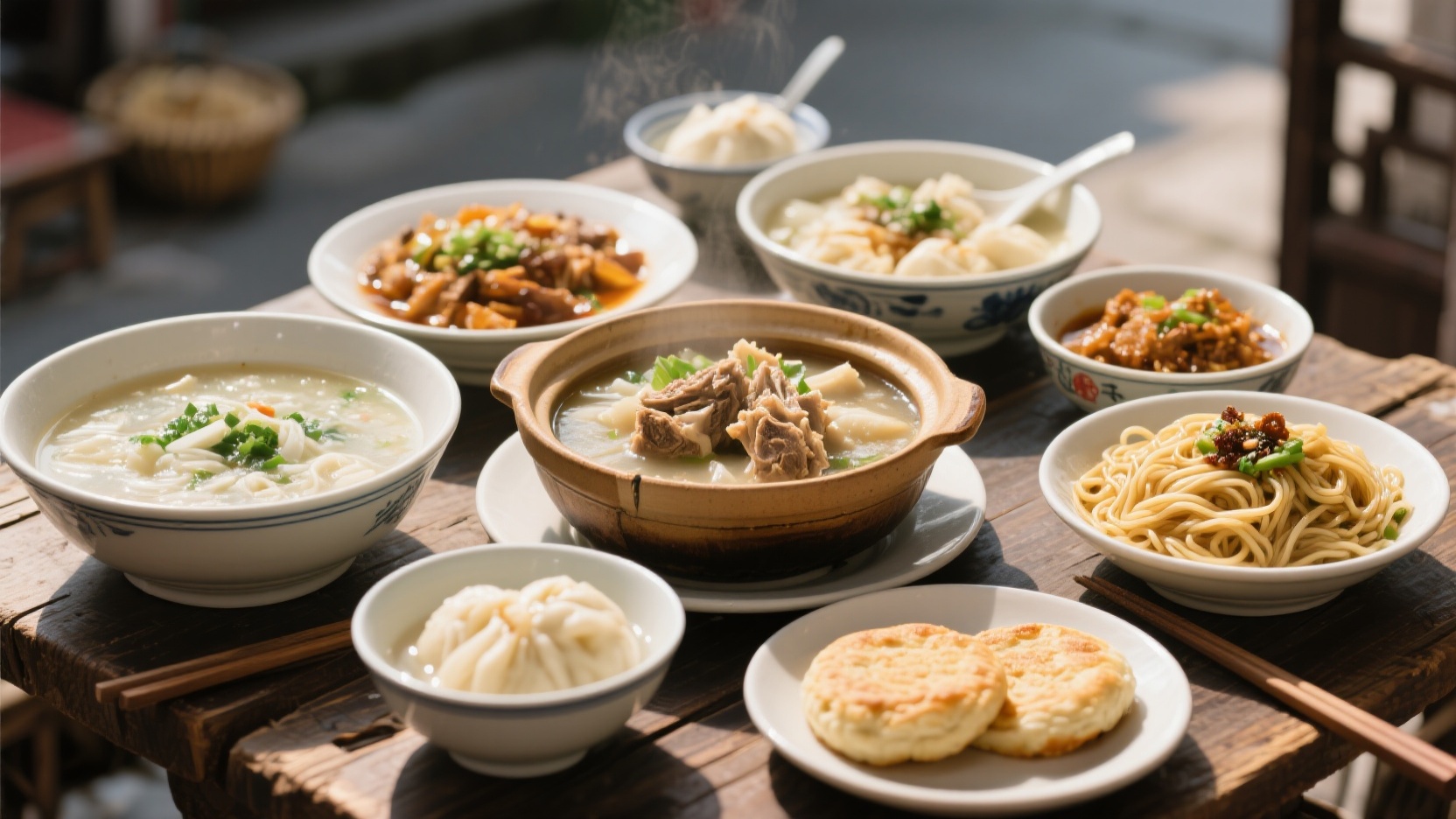
At six in the morning, the streets and alleys of Jinhua's old town are not yet fully awake, but the steamers at breakfast stalls are already rising with the first wisps of steam. For locals, a day begins with a bowl of piping hot soup and a basket of soup dumplings, not with a souvenir shop near a tourist attraction.
Early morning: Fujian soup and Jinhua soup dumplings
Fujian soup is an interesting "misunderstanding" on Jinhua's breakfast tables. Although named after Fujian, it has long been localized in Jinhua, becoming a morning memory for generations. The method involves spreading rice flour batter into a thin sheet, steaming it, cutting it into diamond-shaped pieces, and then cooking it with broth, shredded meat, bean sprouts, wood ear mushrooms, and diced bamboo shoots. A light cornstarch slurry is added, and white pepper is sprinkled on top. The soup is smooth and glutinous, with a clear and fresh broth, and the slight spiciness of the pepper quickly warms the stomach. Regular customers often add a spoonful of the shop's homemade chili sauce, mix it with a fried dough stick, and eat until they are sweating profusely—only then is it truly satisfying.
Jinhua soup dumplings are often paired with Fujian-style soup. Jinhua soup dumplings are known for their "paper-thin skin and abundant broth." The pork skin jelly melts into a clear broth during steaming, which is then locked inside the thin skin. Locals have a set routine for eating soup dumplings: first, use chopsticks to poke a small opening at the top, suck out the broth, then dip them in ginger and vinegar before eating the filling. The meat filling is firm and doesn't fall apart, and the broth is clear and not greasy. A steamer basket of six, served with a bowl of savory soy milk, is a familiar breakfast combination for many office workers and students.
Lunch: Dongyang noodles with boiled cabbage and tofu
At noon, the local eateries begin to bustle. Dongyang Womian is a very common bowl of noodles in Jinhua. It doesn't rely on a rich broth; instead, alkaline noodles are cooked until slightly mushy, then mixed with readily available ingredients such as pork belly, shrimp, mushrooms, vegetables, and shredded egg. The broth is then thickened with cornstarch, creating a semi-soup, semi-noodle consistency. The noodles are soft but not mushy, and the broth is thick and flavorful, allowing you to enjoy noodles, vegetables, and meat in every bite. Because the cooking method is called "Wo"—meaning the noodles and ingredients are cooked together—it used to be a way for ordinary families to deal with leftovers, but now it's a bowl of noodles that locals crave every few days.
Alongside Dongyang noodles, another common lunch dish is a distinctively flavorful home-style dish: stewed cabbage with tofu. Cabbage, also known as Chinese cabbage, develops a unique sour aroma after being salted and fermented, even with a slightly pungent odor. It's stewed in a clay pot with tender tofu; the pickled cabbage releases its sourness, while the tofu absorbs the broth, resulting in a smooth and tender texture. The broth is golden, and the flavor is tangy and spicy, making it very appetizing. This dish is common in local restaurants in Jinhua and is especially delicious with white rice. First-timers might be put off by the smell, but locals will tell you that this is precisely what makes it so appealing.
Afternoon tea: Jinhua shortbread and brown sugar glutinous rice cakes
Around three or four in the afternoon, the aroma of charcoal fires begins to waft from the street corner pastry stalls. Jinhua pastries, shaped like crab shells and sprinkled with sesame seeds, are filled with preserved mustard greens and diced pork fat, offering a savory-sweet flavor. Traditionally baked in a charcoal oven close to the wall, the pastries are heated evenly, resulting in a crispy, crumbly texture when freshly baked. As they cool slightly, the oil seeps back in, intensifying the aroma. Locals typically buy a few to eat on the go or take home to enjoy with tea. It's not just a snack, but also a childhood treat for many Jinhua residents.
If you prefer a sweeter taste, Yiwu brown sugar mochi is another option for afternoon tea. The glutinous rice is steamed and repeatedly pounded until it becomes stringy, then coated with a syrup made from Yiwu brown sugar, and sprinkled with crushed peanuts or sesame seeds. The caramelized aroma of brown sugar combined with the soft, chewy texture of the glutinous rice creates a sweet but not cloying flavor. In autumn and winter, street stalls making fresh mochi are often surrounded by crowds; it tastes best when eaten hot.
Late at night: Jinhua casserole and beef offal rice noodles
As night falls, the food stalls and hot pot restaurants in Jinhua light up. Jinhua hot pot is the star of late-night snacks, with common dishes including pork bone hot pot, black carp hot pot, and beef offal hot pot. Pork bone hot pot is made by simmering pork bones for a long time to create a white broth, adding tofu skin, dried bamboo shoots, and goji berries. After it's served, you drink the soup first, then use a straw to suck out the marrow. Black carp hot pot features thinly sliced fish, served with pickled cabbage or tomato soup base; the fish is tender and smooth, with a tangy and refreshing flavor. A round table, a bubbling clay pot, and a few bottles of iced drinks are the most common scene for Jinhua residents ending their day.
If you don't want anything too heavy, a bowl of beef offal rice noodles at a late-night diner is just as comforting. The rice noodles are made from steamed and dried rice flour, and after boiling, they are smooth and not sticky. They are topped with braised beef offal and piping hot bone broth, and sprinkled with cilantro and pickled cowpeas. With the hot soup in your mouth, the fatigue of the day will disappear.
From breakfast stalls at six in the morning to late-night food stalls, Jinhua's daily meals aren't particularly fancy, but in every bowl of hot soup and every piece of pastry, you can find the most tangible essence of this city's life. From the main streets to the back alleys, experience the city through its food in a day.