
How to choose a cultural and artistic tour of Jiaxing? Half a day to two days – find the perfect fit.
"How should I plan my cultural and artistic trip to Jiaxing?" This is the question I've been asked most frequently by readers over the past six months. The questions vary: what can I see if I'm bringing children? Where can I go if I want to take some photos? Is two days too rushed for my parents? The reason I'm giving a serious answer is simple—Jiaxing's cultural resources are scattered, unlike Suzhou and Hangzhou where there are clearly defined art districts that you can visit in one place. If you follow a generic list of attractions, you might easily spend most of the day without seeing anything. This guide uses a decision tree based on two main themes: "number of days" and "travel companions." Just find the one that suits you and follow it.
First branch of consideration: Do you have half a day, a day, or two days?
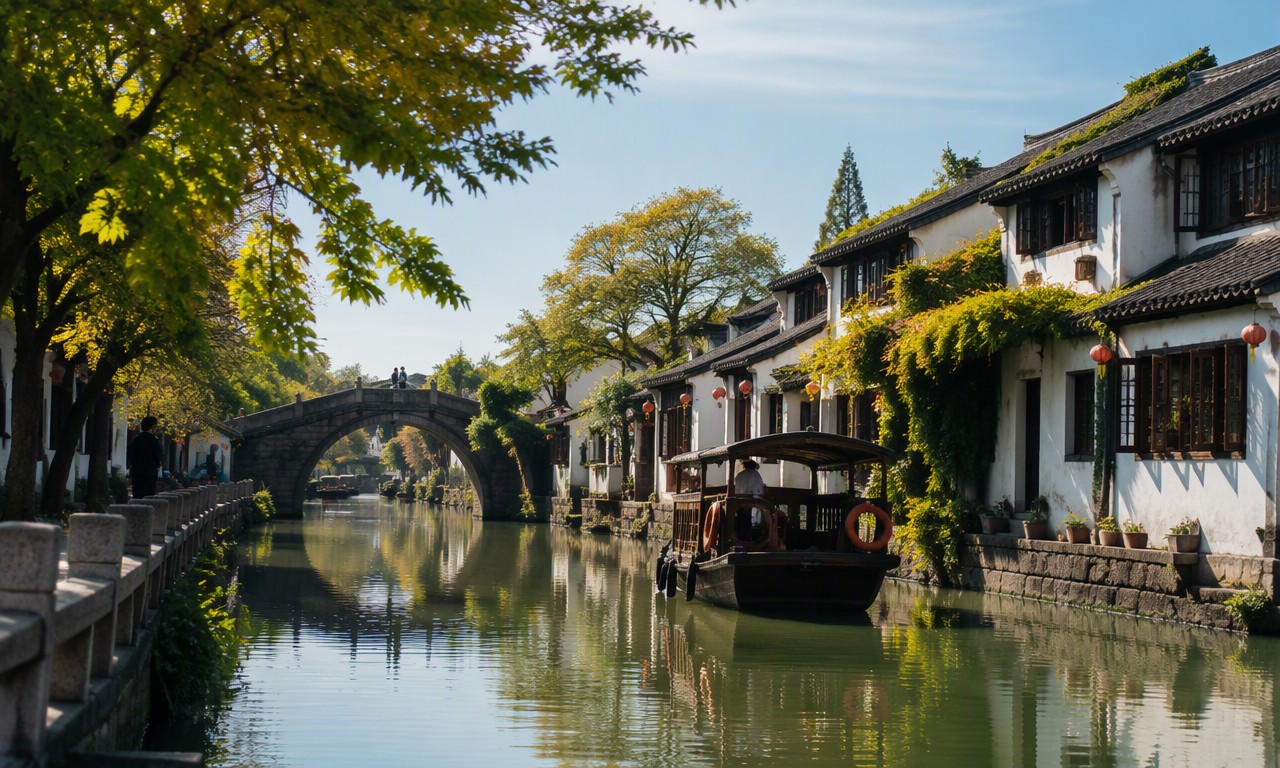
Spend half a day on just one thing. Don't try to do too much; most of Jiaxing's cultural attractions require time to explore. If your half-day is in the morning, go directly to the Jiaxing Museum and see the "Source of Jiaxing" basic exhibition. If it's in the afternoon, go to the Yuehe Historical District. The focus isn't on shopping, but on walking along the outer Yuehe River to the Heyue Bridge area to observe the old buildings and the relationship between the river and the waterfront. The reason for deciding on half a day is that Jiaxing's museums and districts are not large, but the information density is high; rushing to two places means you won't be able to see either one properly.
A day trip could be a combination of "one museum, one street, and one river." In the morning, choose either Jiaxing Museum or Zicheng Ruins Park; in the afternoon, choose either Yuehe River or Luxihui; and in the evening, stroll along the Grand Canal Cultural Square by the city's ring canal. The reason for this arrangement is that you can experience both the historical depth of Jiaxing and the living face of this water town within one day, avoiding repetition and preventing feeling overwhelmed.
Two days are needed to include either Xitang or Wuzhen in your itinerary. Note that it's "or," not "both." Spend two days and one night. Leave the first day in Jiaxing city, then head to Xitang on the morning of the second day, arriving around noon and exploring until evening before returning. Why not spend both days in the ancient town? Because Xitang and Wuzhen are already highly commercialized. The cultural experience is concentrated in the early morning and evening; during the middle of the day, the crowds significantly diminish the artistic and authentic feel.
Decision Branch Two: Are you bringing your child, accompanying elders, a solo artsy individual, or specifically here to take photos?
For families with children, the focus should be on "tangible experiences." The Jiaxing Museum's intangible cultural heritage exhibition hall has hands-on activity areas where children can participate; the stove painting displays in Yuehe Street are also more worthwhile than simple shops. If the child is in elementary school, a two-day itinerary could replace Xitang with the Zongzi (sticky rice dumpling) culture experience area at the Wufangzhai Industrial Park, where the interactive elements are much stronger than in the ancient town. The rationale is that Jiaxing has too many static cultural venues, which can bore children; hands-on activities are essential.
When accompanying elders, keep walking distances manageable and make dining part of the cultural experience. Nanhu Lake is a must-see for elders visiting Jiaxing, but avoid taking a boat to the island – it's too tiring. A better approach is to walk along the lake from the old Nanhu Revolutionary Memorial Hall to Huijing Garden; the distance is gentle, offering views of water and trees along the way. Then, head directly to the nearby Nanhu Tiandi to find a place for local cuisine. In the afternoon, visit the Zicheng Ruins Park, which has fewer steps and more shade, perfect for a leisurely stroll. The rationale behind this arrangement is that elders' expectations for Jiaxing often lie in "seeing the lake, the city, and its historical heritage," rather than visiting numerous museums and cultural sites.
For solo art enthusiasts, I recommend the "Zicheng—Catholic Church—Shaonian Road Old Alleyways—Moon River Evening" route. The renovated Zicheng Ruins Park has a restrained exhibition, perfect for quiet contemplation; the Catholic Church and Zicheng are separated by only one road, creating a striking architectural contrast; the old alleyways on both sides of Shaonian Road haven't been fully renovated, offering glimpses into the authentic local life; and the twenty minutes after dusk when the lights come on at Moon River are the most atmospheric in the entire area. My reasoning is that this route offers a moderate amount of information, providing ample space to process it all, and it's not as noisy as the artsy districts of Suzhou and Hangzhou.
For photography, season and time of day are more crucial than location. In spring and autumn, between 6:30 and 7:30 AM, head to the section of the city moat near Fanli Lake Park. The water is calm, the light is at an angle, and there are few people, allowing you to capture clean reflections and locals doing their morning exercises. The best times to photograph Xitang are before 8 AM and after 9 PM; other times are generally not recommended. If you want to photograph the details of old buildings, the facades of Yuehe River show significant signs of renovation. If you're truly interested, try the area near Baoshuting in Wangdian Town; there are almost no tourists there, and the relationship between the buildings and plants is well-preserved. The key takeaway is that photography in Jiaxing focuses on water towns and streets; good shots depend on lighting and crowd control, not on filling your schedule with specific spots.
Decision Branch Three: Where you stay determines what kind of Jiaxing you will see.
If you're only staying one day, prioritize staying in a location near the city's ring canal in the city center. The reason is practical: many of Jiaxing's cultural attractions are located within the old city area, so staying nearby allows you to easily walk around them and saves you the hassle of parking. A mid-range budget is sufficient; there are many accommodation options in the city center, and prices are relatively transparent.
If you're staying for two days, consider a guesthouse outside the Xitang scenic area for the second night. There are two reasons for this: first, dragging luggage along the cobblestone streets inside the scenic area is very uncomfortable; second, the accommodations outside the scenic area are usually only a few minutes' walk from the entrance, but the quality is significantly better. If you're particularly drawn to the ancient town in the early morning, choose accommodation near the western exit of West Street within the scenic area. Leaving at 6 AM will allow you to capture the tranquil, misty covered walkway without any people. I don't recommend staying in Xitang if you're traveling with older people, as the lighting is dim and the roads are uneven at night, making the walk back to your accommodation quite strenuous.
Decision Branch Four: The season you visit determines whether you focus on indoor or outdoor activities.
In spring and autumn, the entire route is open to the public, with outdoor areas making up over 60% of the route. During these two seasons, the area along the city's ring canal and Fanli Lake Park in Jiaxing is the most worthwhile to spend time, as the humidity and light are perfect for leisurely walks. The criteria for this assessment are: spring in Jiaxing begins to feel noticeable from mid-March, and autumn reaches its most comfortable state from mid-October, each lasting about a month.
In summer, focus on indoor activities and early morning/evening hours. Visit air-conditioned venues like the Jiaxing Museum and the Zongzi Culture Park around midday; only explore the Yuehe River and the city moat before 7 AM and after 6 PM. Excessive outdoor walking during the day in July and August is a waste of energy, and the humidity will ruin any patience for cultural experiences. In winter, it's recommended to plan a cultural route of no more than one day, focusing on exhibition halls and the Zicheng Ruins, and minimizing visits to the waterfront. Jiaxing's winter humidity is high, and the perceived temperature along the city moat is two to three degrees Celsius lower than in the city center, making the same route much more strenuous than in spring and autumn.