
Don't be fooled by travel guides anymore | A list of pitfalls to avoid in Hohhot for a 3-day, 2-night trip, recommended by locals.
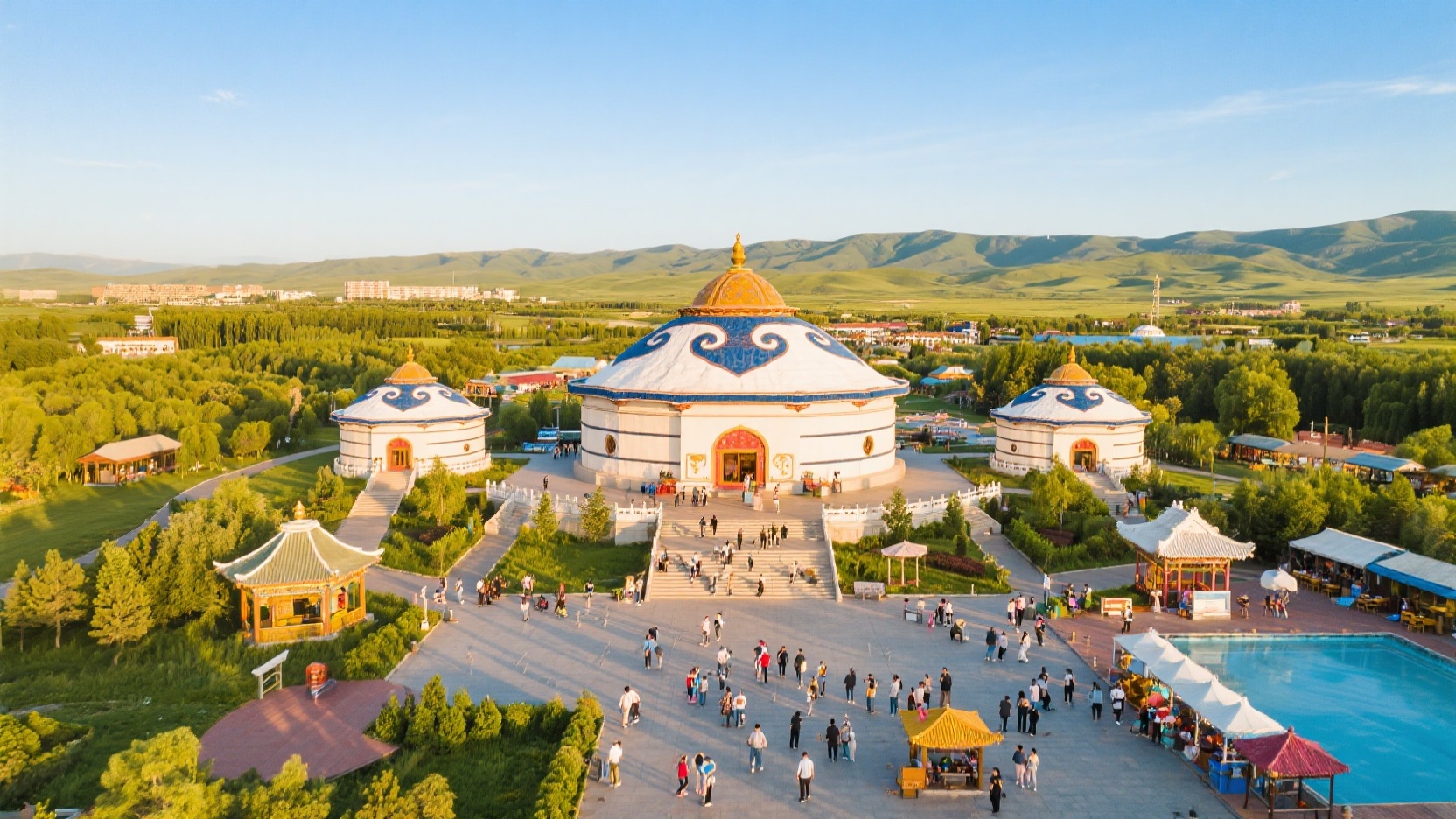
Having lived in Hohhot for six years, I dread receiving those "3-day, 2-night classic itineraries" from friends—following them will lead you to be stuck in traffic on Zhongshan Road until you question your existence, queue until your legs go numb in front of trendy restaurants, and finally, sit before a bowl of cold mutton offal soup and ask yourself why you even came.
Most online travel guides treat Hohhot as a "transfer station on the grasslands," but the city center and surrounding attractions are severely misrepresented. I travel there more than twenty times a year and have watched tourists get ripped off by the same template time and time again. Today, I won't just pile on the hype; I'll expose the pitfalls.
First, dismantle the three most difficult sections of the "classic route".
Every travel guide tells you to rush to Dazhao Temple and Sai Shang Old Street on your first day, but nobody tells you that Zhongshan Road and Tongdao South Street will be so congested after 6 pm that you'll question your existence. Especially on Fridays and holidays, the short distance from the train station to Dazhao Temple can take forty minutes, and taxi drivers would rather take the Second Ring Road than venture into the old city.
The second leg of the journey to Xilamuren Grassland is usually listed as "about two hours" one way, but in reality, it takes at least two and a half to three hours from the city center. The grass quality in the grassland tourist area is generally poor, horseback riding activities are subject to multiple layers of markups, and the return trip coincides with the evening rush hour, meaning the entire day is spent on the road. Locals in Hohhot rarely go to Xilamuren in the summer to escape the heat, preferring to travel to the northern Shengshuiliang or Xiaojinggou.
The third part of the trip crammed the Zhaojun Museum and the General's Office into the same day, resulting in a roundabout route. The Zhaojun Museum is far from the city center and its exhibits are rather static; unless you are particularly interested in the history of marriage alliances, making a special trip there would be very inefficient.
Second, these points only require 30 minutes; don't spend half a day on them.
The free area of Dazhao Temple Square is more worthwhile to linger in than the temple itself, but half an hour is sufficient for a visit inside the halls. Many people take photos and then sit in the square, only spending a short time actually inside. The Sai Shang Old Street can be walked through in ten minutes during the day, but at night it's filled with Yiwu small commodities and barbecue stalls; it's only suitable for passing through to experience the atmosphere, don't expect to find any "local handmade goods."
The General's Office is a well-organized Qing Dynasty courtyard; half an hour is just right to walk through it. If you spend too much time there, you'll only see the same type of brick carvings. The Five Pagoda Temple is quite small; climbing the pagoda to see the reliefs on the Vajrasana Relic Pagoda takes about twenty minutes. If you schedule these three places for a whole day, you'll have so much free time in the afternoon that you'll only be able to scroll through your phone.
3. Is it true that you have to wait two hours for that meal? Locals really don't wait.
A certain Mongolian restaurant chain, which has been lauded by travel guides, has queues that can last for two hours or more during peak hours. Many of its branches are designated stops for tour buses, and the food has become mass-produced. Locals prefer to eat Mongolian food at established restaurants in their neighborhoods, or simply order a pot of milk tea and a plate of hand-pulled mutton and sit back and relax. There's no need for them to become human billboards in front of trendy restaurants.
Avoid the crowded tourist area shops for shaomai (steamed dumplings). Local favorites like Deshunyuan and Laosuiyuan, especially their branches outside tourist areas, offer consistently better taste. If you get a seat before 9 AM, you'll likely not have to wait. For mutton offal soup and baked buns, head to the small shops around the North Gate of the Old City or Kuan Alley, where the parking lots are full of local cars. They cost around 10-20 RMB per person, the broth is rich and not fishy, much better than the trendy, long-distance shops. For hot pot, stick to the copper pot with clear broth; the original Erdun and Zecheng shops are good, avoid the branches in shopping malls.
IV. Delete these points and replace them with local ones for better value.
Remove Xilamuren Grassland and replace it with Shengshuiliang or Xiaojinggou in the northern suburbs. They have alpine meadows and treelines, short summers, and excellent autumn scenery. They're close to the city, a half-day trip is possible, and they're comfortable for photography and hiking. If you're traveling with elderly people or children, consider Chulechuan Grassland or Halaqin Ecological Park; the trails are easy and less strenuous.
Remove the Zhaojun Museum and replace it with the Qing Dynasty Princess Gulun Kejing Mansion and the Inner Mongolia Museum. The Princess Mansion is a tangible example of a Manchu-Mongol marriage during the Qing Dynasty; the courtyard is well-preserved and less crowded, making it quieter. The Inner Mongolia Museum has three floors and is free to enter; the Chagan Nuoer Dragon fossils and artifacts from northern ethnic groups are worth about two hours to see. If time is limited, the museum, science and technology museum, and art museum are adjacent, so you can visit both in one trip.
Don't make a special trip to Naobao Village just because it's a "trendy ancient village." It's an imitation ancient street, and parking is difficult during peak season, with similar snacks. Instead, go to the area around the North Gate of the Old City to visit the Great Mosque and Kuan Alley, have a bowl of mutton offal soup, and buy a couple of baked buns. It has a more authentic, down-to-earth feel than artificial tourist attractions.
V. Indigenous Optimized Version: 3 Days 2 Nights + 1 Day Flexible Alternative
Day 1: Morning: Dazhao Temple + Sai Shang Old Street; Noon: Shaomai or Lamb Offal Soup at the North Gate of the Old City; Afternoon: Inner Mongolia Museum; Evening: Eat baked buns and drink fruit soup around Kuan Alley. Stay overnight near Xinhua Square or East Railway Station. Avoid staying near Dazhao Temple as it's noisy and parking is expensive at night.
Day 2: Depart early for Shengshuiliang or Xiaojinggou, bringing some snacks and a windproof jacket. In the afternoon, return to the city for hot pot. In the evening, visit Ruyi River or Chulechuan Bridge for the night view. If it happens to be September or October, the treeline in the northern suburbs changes color every day.
Day 3: In the morning, visit the Qinggulun Kejing Princess's Mansion and the General's Office. For lunch, find a traditional restaurant for braised noodles or oat noodles. In the afternoon, buy some milk skin and beef jerky as souvenirs. Return directly from the East Railway Station or the airport. Don't cram shopping into the last hour; traffic in Hohhot is notoriously congested.
Flexible alternatives: With an extra day, you can visit Laoniu Bay in summer to see the Yellow River meet the Great Wall, Hongzhao Jiulong Bay in autumn, and Hasuhai Lake in winter to watch the sunset over the frozen surface. For families with children, we suggest adding a day to visit the Inner Mongolia Science and Technology Museum and the Hohhot Sculpture Art Museum, where it's not cold indoors and children can run around freely.
6. 10 things you shouldn't do
1. Avoid taking Zhongshan Road to Dazhao during Friday or holiday evening rush hour, as you may get stuck in traffic and miss your train/train. 2. Don't make Xilamuren Grassland your first choice, as the quality of the grass and the experience don't justify the round trip. 3. Avoid eating shaomai (steamed dumplings) around the scenic area, as they are expensive and involve long queues.
Fourth, don't have high expectations for the small commodities in the old street of the border region; they are all the same across the country. Fifth, don't stay in the core area of the scenic spot; the sound system and traffic at night can be unbearable. Sixth, don't schedule half a day for the Zhaojun Museum unless you are a true fan of the history of peace and harmony.
7. Don't go to Mongolian restaurants in shopping malls; the taste is not as good as the old restaurants in the neighborhood. 8. Don't go to buy local specialties on the last afternoon; traffic jams and packing will cause you to miss your flight. 9. Don't believe the "one-day tour of the grassland" offered by roadside touts; low-priced tours are all shopping stops. 10. Don't walk around the old town at noon in July or August; the sun is too strong, and you'll get sunburned and peel in just two hours.
In conclusion
Don't ask the locals if I didn't tell you: the most comfortable seasons in Hohhot are from mid-May to mid-June and from early September to mid-October. July and August are crowded and expensive, and the winter is windy, dry, and cold, so it's not suitable for everyone.
Families with elderly people or children should avoid following the routes taken by younger people; instead, consider visiting parks and museums for a more practical option than hiking on the grasslands. Couples or friends can opt for places like Shengshuiliang and Laoniuwan, which offer great photo opportunities and less queuing.
Many great places in the city don't need a travel guide. Riding a shared electric bike between the old town and the East River offers a better glimpse into local life than taking a taxi.
Don't be bound by the "several cities and several nights" template. Hohhot is more suited to a slower pace. Two points a day is just right, any more than that and you'll be rushing from one event to another.
Lastly: Lamb and dairy products are the bare minimum in Hohhot. Anything that is expensive and doesn't have a gamey smell is probably not what locals usually eat.