
Hong Kong Avoidance List | Don't be fooled by 3-day, 2-night itineraries: A local's testimonial: a complete list of what to delete and what to replace.
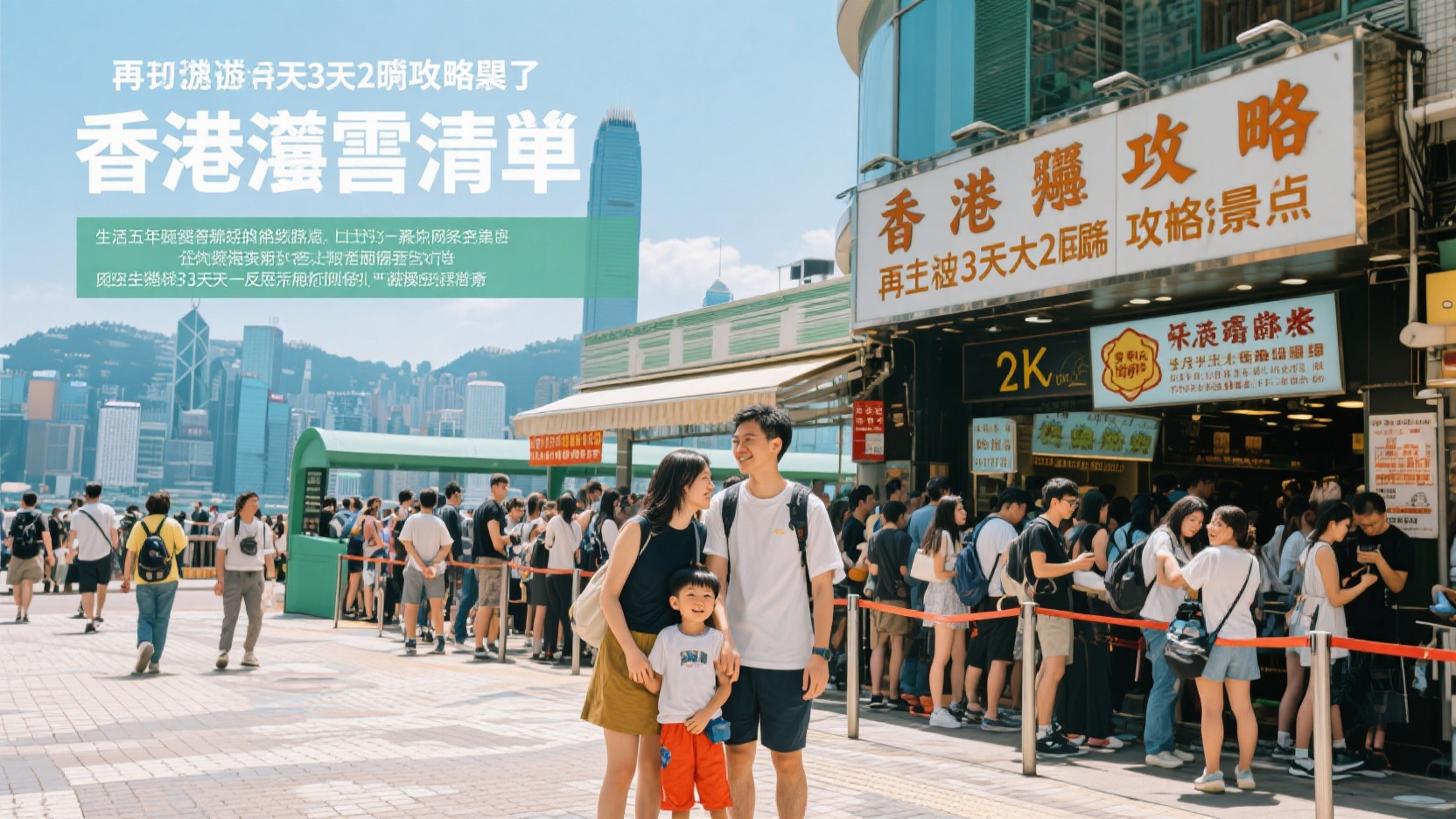
Every time I see that "Hong Kong 3 Days 2 Nights Classic Itinerary Map" online, I want to tear it up. If you follow that, you'll be stuck in traffic on the Mid-Levels Escalator in Central until you question your existence, queue until your legs break at Kau Kee Beef Brisket Restaurant, and finally find that the so-called must-see attractions can be visited in half an hour, wasting the time of two meals.
Many travel guides treat Hong Kong like a Disneyland-style must-see list, ignoring the fact that the real cost of visiting the city isn't entrance fees, but rather commuting, queuing, and physical exertion. The correct way to experience Hong Kong is to connect different areas by time of day, rather than forcing popular spots into a single route. The following corrections are intended to correct errors in online itineraries.
First, let's tear down the "classic first stop": Don't go up the Mid-Levels Escalator in Central too early.
Online routes often list the Mid-Levels Escalator in Central as the first stop in the morning, resulting in tourists and commuters crowding onto the same escalator, with photos taken against a backdrop of rushing office workers. In reality, this escalator is a one-way commuter tool during the morning rush hour and is completely unsuitable for tourists to stroll leisurely.
The right approach is to walk from Tai Kwun or PMQ after noon, taking only a short ride on the elevator to get a feel for it; there's no need to ride it from one end to the other. What's truly worth spending time on is the nearby Pottinger Street cobblestone streets and the tin-roofed food stalls in the alleyways, where you can experience the character of old Central in just half an hour.
If you're staying at a hotel on Hong Kong Island, it's better to have a Hong Kong-style breakfast at a street-side tea restaurant in the morning and head out after the morning rush hour; it's much better than squeezing into an elevator. Planning a daytime trip to Lan Kwai Fong is even more absurd; at that time you'll only see closed bars and street vendors, so there's absolutely no need to go through all that trouble.
"Must-try Kau Kee Beef Brisket" requires a two-hour wait: Locals advise you to try the everyday noodle shops next to the market instead.
Kau Kee Beef Brisket is indeed a long-established brand, but after being touted as a "must-eat" on social media, the lines for lunch and dinner stretch out to the corner, and the seats inside are so crowded that you're practically touching each other. You'll even be rushed after you've finished eating. Spending two hours for a bowl of beef brisket is really not worth it in Hong Kong, where you have to carefully budget your daily commute.
Locals don't necessarily avoid beef brisket; they just prefer the everyday noodle shops in Sheung Wan and Sai Ying Pun. These shops are usually located near markets, and their beef offal, tendon, and wontons are all made with high quality. At lunchtime, you can share a table with nearby office workers, and the price is only a few dollars per person. They have a fast turnover, and you get the authentic Hong Kong flavor.
The beef brisket soup base is clear and not oily, the beef tendon is tender, and the wonton wrappers are thin and the filling is generous—this is the usual standard at these shops. If you must go to Kau Kee, choose a time outside of mealtimes like 3:30 PM, and you might only have to wait about ten minutes; otherwise, just go somewhere else without feeling guilty.
Victoria Harbour's night view isn't limited to the Avenue of Stars: this waterfront promenade is far from congested.
The Victoria Harbour night view from the Avenue of Stars is indeed classic, but after 8 pm, the crowds are so dense that you can't even get close to the railings, and the photos you take are all filled with cell phones. Many travel guides suggest visiting Harbour City in the afternoon and then walking directly there, but the crowds combine to create a terrible experience.
Locals often choose to view Victoria Harbour from the Wan Chai Promenade to the Golden Bauhinia Square, or from the West Kowloon Cultural District waterfront. The former offers views of the skylines of Central and Tsim Sha Tsui, while the latter features grassy areas and sea breezes, making it a good place to sit and enjoy the view at a leisurely pace.
To see "A Symphony of Lights," you don't need to squeeze into the Tsim Sha Tsui Clock Tower area. The Hung Hom waterfront or North Point Pier offer equally good views and are much less crowded. The queues at the Star Ferry Pier on weekend evenings are equally outrageous, so it's recommended to choose a weekday evening or take the MTR directly across the harbor.
Mong Kok Ladies' Market and Sneaker Street? Forget about them. A late afternoon in Sham Shui Po is the real deal.
Ladies' Market and Sneaker Street have become homogenized by the tourist economy, selling goods that are essentially no different from those in mainland China's small commodity markets. In fact, you might even have to worry about the authenticity of some items in Sneaker Street. Spending an afternoon here is less worthwhile than taking the MTR two stops to Sham Shui Po.
The Apliu Street and Fuk Wing Street area in Sham Shui Po is a vibrant and bustling place with secondhand goods, used audio equipment, affordable kitchenware, and a plethora of local snacks. Even in the afternoon, you can still see vendors setting up their stalls and housewives browsing the goods – this scene truly captures the essence of Hong Kong's everyday life.
If you're not interested in secondhand items, at least go to Fuk Wing Street for a bowl of pork liver noodles or tofu pudding; it's more worthwhile than queuing up for chain snacks in Mong Kok. The Golden Computer Centre area in Sham Shui Po is also suitable for tech enthusiasts looking for accessories, but be careful of the difference between parallel imports and official products. Browse around, but compare prices before placing an order.
Don't be fooled by the "one-day whirlwind tour of Yau Tsim Mong": a cross-sea commute will consume half your energy.
Many routes are planned with "Mong Kok in the morning, Central in the afternoon, and Causeway Bay in the evening," which seems plentiful, but they underestimate the cross-harbour transfers. The distances between Hong Kong MTR transfer stations are not short, and crossing the harbor two or three times a day will wear out your legs and back.
The correct logic is to divide the trip into "one day on Hong Kong Island and one day in Kowloon" to minimize the number of times you cross the harbor. On Hong Kong Island, use the tram to connect Central, Sheung Wan, Wan Chai, and Causeway Bay; on Kowloon, use walking and short-distance buses to connect Sham Shui Po, Prince Edward, and Yau Ma Tei.
Don't underestimate the weather. In summer, you'll be soaked in sweat after just twenty minutes outdoors. A packed schedule is just asking for trouble. If you really want to visit multiple districts, at least save your cross-harbor trip for lunch and avoid transferring in Central or Tsim Sha Tsui during rush hour.
The optimized "3 days 2 nights + 1 day flexible alternative" plan can be copied directly.
Day 1 Hong Kong Island: Have a light lunch at the Central Market, then explore Tai Kwun, Pottinger Street, and Sheung Wan Old Street in the afternoon. In the evening, take the tram to Wan Chai waterfront to watch the sunset, and stroll around Causeway Bay before returning to the hotel. This itinerary avoids the morning rush hour and crosses the harbor, ensuring a steady pace.
Day 2 Kowloon: Breakfast at Sham Shui Po Market, followed by a stroll along Apliu Street and Fuk Wing Street. Lunch at Prince Edward Flower Market or Yuen Po Street. Afternoon at Yau Ma Tei Fruit Market and the area around Temple Street. Evening at West Kowloon Cultural District to see the Victoria Harbour night view. No backtracking throughout the entire itinerary.
The third day is flexible: if the weather is good, spend half a day at Peng Chau or Lamma Island, and return to Central in the afternoon to buy souvenirs; if the weather is bad, take a walk along the beach in Sai Ying Pun or Kennedy Town, and then take the tram back to Sheung Wan for a cup of milk tea.
Add an extra day as an option: reserve it for Lantau Island or Stanley, provided you've already adjusted to the pace in the first three days; otherwise, don't force it. For souvenirs, it's recommended to buy them at the dried seafood street in Sheung Wan, not near tourist attractions.
In closing: Don't ask the locals if I didn't tell you.
First, don't take the Mid-Levels Escalator during rush hour, and don't use the tram as a prop for taking photos at tourist attractions; it really does transport people.
Secondly, don't starve yourself to the point of hypoglycemia while queuing for trendy restaurants. The three-course rice, roast meat shops, and noodle stalls near Hong Kong markets can save you.
Third, avoid outdoor walking in the summer. Hong Kong's humidity and heat are no joke. Indoors in the afternoon or the sea breeze on the outlying islands are more suitable.
Fourth, don't buy so-called "antiques" on Temple Street. Most of them are wholesale market goods; just take pictures of them.
Fifth, when asking for directions, don't just give the name of a popular shop. Many locals only know street names and landmarks. Giving the subway exit is more reliable.