
Should I choose shopping districts or old town areas for accommodation in Hong Kong? I stayed in both.
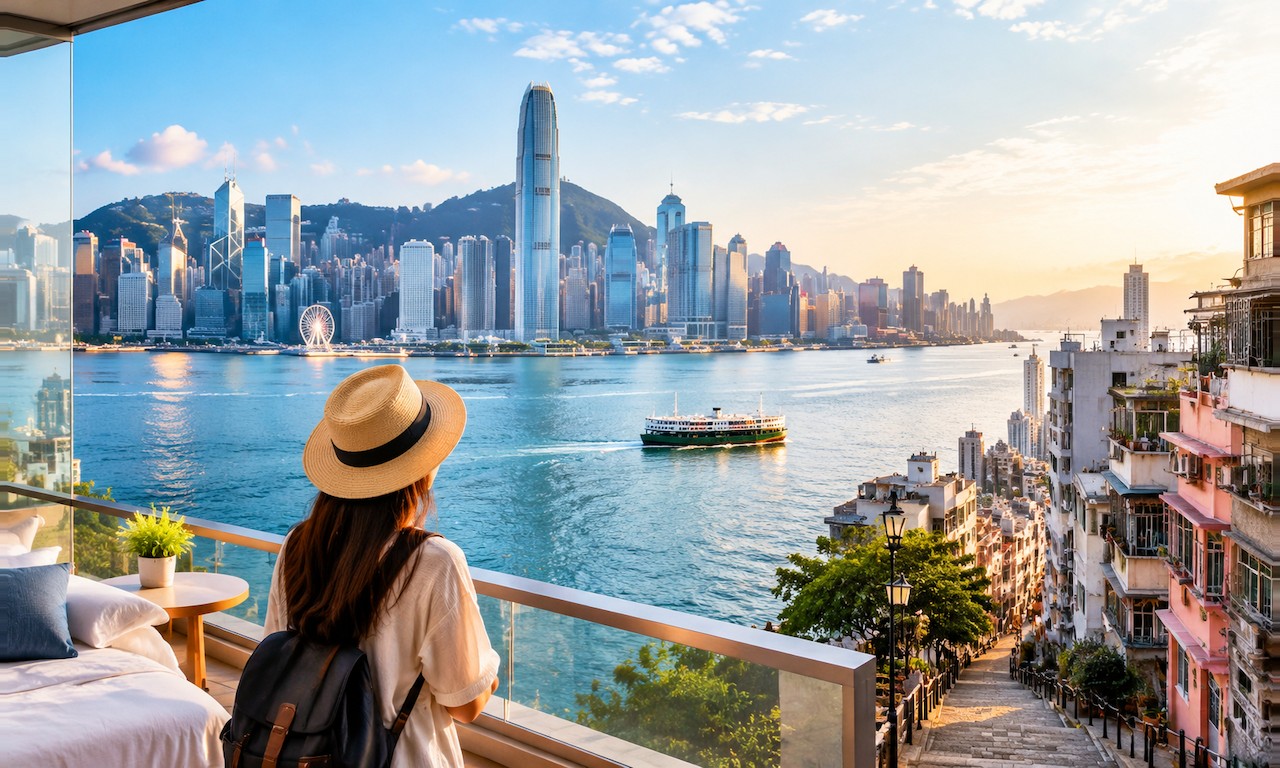
Many readers' first question to me before their trip isn't "What's fun in Hong Kong?" but rather "Which area should I stay in?" This question deserves a serious answer because while Hong Kong offers a wide variety of accommodation options, each has a very specific applicable scenario. Choosing the wrong option will either cost you more money or ruin your trip by making a daily commute and dealing with noise. In this article, I want to use a comparative approach, placing the most common accommodation decisions side by side and explaining the differences and trade-offs.
Hotel or guesthouse? Not everything "having a kitchen" is an advantage.
Most travel guides will tell you that guesthouses offer more space, laundry and cooking facilities, making them suitable for families and long-term stays. However, the legalization and service standards of guesthouses in Hong Kong are far less stable than those of hotels. Many "guesthouses" are actually short-term rentals converted from tenement buildings, with varying levels of soundproofing, safety, and cleanliness. If you're only staying for two or three days and will be out and about during the day, a mid-range hotel room is a more convenient option, as luggage storage and front desk services can solve many unexpected problems. Guesthouses are more suitable for those who have immediate needs for laundry and cooking, or those familiar with Hong Kong's streets and transportation. For first-time visitors with limited time, I don't recommend spending too much time searching for "unique guesthouses."
Living in the Tsim Sha Tsui shopping district or the old town of Sheung Wan? A trade-off between commuting convenience and a sense of local life.
Most travel guides will tell you that Tsim Sha Tsui has the most convenient transportation, with Victoria Harbour, the Star Ferry, and shopping malls all within walking distance. However, Tsim Sha Tsui's "convenience" comes at the cost of extremely high foot traffic; it's not quiet even late at night, and the way back to the hotel often involves navigating through dense crowds of tourists. The older districts of Sheung Wan and Sai Ying Pun, while slightly further from traditional attractions, have fast MTR Island Line connections, providing direct access to Central and Causeway Bay. More importantly, in the mornings, you can see dried goods stalls opening in the seafood market and locals enjoying breakfast in tea restaurants—a local pace that Tsim Sha Tsui simply can't offer. The target audience is clear: first-time visitors to Hong Kong who mainly want to visit tourist attractions should choose Tsim Sha Tsui; those who want to experience local life and don't mind taking a few more MTR stops should choose Sheung Wan or Sai Ying Pun.
Living above a subway station or in a pedestrianized area? Don't just look at "how far from the station".
Most travel guides will tell you that the closer the hotel is to the subway station, the better, ideally with the entrance/exit right downstairs. In reality, hotels above the Hong Kong subway station are usually high-rise buildings with smaller rooms, and due to the high volume of people, elevator wait times are long, so getting in and out might not be as quick as it seems. Some hotels within a five- or six-minute walk of the subway station are often located in local neighborhoods, where food, water, and fruit are more affordable, and you can even grab some late-night snacks on your way back. My advice is not to use straight-line distance as the sole criterion; first consider your primary mode of transportation each day. If you're traveling with elderly people or children, or if you dislike walking, then hotels above the subway station are a good choice; however, for younger people with little luggage who are willing to walk, pedestrianized neighborhoods offer greater convenience.
Living on Hong Kong Island or in Kowloon? These two "city centers" actually represent two different paces of life.
Most travel guides will tell you that Hong Kong Island is the financial center, while Kowloon is the shopping and night market hub, and that you can stay in either. However, Hong Kong Island has a higher street density and greater vertical elevation changes; many hotels are located on hillsides, and although they may appear to be only 300 meters from a subway station on a map, it could actually be an uphill walk. In Kowloon, the streets along Nathan Road, Yau Ma Tei, and Jordan are relatively flat, making walking more convenient for those with luggage. My assessment is this: if your main activities are on Hong Kong Island, such as Central, Wan Chai, or Causeway Bay, staying on Hong Kong Island will reduce crossing time and transportation costs; if you plan to visit both sides of Victoria Harbour, Kowloon offers more hotel options and better value for money.
Should you choose a high-floor ocean view room or a low-floor street view room? The view from your window directly impacts your travel plans.
Most travel guides will tell you that you must stay in a sea-view room in Hong Kong, as the Victoria Harbour night view is part of the accommodation experience. However, sea-view rooms aren't necessarily suitable for everyone. High-floor sea-view rooms in Hong Kong are usually expensive, don't offer a significant advantage in room size, and you're away from your room most of the day, so the view is only enjoyed for a short stretch when you return at night. Lower-floor street-view rooms, while offering views of roads or buildings, sometimes have a quieter atmosphere, especially those facing inner streets or courtyards. For most travelers with a limited budget, spending the difference on food and transportation is more practical.
Chain hotels or established local establishments? A comparison of stable service versus personalized experience.
Most travel guides will tell you that chain hotels have uniform hygiene standards, so you can't go wrong with your stay. In reality, Hong Kong has some local guesthouses that have been operating for over two or three decades, offering very personal service. The front desk will remember your room number and even remind you of the weather outside in Cantonese. However, their problems are also obvious: facilities are updated slowly, room sizes vary, and there's a tendency for discrepancies between the pictures and the description. Chain hotels are suitable for readers who have high standards for accommodation and don't want to spend time researching reviews; established local guesthouses are suitable for travelers who are willing to accept some uncertainty, want to save money, and are interested in "staying in the life of Hong Kong people."
Should you stay near a tourist attraction or in a residential area? Don't be misled by the idea that "tourist attractions are right outside your door."
Most travel guides will tell you that staying near Victoria Harbour or Temple Street offers a high density of attractions and makes sightseeing more efficient. However, hotels near tourist attractions often have significant price premiums, and the surrounding restaurants are mostly tourist-priced, offering limited choices. Residential areas like North Point, Hung Hom, and Sham Shui Po, while a bit further from the main attractions, have excellent MTR coverage, allowing you to reach the core areas in just over ten minutes. Accommodation and surrounding prices are also closer to local levels. I would suggest considering your "daily activities after returning to the hotel": if you want to go shopping, grab a late-night snack, or find a convenience store in the evening, the experience in residential areas is often more natural, avoiding the queues of other tourists.
Ultimately, there's no standard answer when it comes to accommodation in Hong Kong. The best choice for you depends on your travel priorities and the needs of your travel companions. Price is just a starting point; don't make decisions solely based on the numbers. First, clarify three questions: "Where will you be spending your days?", "How long can you tolerate commuting?", and "What do you want to do after returning to the hotel at night?". Then, compare your choices with the differences mentioned above, and the answer will become much clearer.