
From morning congee to night market stalls: The everyday flavors of Hong Kong locals' meals
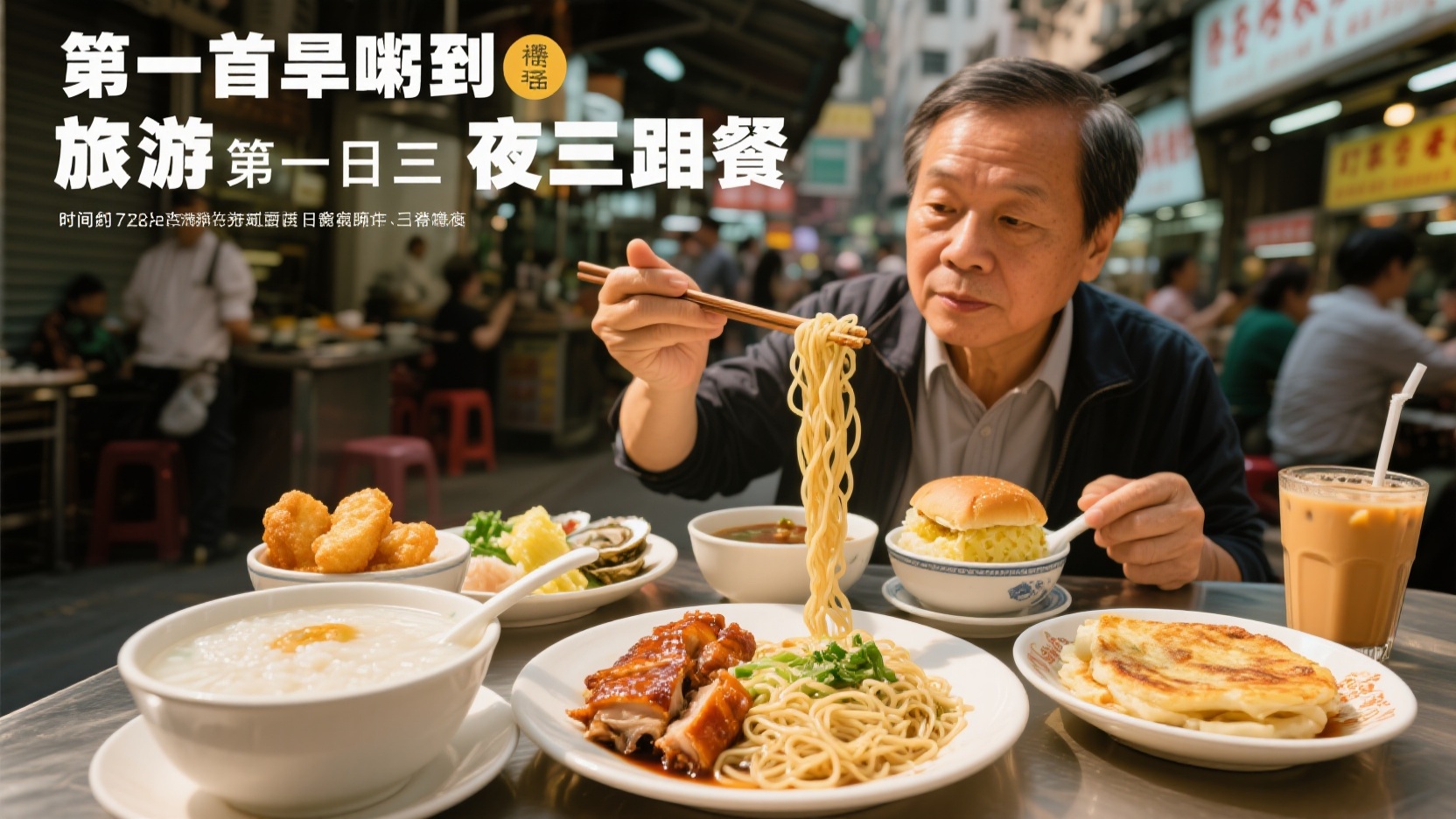
A typical Hong Kong local's day begins with a pot of smooth, simmering congee at the alleyway corner and ends amidst the smoky aroma of late-night food stalls. Unlike the tea restaurants and roast meat shops that tourists might imagine, ordinary residents rely more on neighborhood stalls for their meals: a bowl of congee in the morning, a box of roast meat at noon, a pineapple bun at 3 pm, and a cold dish stall late at night. Below, we break down seven everyday dishes eaten by locals, each corresponding to a different lifestyle.
7 a.m.: Plain congee with fried dough sticks – a gentle start for the digestive system.
The congee served at Hong Kong breakfast stalls isn't just plain porridge; it's made by slow-cooking rice and water for a long time until the rice grains bloom and the porridge base is smooth and creamy—a style known as "open-fire congee." Fried dough sticks (youtiao) are made by stretching dough and deep-frying it until fluffy and golden brown, crispy on the outside and chewy on the inside. Locals often cut the fried dough sticks into pieces and dip them into the congee, letting them soak up the broth until they're soft on the outside and crispy on the inside, or they can be eaten with soy sauce or sweet sauce. This combination is not too oily, and the temperature is just right, perfect for an appetite that hasn't fully woken up in the morning. For many residents of public housing estates, congee and fried dough sticks mean a "leisurely day," because if the stall closes late, only rice noodle rolls are left.
10 AM: Shrimp dumplings and siu mai in a traditional dim sum meal, a classic morning social occasion.
Retired elders and housewives often enjoy morning tea in restaurants or old-fashioned tea houses, a tradition known as "one pot and two dim sum dishes." Shrimp dumplings, made with wheat starch wrappers, become translucent after steaming, filled with fresh shrimp and bamboo shoots, releasing juicy flavor with a light and bouncy texture. Siu mai, on the other hand, features a yellow egg skin wrapped around pork and shrimp, topped with crab or fish roe; the meat is firm and the oiliness is richer than shrimp dumplings. These two dim sum dishes are accompanied by a pot of Pu-erh or jasmine tea, the focus not on filling one's stomach, but on "sitting down and chatting." While dim sum carts have gradually been replaced by make-to-order steaming, this slow morning rhythm remains a daily occurrence in Hong Kong's old districts.
Lunchtime: Roasted meat rice and soup of the day – a satisfying formula from a local eatery.
For weekday lunches, office workers on Hong Kong Island and Kowloon often head to the cooked food centers upstairs in market stalls or the roast meat restaurants on street corners. The most common double-portion rice dishes feature char siu with roast goose or soy sauce chicken. The char siu is made from pork shoulder, marinated in maltose, rose syrup, and soy sauce, then roasted in a hanging oven until the edges are slightly charred, resulting in a glossy, honey-glazed appearance after slicing. The roast goose has crispy skin and tender meat, with goose fat seeping into the white rice. A spoonful of ginger and scallion paste or plum sauce is often served alongside the rice. The accompanying soup is usually made with pork bones, chicken feet, winter melon, or watercress, resulting in a light and refreshing meal. The key to this meal is that it's "quick, filling, and includes both meat and vegetables," with affordable prices and generous portions.
3 PM: Pineapple bun and Hong Kong-style milk tea, a sweet and savory intermission.
Afternoon tea isn't just for tourists; it's a local's "3:30 PM treat." A freshly baked pineapple bun is sliced open and filled with a thick slice of chilled butter, which melts slightly from the residual heat of the bread, creating a "hot and cold" texture. The pastry, made with sugar, lard, and flour, is crisp at first, then soft. The accompanying milk tea is a blend of Ceylon black tea, repeatedly churned in a cotton bag before being infused with evaporated milk, resulting in a rich tea flavor, smooth milk aroma, and a slightly astringent taste. In the afternoons, tea restaurants in factory districts and markets are often filled with drivers and housewives finishing their workdays; this cup and bun mark the dividing line of a long workday.
6 PM: Wonton noodles, the freshness and delight of a street corner noodle stall.
If you don't feel like cooking dinner after work, many Hong Kongers will opt for a bowl of wonton noodles. The authentic version uses bamboo-pressed noodles made with duck eggs and pounded with a bamboo pole, resulting in a smooth and chewy texture. The wontons are filled with fresh shrimp and semi-fatty pork, shaped like goldfish tails, and have a translucent, thin skin after cooking. The broth is made with dried flounder, shrimp roe, and pork bones, clear yet rich in flavor. The wontons are served on the bottom, with the noodles on top, to prevent the noodles from becoming soggy. In Cantonese style, it's served with a little vinegar and soy sauce, while Hong Kongers prefer to drink the broth directly. This bowl of noodles can be a main meal or a late-night snack, quickly enjoyed in minutes at a street corner noodle stall – a satisfying meal for one.
10 PM: Cart noodles, a late-night bowl of my own concoction.
Cart noodles originated from hawker carts, and even today, the "you decide" way of choosing your ingredients remains when you enter a shop. Noodles can be oil noodles, thick noodles, thin noodles, or rice noodles, and toppings range from pork skin, pig's blood, radish, beef brisket, fish balls, chicken wing tips to braised large intestines—there's something for everyone. The broth is seasoned with pork bones, dried shrimp, curry, or spicy sauce. The radish is stewed until translucent and absorbs the broth, and the pork skin is chewy yet gelatinous. Every diner's taste is different, making a bowl of cart noodles highly personalized. After 10 pm, hot pot restaurants and cart noodle stalls are often frequented by young people who have just finished overtime work, seeking solace in a familiar bowl of noodles to calm the tension of the day.
Midnight: Cold dishes and oyster pancakes, the last bite of the meal in the dimly lit food stall.
"Da Leng" refers to Teochew-style cold dishes, commonly found at dai pai dongs (open-air food stalls) in older districts. Locals often order a dish of chives and pig's blood, braised goose slices, or bigeye croaker late at night, accompanied by a bowl of Teochew congee. Oyster pancakes are a popular fresh hot dish at dai pai dongs: fresh oysters are mixed with sweet potato starch and egg, then pan-fried until the edges are crispy and the oyster meat in the center is plump and juicy, served with fish sauce or white pepper. The folding tables, plastic stools, and the sound of woks at dai pai dongs create the most authentic scene of Hong Kong's nightlife. Those still sitting at the dai pai dongs in the early hours of the morning might be stall owners who have just closed their shops, or taxi drivers waiting for their shift to end; at this time, the food isn't about being fancy, but about being hot, flavorful, and having a lively atmosphere.
From a bowl of smooth congee in the morning to crispy oyster pancakes at a late-night food stall, a Hong Kong local's day is never sculpted into a menu, but unfolds naturally amidst congee, roast meats, milk tea, wonton noodles, and cold dishes. From the streets to the alleys, experience the city through its food in a day.