
Is it worth making a special trip to Hong Kong to see exhibitions? I've clarified seven questions.
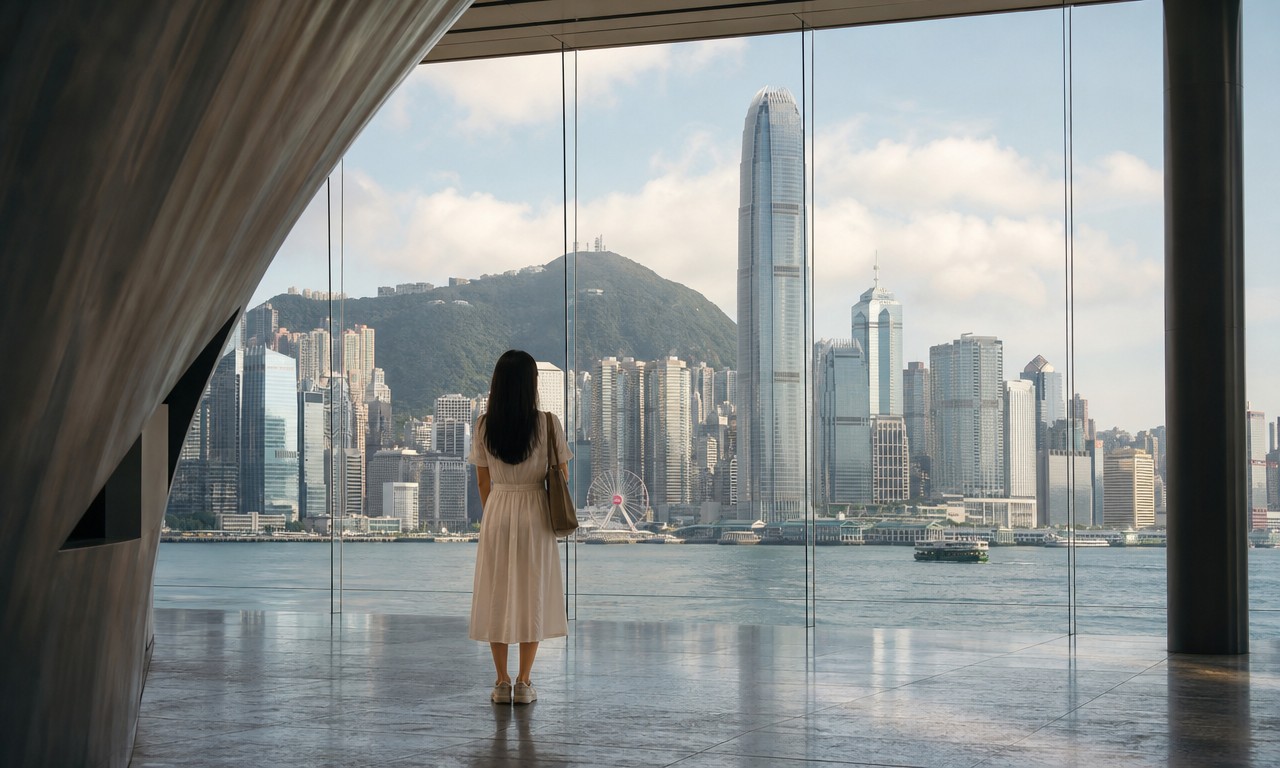
Whenever someone asks, "Is Hong Kong's cultural and artistic scene worth making a special trip for?", I don't rush to say yes or no. This is because behind that question lie more specific concerns: will I miss something? Will I not understand it? Will I find the major museums on the mainland more enjoyable? This article compiles seven questions readers have repeatedly asked me over the past year, answering them one by one, and offering judgments that can be directly followed.
Question 1: Is Hong Kong's culture and arts really worth making a special trip to see?
It's worthwhile, but it depends on your type of traveler. If you're the type of tourist who "visits at least one or two galleries when visiting a city," Hong Kong's galleries won't disappoint, but you don't need to make a separate trip just for an exhibition. If you're the type who will book a flight specifically for a special exhibition, Hong Kong's current standards are sufficient for a two- to three-day thematic trip, especially in the areas of modern and contemporary art, architecture and design, and film and popular culture. Hong Kong's advantage isn't in the sheer volume of its collections, but in its "global connectivity"—many international touring exhibitions, Asian premieres, and collector-specific events are arranged more flexibly and promptly than those in mainland China. Plus, the key venues are close together, and the city's transportation is efficient, making the exhibition experience very efficient. The downside is that top-tier special exhibitions often have limited run times; if you miss one, it's the next one. Therefore, checking the current exhibition information before your trip is crucial.
Question 2: If you only have one day, which museums are "must-sees" rather than "something to see on the way"?
I'll prioritize the "M+ Museum" and the "Hong Kong Museum of Art" as the framework for my day trip, and consider the "Hong Kong Palace Museum" if time allows. The reasoning behind this is as follows: M+ represents Hong Kong's strength in contemporary visual culture, with collections spanning design, architecture, video, and visual arts. Its curatorial perspective differs significantly from most mainland art museums, offering a more comprehensive understanding of "what constitutes contemporary art." The Hong Kong Museum of Art fills in the gaps in local art history, particularly excelling in sections on the Lingnan School of painting, export paintings, and urban landscape changes. Its moderate size allows for a complete visit in two to three hours. The Hong Kong Palace Museum is undoubtedly excellent, but its focus on the Palace Museum's collection makes it more familiar to most mainland readers, making it suitable as a supplement to M+ rather than a replacement for the first two. All three museums are easily accessible by walking or short drive, making the West Kowloon Cultural District ideal for a day trip.
Question 3: If I take an elementary school student to see this, will they not understand the whole thing?
When visiting museums, it's important to divide the space into sections. In M+, the design, architecture, and video exhibits are often the easiest for children to understand; these are visually direct and don't require extensive background knowledge. At the Hong Kong Museum of Art, the oil paintings and urban landscape exhibits depicting old Hong Kong often linger longer than the abstract contemporary works. The real concern lies with certain contemporary art installations and video works, as their content may touch on adult themes. Parents should check the signage at the entrance beforehand. If you're bringing children, limit yourself to a maximum of two museums per day, making sure to allow for outdoor breaks in between. The waterfront promenade in the West Kowloon Cultural District and the viewing platform outside the Hong Kong Museum of Art are excellent places to catch your breath. It's not recommended to cram three major museums into one day with children; the intensity would tire even adults, and children will only remember the leg pain.
Question 4: How should the itinerary be arranged reasonably? What is the difference between two days and three days?
A one-day itinerary is a "check-off" style of exhibition viewing, focusing on M+ and the Hong Kong Museum of Art, ending with a performance or art film in West Kowloon. A two-day itinerary is a "rhythmic" approach to exhibitions, concentrating on the West Kowloon Cultural District on the first day, and moving to high-end galleries in Tai Kwun and Pedder Building, as well as the Hollywood Road area on the second day, juxtaposing contemporary art with old neighborhoods to experience Hong Kong's unique atmosphere of "art embedded in the old city." A three-day itinerary is a "moderately in-depth" approach, which can include a full visit to the Hong Kong Palace Museum, in-depth exhibition viewing sessions at M+, and a cultural cluster in the suburbs, such as artist studios on Lamma Island or Peng Chau, although the latter requires checking opening hours in advance. Itineraries of more than three days are usually arranged to coincide with film screenings, performance schedules, or auction seasons, and are not very meaningful for general tourists.
Question 5: What days are they closed? Is there a big difference between going in the afternoon and going in the morning?
This is a very practical lesson. Museum + Hong Kong (M+) is closed on Mondays, but this may be adjusted on holidays or for specific exhibitions; the Hong Kong Museum of Art is closed on Thursdays; and the Hong Kong Palace Museum is closed on Tuesdays. The closing days of the three museums are staggered, so don't assume "closed on Mondays" is a uniform rule across Hong Kong. The main differences between morning and afternoon are lighting and visitor numbers. Some exhibition areas in M+ have better natural lighting in the afternoon, but weekend afternoons are also the busiest. Some waterfront galleries at the Hong Kong Museum of Art offer a fantastic visual experience at sunset, especially suitable for taking photos. My advice is: try to enter popular special exhibitions within an hour of opening, as visitor numbers increase after 2 or 3 pm, and then head to the accompanying spaces or shops after 4 or 5 pm.
Question 6: What are the core differences between exhibitions in Hong Kong and those in mainland China?
It's not about size or quantity, but rather about greater flexibility in "curatorial themes" and "private participation." Hong Kong exhibitions tend to explore themes like urban identity, immigrant experiences, popular culture, and visual mechanisms. The extensive participation of private galleries and small-to-medium-sized art spaces creates a strong sense of system within the art ecosystem. While large mainland museums excel at grand narratives and large-scale exhibitions, Hong Kong's strength lies in density and pace. After finishing one exhibition, you might casually stumble upon a completely different experimental exhibition taking place just a few hundred meters away. If you're accustomed to the spacious galleries of large museums, you might find some floors in Hong Kong somewhat cramped. However, after visiting three or four museums consecutively, you'll discover a "light and precise" viewing rhythm—its most easily underestimated characteristic.
Question 7: What can I eat nearby after seeing the exhibition? Are there any affordable options?
Yes, and you don't have to go far. The West Kowloon Cultural District mainly offers light meals and casual dining at mid-range prices. You can easily grab some pasta or a Hong Kong-style light meal, but the selection isn't huge. The Tsim Sha Tsui area is easily walkable from the Hong Kong Museum of Art. If you want authentic local tea restaurants or roast meat rice, head towards Carnarvon Road; there are many established shops. After visiting the M+ exhibition, if you don't want to eat in the Cultural District, take the train one stop to Jordan or Tsim Sha Tsui. The options will be much wider, with plenty of choices ranging from tens to hundreds of dollars per person. Crucially, the food is more authentic once you leave the tourist area. After visiting the Grand Galleries and Museums in Central, there are also many local eateries in the nearby markets and Ladder Street area. You can still find what you want to eat after the evening shows, so there's no need to worry beforehand.