
A Culinary Journey Through Hefei's Markets: Hidden Gems Locals Repeatedly Visit from Siwan to Shuanggang
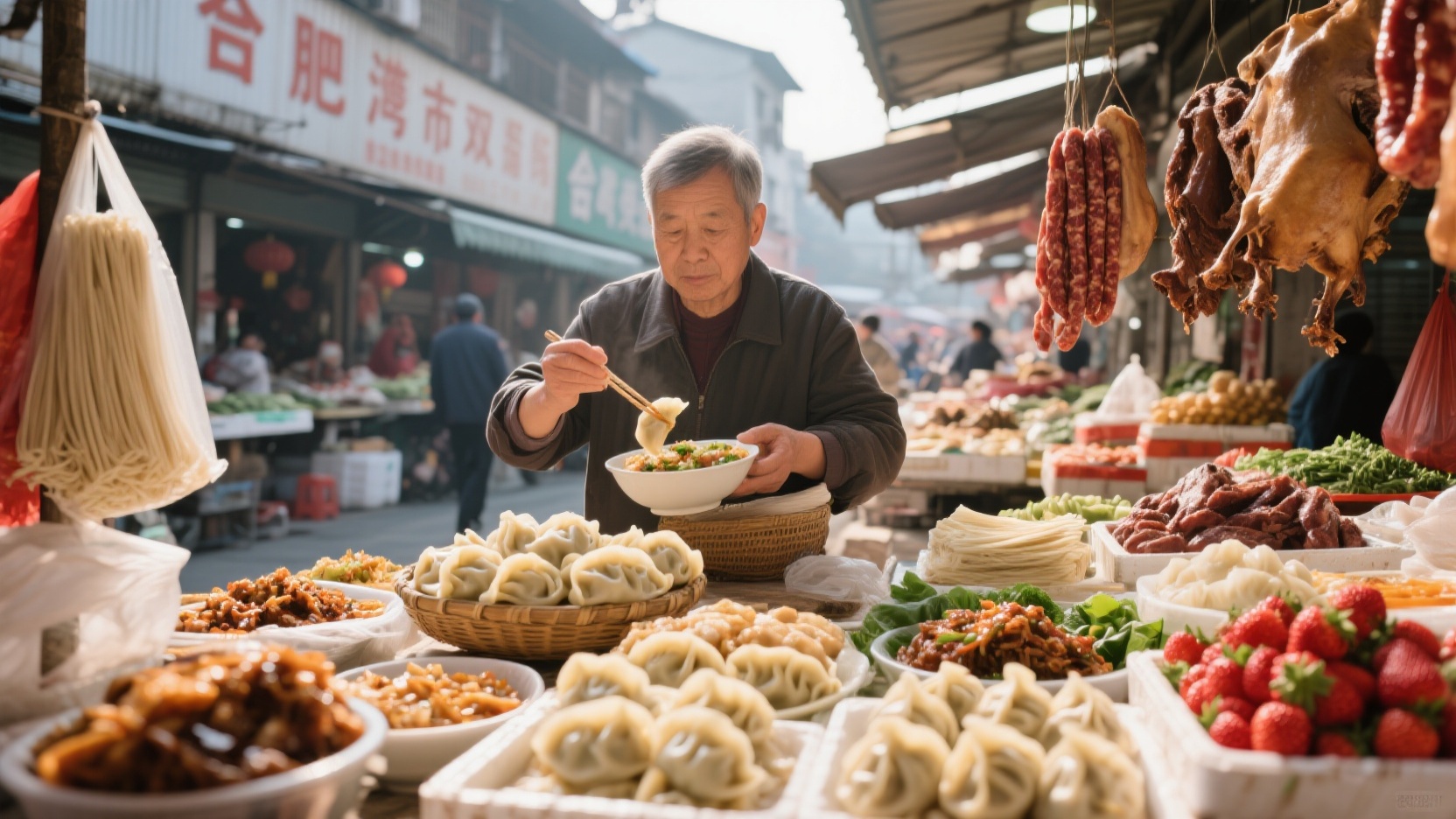
In the early mornings of Hefei's old city, the first place to awaken is often the Gongchen Street Market. This open-air market, known locally as "Siwan Market," has stalls lining both sides of the narrow street, where the aromas of cooked food, cured meats, and sweet fruits mingle together, capturing the essence of Hefei's daily cuisine more vividly than any other food street. If you want to find all the hidden gems for a Hefei family's dining table in one go, you're unlikely to miss out on anything from Siwan to Shuanggang Market.
Sanhe Rice Dumplings: Hardcore Carbs from Breakfast Stalls
The rice dumpling stalls at Caishikou usually set up shop early in the morning. They scald and knead rice flour into dough, fill it with dried shrimp from Chaohu Lake, dried tofu, and a little minced meat, shape it into a crescent shape, and then deep-fry it until the outer shell bubbles. When choosing, look for a golden-white skin and whether the edges have softened. Freshly fried rice dumplings should be crispy on the outside and soft on the inside, with a distinct fresh shrimp flavor in the filling. They shouldn't be kept for long; it's best to buy and eat them immediately, and they taste even better with a bowl of soy milk or spicy soup.
Handmade egg dumplings: the semi-finished main ingredient in soups and hot pots
Several stalls at Shuanggang Market make egg dumplings on-site. They spread the egg skin on a coal stove using a small iron spoon, fill it with pork filling while the egg is still slightly runny, and then fold it in half and press the edges. When choosing handmade egg dumplings, look for an even color of the egg skin and a tight seal. Egg skins that don't crack after refrigeration are more suitable for stewing. In Hefei households, they are often added to pork rib soup, chicken soup, or winter hot pots, where they absorb the broth and become even more popular than the meat filling itself.
Dried noodle dumplings and glutinous rice dumplings
These two dishes are traditional flavors for Hefei residents during the Spring Festival and banquets. The handmade noodle dumplings are made by mixing cooked handmade noodles with minced meat, ginger, and sweet potato starch, then shaping them into balls and deep-frying them until crispy on the outside and soft on the inside. The glutinous rice dumplings come in both sweet and savory varieties; the savory ones are often mixed with diced cured meat and chopped scallions. When buying ready-made dumplings, choose those with a dry surface and no oil seepage. You can refry them at home or reheat them in a steamer; steaming makes them even softer and more glutinous than freshly made dumplings. If not fried on the same day, it is recommended to refrigerate them and consume them within two days.
Wushan Goose and Braised Duck: A Reliable Choice for Cooked Food Stalls
Hidden deep within the market are often stalls selling braised dishes, such as Wushan goose, braised duck, and braised pork hock. For Wushan goose, choose pieces with firm meat, light brown skin that isn't sticky, and a fragrant aroma without any sourness. Ask the vendor to keep the gizzard and liver when chopping the goose; you can eat it cold at home, or place the goose meat on top of hot rice and simmer for half a minute to soften the fat and enhance the flavor. For braised duck, choose pieces with thick leg meat and thin subcutaneous fat; cut in half for a side dish at dinner. The braising liquid can be bagged separately for use with noodles later.
Salted duck, sausage and scallion pancake
In Hefei's winter markets, the cured meat section is the most recognizable, with rows of salted duck, sausages, and crispy fried pork hanging up. When choosing salted duck, gently press the breast; the meat should be firm and elastic, and the skin should be free of slime. For sausages, select those with intact casings and a fat-to-lean ratio of about 3:7. After buying cured meats, don't steam them in large pieces immediately. First, wash the surface with warm water, then slice them thinly and steam them with tofu skin and bamboo shoots. The saltiness will permeate the side dishes, making them more flavorful than eating them alone. Crispy fried pork is best stewed with spring bamboo shoots; no extra salt is needed.
Pickled cucumbers, pickled mustard greens and fermented bean curd
Pickled vegetable stalls are often overlooked by tourists, but they are a staple for locals when eating porridge or noodles. Choose pickled cucumbers with wrinkled skin, a deep, not black, sauce, and a crisp texture when bitten. Pickled mustard greens come in whole or chopped varieties, suitable for stir-frying with shredded meat or braised tofu. For fermented tofu, it's recommended to buy loose red fermented tofu; place a piece in a small dish, drizzle with a few drops of sesame oil, and serve with plain porridge or steamed buns. If buying in bulk, pickled vegetables should be refrigerated and the sauce should completely cover them to prevent mold.
Dried silverfish and white shrimp from Chaohu Lake
Dried silverfish and dried shrimp from Chaohu Lake, sold at seafood stalls, are representative of small-sized, flavorful products in Hefei's markets. Choose silverfish that are pale yellow, intact, and free of fragments. Soak them in warm water for five minutes at home, then steam them with egg mixture to make a silverfish custard, or stir-fry them with chives. Dried shrimp can be lightly dried over low heat, ground into powder, and used as a substitute for MSG to enhance the flavor of soups. Both types of dried goods should be sealed and frozen for storage to prevent them from becoming damp and spoiling.
Changfeng strawberries and local seasonal fruits
During the transition from winter to spring, Changfeng strawberries occupy the most prominent positions at fruit stalls. When choosing strawberries, don't just look for the largest ones; medium-sized ones with bright green stems and a strong aroma are usually sweeter. After buying them, don't remove the stems or wash them beforehand. Wash only what you plan to eat to avoid the skin breaking and the fruit turning sour. In summer and autumn, you can also look for local fruits such as Dawei grapes and Chaohu pears. Fruit stalls in farmers' markets have a faster turnover, and the ripeness is often more consistent than in supermarkets.
Visiting the local market is the best way to experience a city.
In Hefei, you don't need to queue for long-established restaurants or follow travel guides to find trendy eateries. In the farmers' markets of Gongchen Street and Shuanggang, vendors make egg dumplings, chop braised geese, and dry salted goods day after day—these repetitive actions reveal the most unpretentious local flavor. Buy a Wushan goose, half a pound of pickled mustard greens, and a box of Changfeng strawberries; a simple meal at home makes a typical Hefei home-cooked meal. The noise and crowds of the markets are precisely evidence of a city's unpackaged lifestyle.