
Harbin Accommodation Avoidance Guide | Local Testimonials: Avoid 3 Popular Spots, These 4 Residential Areas Are Reliable
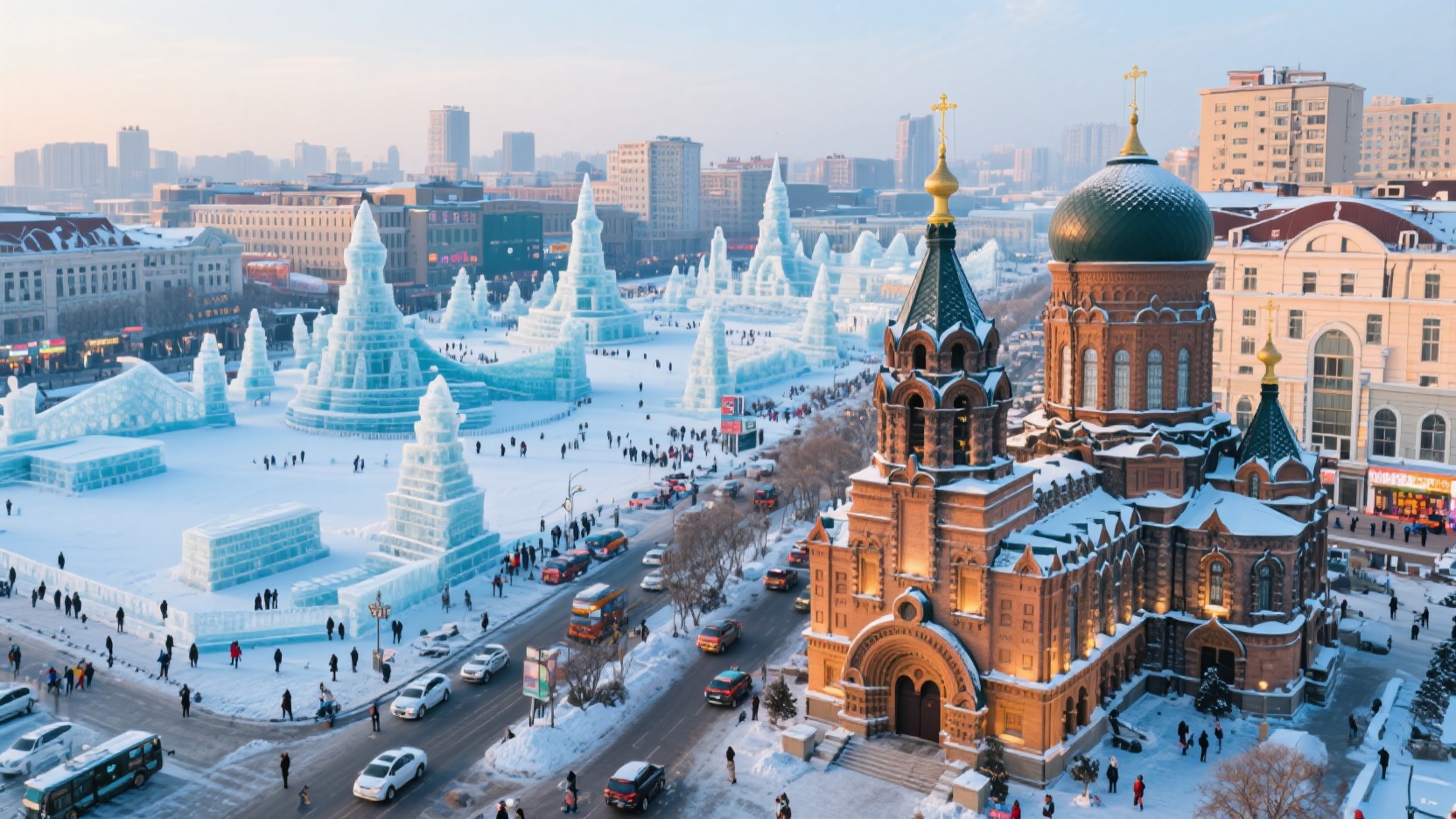
Staying on Central Street in Harbin is like paying for a river-view room but ending up in a giant outdoor karaoke room. Whenever out-of-town friends ask me where I'm staying, I always ask them in return: Are you here to sleep, or just to take a couple of photos and leave? If you really want a good night's sleep, you can skip those trendy accommodation areas in the travel guides.
When locals choose accommodation, they never prioritize proximity to tourist attractions. Instead, they consider factors like whether they can sleep peacefully at night, how easy it is to get a taxi, and whether there are decent places to eat nearby. Below, we'll first expose three common pitfalls that are frequently mentioned in travel guides but are avoided by locals, and then provide four truly suitable local neighborhoods for accommodation.
Both sides of the main street of Central Avenue: not for convenience, but for massive noise pollution.
Travel guides often say, "Stay on Central Street, and you'll be right next to the Breadstone Road." But locals just shake their heads at that. Many guesthouses on both sides of the main street are converted from old buildings. They look charming, but the soundproofing is practically nonexistent. You can still hear suitcases and tourists shouting on the street at one or two in the morning.
Even worse is the transportation. Central Avenue is a pedestrian street, so vehicles can't get in. When you hail a taxi, the GPS often drifts to a side street. In winter, it's common to drag your luggage for ten minutes or more on icy roads. At night, there are many bars and barbecue stalls along the river, and lots of drunken noise, so light sleepers can't get a full night's sleep.
Don't be fooled by the claim that it's "walking distance from St. Sophia Cathedral." To get to the Ice and Snow World and Sun Island from here, you have to cross the river, and during peak season, you can get stuck in traffic on the highway bridge for at least half an hour. Parking is even worse; many guesthouses don't provide parking spaces, so if you're driving, it's a matter of luck.
The area around the Ice and Snow World: Close to snow, far from daily life
Many travel guides recommend staying near the Ice and Snow World, arguing that "you can go straight back to your hotel after seeing the ice lanterns at night." However, locals in Harbin wouldn't recommend this area for everyday accommodation because, except for the two winter months, this large area is basically dark and lacks decent amenities.
There are very few dining options nearby; they are either expensive fast food options in tourist areas or require taking a taxi to the Songbei Shimao area. Non-driving tourists often have difficulty hailing a taxi at night, and waiting on the roadside is cold, dark, and unsafe. While the subway goes nearby, there is often a stretch of icy road with poor lighting from the station to the hotel.
A more practical problem is its distance from the city center. You might think it's close to the Ice and Snow World, but if you want to visit Central Street, Laodaowai, or the museum during the day, the commute is at least forty minutes each way, taking up a whole day. It's only suitable for people whose sole destination is the Ice and Snow World, not for tourists who want to explore the entire city of Harbin.
Laodaowai Chinese Baroque B&B: Photogenic during the day, guilty at night.
"Stay in Laodaowai and experience the old Harbin" is a common phrase in travel guides. But locals know that many areas around the Zhonghua Baroque Street have dim streetlights at night, shops close early, and after nine o'clock the streets are so quiet you can hear your own footsteps, a completely different scene from the daytime.
Some guesthouses are located in old courtyards with cluttered hallways and incomplete security cameras, making it unsettling to return late at night. Taxi drivers are sometimes reluctant to enter narrow alleys, and GPS location is often inaccurate. While the location isn't particularly close to Central Street or Harbin Railway Station, walking there at night feels especially long, particularly in winter when the roads are slippery, making for a poor walking experience.
If you're a photography enthusiast, it's fine to come and take pictures of the architecture during the day, but staying here is really unnecessary. Single women or tourists with children, don't be fooled by the retro filters. Harbin's old buildings are worth seeing; you don't necessarily have to sleep inside them.
Aijian Business District: A local middle-class residential area with reliable food and beverage options.
Suitable for: First-time visitors to Harbin, working professionals, couples, or small families who want convenient transportation but don't want to stay in tourist areas. Aijian is located in the Shanghai Street and Friendship Road area, about a ten-minute taxi ride from Central Avenue, and close to the highway bridge across the river to the Ice and Snow World, avoiding repeated detours through traffic jams.
There are plenty of restaurants nearby, ranging from authentic Northeastern cuisine to cafes and casual dining options. Locals frequent these places regularly; they're not just catering to tourists. Returning to the hotel late at night is safe thanks to the streetlights of the surrounding area, which isn't a dark alley.
Parking is convenient, with many surrounding apartments and hotels offering underground parking, making it driver-friendly. The area feels more like a typical Harbin neighborhood, avoiding the awkward situation of being surrounded by tourists right outside the hotel.
Qunli New District: The top choice for family road trips with kids – wide roads and a relaxed mindset.
Suitable for: Families of three who want to take their children skiing, to the Ice and Snow World, or on a road trip in winter. Qunli is a highly regarded residential area in Harbin, known for its wide streets, new buildings, and well-organized parking, unlike the cramped feeling of the old city.
It takes about 20 minutes by taxi to Central Street, and about half an hour to Jiangbei Ice and Snow World after crossing Yangmingtan Bridge. The road conditions are better than in the old city. There are decent restaurants in Wangfujing and Yuanda nearby, so you won't have to worry about food in the evening. Parking at the shopping malls is also convenient.
Returning to the hotel late at night is mostly on main roads with good street lighting, making you feel safe. The downside is that it's a bit far to Laodaowai, but if your priority is visiting Jiangbei attractions and comfort, Qunli is a better choice than Central Street.
Harbin West Xuefu Road area: You can stay right after landing at the high-speed rail station, and there are so many late-night snacks that it's hard to choose.
Suitable for: Young people or students who take the high-speed train to Harbin West Station, have a mid-range budget, and enjoy lively night markets. The Harbin West commercial district offers a wide selection of hotels and apartments. It's about a 20-minute subway ride to Central Street, and taxis are convenient, making travel costs manageable.
There are many universities nearby, so the food options are incredibly diverse, ranging from inexpensive snacks to restaurants costing tens of dollars per person. Some restaurants are even open until 11 PM. The streets back to the hotel were quite crowded late at night, making it safer than some tourist areas.
Parking around the mall isn't difficult, but it's not recommended to park haphazardly in the narrow alleys. Overall, this place offers great value for money, is more comfortable than staying in older buildings in the old town, and has a more vibrant, local student atmosphere.
Convention and Exhibition Center Business District: Avoiding the crowds of tourists, it offers both a business and lifestyle experience.
Suitable for: Tourists coming to Harbin to attend concerts or exhibitions, or those seeking a quieter experience away from the crowds. There are many hotels of varying price ranges along Hongqi Street and Changjiang Road. A taxi ride to Central Street takes about 20 to 30 minutes, and it's not far to Laodaowai District.
The surrounding area has local restaurants and large supermarkets frequented by locals, so dining isn't overpriced like in tourist areas. The main roads are wide and well-lit at night, making it feel safe to return to the hotel. Parking is also better than in the old town of Daoli, with some hotels having their own parking lots.
There's none of that artificial, tourist-oriented feel here; staying here feels more like living in Harbin. If you want to experience the daily life of a local without sacrificing convenience, this area is perfect.
In closing, don't ask the locals if I didn't tell you:
1. In Harbin, it gets dark early in winter, so avoid choosing accommodations on streets with only streetlights and no shops. Feeling safe when returning to your hotel at night is more important than saving a few dozen yuan.
Second, it's fine to stroll around Central Street during the day. For accommodation, choose a residential area that is one or two subway stops away or a ten-minute drive away, which will be quieter and more convenient.
3. It is extremely difficult to get a taxi after the Ice and Snow World ends. If you are staying far away, book a car in advance or choose accommodation with shuttle service. Don't believe the claim that "there will be a car right outside the door".
Fourth, when traveling with parents and children, try to avoid choosing guesthouses in renovated old town areas, as sound insulation and stairs are major drawbacks. Apartments with elevators are a safer bet.
5. When driving in winter, check if the hotel provides underground parking spaces. Parking on the roadside can be troublesome due to snow removal and low temperatures, and parking fees are more troublesome than you might imagine.