
What is it like to spend a night on Beishan Street?
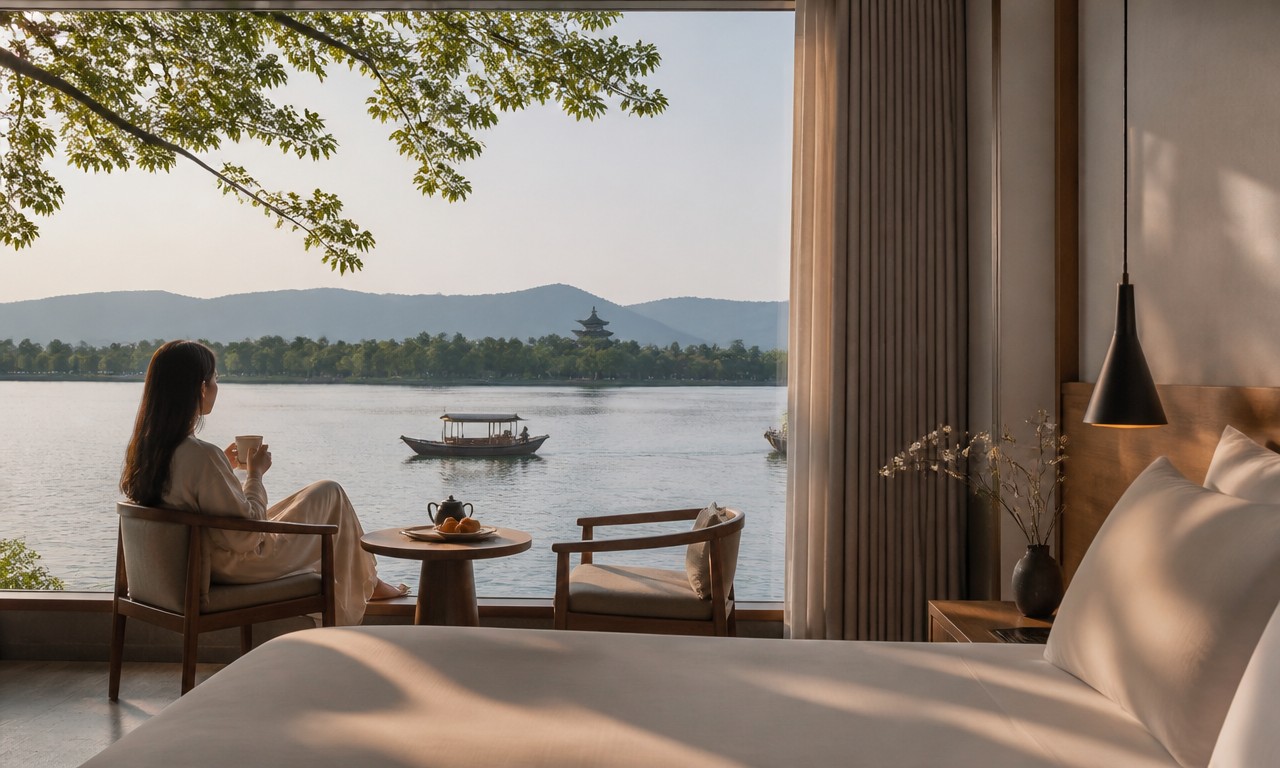
Many readers ask before their trip: Is it worth staying near West Lake in Hangzhou? This question deserves a serious answer because "where you stay" directly determines whether you see a West Lake teeming with people or one that only truly shines in the early morning and late at night. The Beishan Street area is one of the few places in Hangzhou that can simultaneously offer both "living amidst scenery" and "living amidst life," but the experience varies greatly depending on the time of day. Staying at the right pace is key to truly appreciating the experience. This article recreates a genuine Beishan Street accommodation experience, following a 24-hour timeline from check-in to check-out.
Arrive at the hotel at 2:00 PM. Don't rush out.
I arrived around 2 PM; the sun was blazing, and the lakeside was packed with tour groups. This time of day is actually the least ideal for sightseeing at West Lake, but it's perfect for doing one thing: figuring out the "location advantage" of the hotel. Most hotels on Beishan Street stretch along the lakeshore, and the buildings themselves are converted from old Republican-era structures. The angles from the windows are often more interesting than those from the lobby. After checking in, I spent about twenty minutes walking between the room and the public terrace to confirm the walking distances from the hotel to the Broken Bridge and the north entrance of the Su Causeway.
The basis for this judgment is simple: the hotels on Beishan Street are "crowded along a crescent-shaped lake shoreline," and the walking experience between different hotels in the same area can vary even more than between different areas. Some hotels have the lakeside boardwalk right outside their doors, while others require crossing a narrow road with both pedestrians and vehicles. Knowing your location and the nearest lakeside entrance beforehand will prevent you from getting lost later on.
16:00 Walk from the hotel to the Broken Bridge, taking the "reverse route".
Around 4 PM, the light softens, and tourists begin to gather on Bai Causeway. At this time, you should walk from your hotel towards the Broken Bridge, but avoid the main bridge itself. Instead, wander around to the alleys and Republican-era buildings on the inner side of Beishan Street. At the foot of Baoshi Mountain, along Geling Road and near the former site of Manao Temple, there's a quiet path parallel to the lakeshore within a ten-minute walk. The core logic of this route is to "go against the flow of people": while others descend from the Broken Bridge towards Yue Temple, you slowly approach the Broken Bridge from your hotel, returning to the lakeside when the light is most comfortable.
Why this time? Because the old white-walled buildings on Beishan Street are at their most beautiful in the shade of the mountains after 4:30 pm, with the shadows of the trees slanting down and the walls a warm, grayish-yellow hue. At this time, no filter is needed for photos; every snapshot captures the atmosphere of "living in Hangzhou." After about forty minutes of walking, you'll reach the vicinity of the Broken Bridge, where you can take a look at the crowds, then turn back and make a comparison in your mind: the east side of the lake is bustling, while the north side is tranquil.
18:00 Dinner will be at a restaurant within walking distance.
There aren't many dining options on Beishan Street in the evening, which is actually a good thing. Most guides recommend going to the Hubin commercial area or Hefang Street for food, but the commute from Beishan Street to Hubin for a meal will actually pull you out of your "living in a scenic environment" mindset. The right approach is to choose small restaurants within walking distance. There are several restaurants serving local home-style dishes on the western section of Beishan Street near Yue Temple, with prices ranging from tens to hundreds of yuan per person, and the food is generally good.
The rationale is that the accommodation experience on Beishan Street is all about "trading inconvenient transportation for tranquility and scenic views." If you have to take a bus out for dinner, then you've lost the point of staying in this area. The walk back to the hotel after dinner shouldn't take more than 15 minutes, so you can still stand by the lake for a while after dark. West Lake changes its appearance in the evening: it's a tourist area during the day and a walking area at night, with the relationship between the water level and the lights completely different.
At 8:00 PM, Beishan Street belongs only to those who have settled there.
After 8 PM, the crowds on Beishan Street have mostly dispersed. The best thing to do at this time is to stroll along the lakeside in front of the hotel, walk west to Xiling Bridge, and then turn back. At this hour, Beishan Street is almost silent, streetlights filter through the plane tree leaves, and the city lights across the lake seem like another world. The core value of staying in this area lies in this one hour of tranquility.
However, please note that the lakeside boardwalk on Beishan Street is not fully illuminated at night; some sections are dimly lit. You can turn back near Xiling Bridge; there's no need to walk further into Su Causeway. On the way back, you'll pass some old-fashioned gates and walls. They don't seem particularly special during the day, but at night they reveal the "depth of old Hangzhou." This experience is not available to those who don't stay overnight.
After returning to my room at 10:00 PM, I left the window slightly ajar.
Many readers overlook the subtle nuances of simply "staying overnight." The old buildings on Beishan Street emit faint sounds of wood and brickwork late at night, and the lake breeze, blowing from the direction of Baoshi Mountain towards the lake, makes the air noticeably more humid than in the city center. It's recommended to leave a small crack in the window before bed, turn off the air conditioning, and listen to the chirping of insects and the occasional passing electric scooter. The nights in this area are not noisy, but they are not deathly silent either; rather, they possess a "breathing quality on the edge of the city."
If you're staying in a room facing the street, you might hear occasional car noises, but traffic on Beishan Street is very light at night, so it shouldn't affect your sleep. The real problem is in the early morning: birds by the lake wake up early, so if you're sensitive to noise, you can ask the hotel in advance if they have any rooms that don't face the lake. Many people don't sleep well on Beishan Street not because it's noisy, but because it's "too quiet, and you become aware of your own breathing."
The West Lake at 6:00 AM is the only criterion for judging whether the evening was worthwhile.
I left home at six, didn't even bother washing my face, and ran straight to the lake. Beishan Street in the early morning is probably the place in all of Hangzhou that needs no words to describe. Mist hangs over the lake, the city on the opposite shore hasn't fully awakened yet, and the lotus leaves nearby and the distant boats seem like two separate time systems. At this time, you might encounter fewer than ten tourists on your entire walk from the hotel to the Broken Bridge. The greatest reward of staying on Beishan Street is these forty minutes of morning light.
Why can't others experience this? Because the morning view of West Lake is only at its most complete within an hour after sunrise; afterwards, the mist and low-angle light on the lake are disrupted. People staying in other areas need to get up early and travel to reach the lake, while those staying on Beishan Street can simply step out of their doors and see the lake. This difference in location is the most valuable part of the accommodation fee.
Before checking out at 9:00, take a trip to the mountainside of Geling.
Before checking out at 9:00 AM, if your luggage isn't too heavy, you can spend 20 minutes hiking up the small path near the hotel to the halfway point of Geling Mountain. The view from here is completely different from the lakeside, showing how Beishan Street squeezes out a long, thin arc between Baoshi Mountain and West Lake. You'll find that your accommodation looks like "a thin sheet stuck to the lakeshore" from above. This perspective helps you understand the rarity of Beishan Street: it's a unique accommodation area not because there are many hotels, but because "there's only room for this one street between the lake and the mountain."
When checking out, don't rush to call a taxi; stand at the hotel entrance and take a look back. Beishan Street has two faces, one during the day and one at night, and you've only experienced one. If you feel like you "didn't do much" after staying overnight, then you're on the right track. Staying on Beishan Street isn't about rushing to see the sights, but about incorporating a segment of West Lake into your own timeline.