
7-Day Slow Travel in Haikou: A 7-Day, 6-Night In-Depth Slow Travel Guide for Families and Retirees - Daily Breakdown and Branch Itinerary
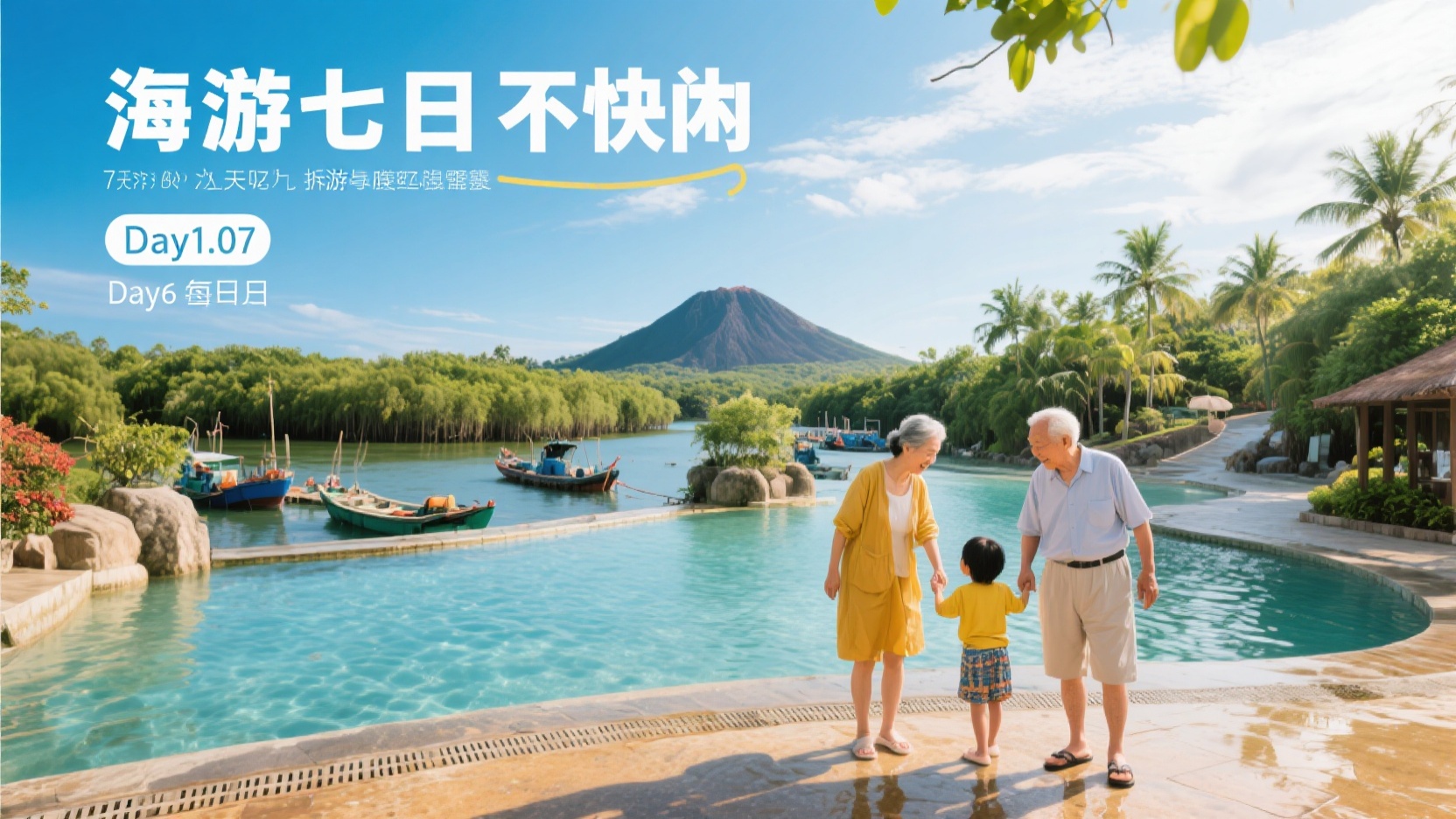
If you're planning to stay in Haikou for a week straight, your itinerary shouldn't be driven by the number of attractions you visit. The following 7-day, 6-night itinerary is based on "2-3 key locations per day," with two suburban branches on Day 3 and Day 4, which you can choose based on the season and your physical condition.
Day 1: Qilou Old Street and Haikou Clock Tower
Upon arrival, no long-distance travel is arranged. In the afternoon, starting from the Qilou Old Street, walk along Zhongshan Road, Shuixiangkou, and Boai Road, focusing on the arcade corridors, stucco sculptures, and old shop facades. Along the way, you can visit the Haikou Intangible Cultural Heritage Exhibition Hall to learn about Hainanese opera, coconut carving, and other traditions. In the evening, walk to the Haikou Clock Tower and Haidian Creek; the path is flat and gentle, suitable for an acclimatization day. For dinner, it is recommended to eat Qingbuliang (a sweet soup), spicy rice soup, or Hainan noodles around the Old Street area, avoiding fried and high-sugar foods.
Day 2: Wanlv Park—Haikou Bay—Yundong Library
In the morning, visit Wanlv Park. The park's paths are flat and well-shaded, making it suitable for strollers and wheelchairs. Have lunch in the Haikou Bay area. In the afternoon, walk along the Haikou Bay promenade towards the Century Bridge. You can stop to admire the exterior of the Yundong Library or make a reservation to enter. Around sunset is the best time to visit Haikou Bay, as the Century Bridge and fishing boats at sea are bathed in soft light, perfect for taking photos. The entire walk is approximately 3-4 kilometers, and you can exit at any time to reach the coastal road and catch a bus.
Day 3-Day 4: Choose one of the two suburban branches
Choose only one branch for Day 3 and Day 4; don't try to do too many. If your companions want to soak in hot springs or see volcanic landscapes, prioritize Route A; if they prefer wetlands, bird watching, and a leisurely stroll through the fishing port, prioritize Route B.
Branch A: Ancient Volcanic Villages and Hot Springs
Day 3: Crater – Rongtang Village or Sanqing Village – Mission Hills Area
In the morning, visit the Haikou section of the Leiqiong World Geopark. The main loop trail has a gentle slope, but the steps at the bottom of the crater are quite steep. Elderly people and children should only walk the loop trail if they are physically capable. In the afternoon, head to Rongtang Village or Sanqing Village in Shishan Town. The volcanic stone houses, stone-paved roads, and old trees at the village entrance create a tranquil volcanic settlement landscape. Walking within the village is gentle. Overnight in the Mission Hills area. Confirm the hot spring opening hours for the next day in advance.
Day 4: Mission Hills Volcanic Hot Springs - Relaxation and Stroll
In the morning, enjoy a soak in the hot springs, choosing a low-temperature pool and controlling the duration. Children and people with high blood pressure should not soak for extended periods. In the afternoon, take a walk within the Mission Hills area or return to the city to rest; no additional sightseeing is planned. If you still have energy, you can stroll along the outer street of the Movie Town, but no in-depth tours will be included.
Branch B: Mangrove Nature Reserve and Fishing Port
Day 3: Dongzhaigang Mangrove Forest - Yanfeng Town Boardwalk - Qukou Ferry
In the morning, we will visit the Dongzhai Port National Nature Reserve and walk along the mangrove science boardwalk, which is gentle and has no continuous steps. In the afternoon, we will go to Qukou Ferry in Yanfeng Town to see fishing boats, mudflats, and the Qiongzhou Strait. It is advisable to prepare a pair of washable sandals for children. If participating in beachcombing, please refer to the on-site safety instructions.
Day 4: Bird watching or shallow water experience — Return to the city
Early morning is the best time for birdwatching in the mangrove area. You can use binoculars to observe herons and shorebirds outside the reserve or near fishing villages. After the morning activities, return to Haikou city. Take a nap in the afternoon. If the weather is clear in the evening, you can go to Haikou Bay to catch a sunset, creating a half-day buffer.
Day 5: A leisurely stroll through the cultural heart of Fucheng
In the morning, visit the Five Officials Temple. The park is tree-lined with gentle paths, offering insights into the culture of exile and Hainan's history. Afterwards, walk or take a short drive to Qiongtan Blessed Land to see Qiongtan Pavilion and the old streets of Fucheng. In the afternoon, if it's hot or rainy, consider visiting the Hainan Provincial Museum instead; its indoor layout is suitable for the whole family. The Fucheng area has a high density of snacks; lunch should consist mainly of easily shareable local dishes such as noodle soup, beef brisket rice, or fermented rice with vinegar.
Day 6: West Coast Coastal Trail
The west coast is best enjoyed at a slower pace. In the morning, head to Xixiu Beach or Holiday Beach, where you can walk, jog, or rent bicycles with child seats along the coastal path. Rest near the viewing platform at midday, and in the afternoon, focus on either the outer harbor of the National Sailing Base or the seaside lawn. Avoid the midday sun; from 10:00 AM to 3:00 PM, stay in the shade or indoors.
Day 7: Market breakfast and return journey
On the last day, only one morning activity is planned: a stroll in People's Park or a visit to Dongmen Market to see local ingredients and dried goods. Families who enjoy morning tea can choose a traditional Haikou teahouse. After morning tea, return to the hotel to collect your luggage and allow time for airport or train station transportation. It is not advisable to schedule any attractions requiring entrance fees or requiring long walks on the return day.
Recommended gentle slope routes suitable for the elderly and children
Most of Haikou's core areas are flat, so three short routes are recommended: 1) Haikou Bay – Wanlv Park route, with almost no steps; 2) Qilou Old Street – Bell Tower – Haidianxi route, with a smooth surface but caution needed for electric vehicles; 3) Dongzhai Port Mangrove Boardwalk route, suitable for birdwatching and nature observation. The main loop of the volcanic crater is walkable, but the higher sections are not recommended for the elderly and young children.
List of frequently used local apps
For maps and public transportation, we recommend using Gaode Maps or Baidu Maps. For public transportation, you can use "Haikou Bus" or WeChat ride code. For taxis, use Didi Chuxing. For local life information, you can refer to Meituan or Dianping. For government services and real-time weather, use apps like "Yecheng Citizen Cloud" and "Hainan Meteorological". For intercity or airport transportation within the island, you can check tickets in advance through the official railway ticketing app and the official airline app.
Clothing suggestions for rainy and dry seasons
Haikou's dry season is generally from November to April of the following year, with relatively comfortable temperatures. However, there are occasional sea breezes in the mornings and evenings, so it is recommended to wear short sleeves with a light jacket. Prepare a windproof jacket for the elderly and children. The rainy season is from May to October, characterized by muggy weather and frequent showers. It is recommended to wear quick-drying clothing, non-slip sandals or mesh shoes, and to carry a lightweight raincoat and waterproof bag daily. During typhoon season, avoid coastal and mangrove areas, and focus on indoor-outdoor combined spots such as museums and the Wugong Temple.