
A Culinary Journey Through Haikou's Markets: 10 Must-Buy Items from the Markets Outside the East and West Gates
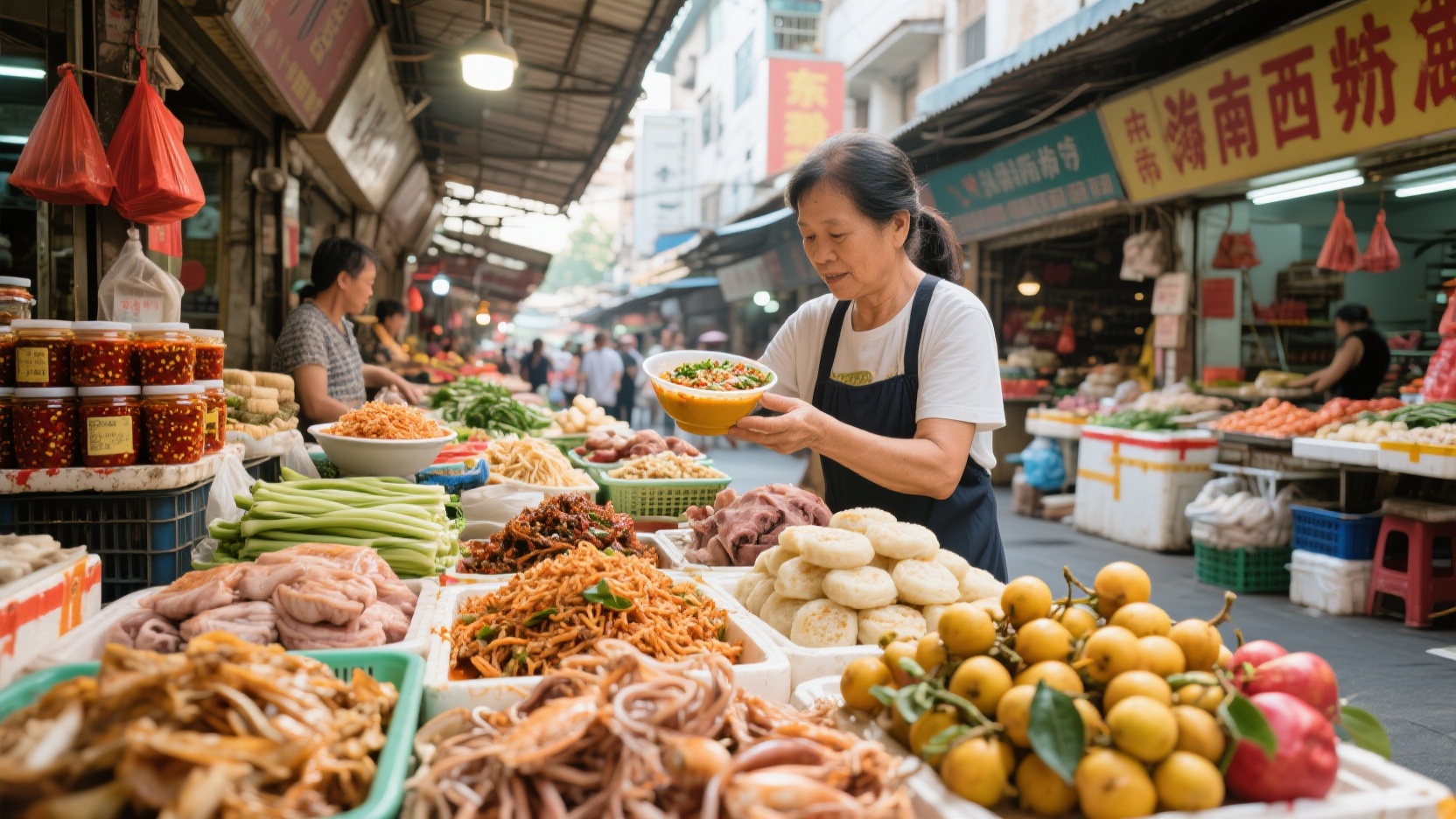
Haikou's old-school flavor isn't found in the trendy shops lining the streets under arcades, but rather in the rhythmic chopping sounds of ingredients at the Dongmen Market and Ximenwai Market. These two markets, located along Bo'ai Road in the old town area, are among Haikou's oldest markets. Starting at six in the morning, cooked food stalls, dried goods stands, and pickle racks line up, with locals carrying cloth bags as they stroll through, buying a complete meal of home-cooked meals. The following items are the "market flavors" that locals repeatedly repurchase from these two old markets.
Cooked food stall: Hainan pickled rice noodles and Lingao suckling pig
The cooked food section of Dongmen Market is filled with the aroma of gravy from morning till night. Hainan pickled rice noodles are the first test of a stall's skill: the thin rice noodles are cooked until soft yet chewy, topped with gravy, peanuts, pickled vegetables, bean sprouts, sesame powder, and finally a spoonful of garlic oil. When choosing, check if the ingredients are freshly cut and mixed; the pickled vegetables should be crisp, the peanuts should be crisp, and the gravy shouldn't be dark in color. As for how to eat it, don't leave it at home for too long; mix it well and eat immediately. If the stall offers yellow lantern chili sauce, adding a small amount can enhance the flavor, but it's extremely spicy; it's recommended to try half a spoonful first.
Lingao suckling pigs are usually sold in the market by weight, cut into pieces. They have a dark reddish-brown skin and a thin layer of fat. When choosing one, hold the back of your hand close to check if it's still warm; the skin should be firm and crisp, and the meat should be juicy. There are two ways to eat it: the local way in Lingao is to eat it plain, dipped in white sugar, which enhances the rich, fatty flavor; if it's cooled down after purchase, you can reheat it in a dry pan over low heat for two minutes to make the skin crisp again.
Handmade dessert: Job's tears cake
The handmade pastry stalls at Ximenwai Market are hidden away, yet there's always a queue. "Yiba" is the Hainanese name; the outer skin is made from glutinous rice flour and a small amount of regular rice flour, while the filling is usually coconut flakes, crushed peanuts, and brown sugar. When choosing, look for a soft but not sticky outer skin; when broken open, the coconut flakes should be moist and have coconut oil seeping out. Yiba is best enjoyed for breakfast or as an afternoon snack, especially with a pot of partridge tea to cut through the richness. Buy only three to five at a time, as the outer skin will harden overnight. Coconut rolls are often sold at the same stall, made in a similar way; if you see them being made fresh, you can also try them.
Pickled and preserved vegetables: fermented vinegar, pickled taro stems, and yellow lantern chili sauce
The fermented lees from the pickles section of Dongmen Market are a common broth for hot pot in Haikou households. It's made from the fermented lees left over from brewing, resulting in a sour flavor with a hint of rice aroma. When selecting it, check that the liquid is cloudy but without mold spots, and that it has a pleasant sour aroma rather than a pungent, rancid smell. To prepare it, add it to bone broth and bring it to a boil. First, add seaweed, shellfish, and pickled bamboo shoots, then add beef or fish slices. Alternatively, it can be used as a dipping sauce for steamed fish, replacing aged vinegar.
Pickled taro stems are often called "sour taro" in Hainan. They are dark yellow in color and have a crisp and tender texture. When choosing taro, select those with clear broth and intact stem sections; if the surface is sticky or the smell is too pungent, it means that the fermentation has been overdone. As for how to eat it, it is best stir-fried with dried anchovies and pork belly after being cut into sections, and it can also be used to supplement the sour taste of hot pot made with fermented rice wine.
Yellow lantern chili sauce is available in glass jars at almost every condiment stall. When choosing it, look for a bright orange-yellow color, a fine and smooth texture without any layering, and a pungent, spicy aroma without a raw oil taste. It's best used as a dipping sauce or to add spice to soup bases; it's not suitable for prolonged high-temperature stir-frying as it easily turns bitter. For first-timers, take a grain-sized amount and mix it into Hainan rice noodles or soup noodles.
Dried seafood: dried shrimp and dried squid
The dried goods section of Dongmen Market is the backbone of Haikou's kitchens. When choosing dried shrimp, select those that are uniform in size, have bright red shells, and a curved shape. When you grab a handful and release it, they should quickly disperse and not stick to your hands. As for cooking methods, soaked dried shrimp can be stir-fried with kale, steamed with eggs, or the soaking water can be added to soups to enhance flavor after settling.
Dried squid comes in two varieties: local small squid and imported large squid. Local small squid has thinner flesh and a more concentrated aroma. When selecting squid, it should smell of the sea and have a slight charcoal-grilled aroma. The white frost on the surface is salt precipitation, which is normal. As for how to eat it, it can be cut into thin strips and stir-fried with green peppers, or soaked until soft and then lightly grilled over charcoal, torn into strips, and dipped in soy sauce and wasabi—a common snack for Haikou locals to enjoy with drinks.
Seasonal fruits: wampee and wax apple
The advantage of fruit stalls in farmers' markets lies in their seasonality and fast turnover. When wampee is available in summer, choose fruits with a deep yellowish-brown peel, round berries, and a small stem attached. A slight rattling sound when you gently shake the bunch indicates ripeness. Wampee can be eaten with the peel on; the peel is slightly astringent with a sweet aftertaste, and the flesh is sweet and sour. It can also be boiled with salt and rock sugar, and cooled to make a refreshing summer drink.
Wax apples are available almost year-round in Hainan, but they are juiciest in summer. When choosing wax apples, look for an open navel, a glossy appearance, and a heavy feel; the darker the color, the sweeter they are. For eating, after washing, there's no need to peel them. Cut them into segments and sprinkle with a little plum powder or sour plum powder to enhance their crisp and sweet flavor. If you buy a milder-tasting apple, you can slice it and add it to a salad.
Exploring the local markets is the best way to experience a city. Haikou's East and West Gate markets may not be elaborate, but they pile up the aromas of Hainan rice noodles, the tangy fragrance of fermented vinegar, the spicy aroma of yellow lanterns, and the salty scent of dried seafood in their narrow alleyways. Spend the time it takes to eat morning tea here, and you can leave with your own authentic culinary memories of this island city, even if you take nothing at all.