
48-Hour Fuzhou Walk | A Two-Day, One-Night Weekend Flash Tour Connecting Ancient Houses, River Views, and the Vibrant Life of the Old Town
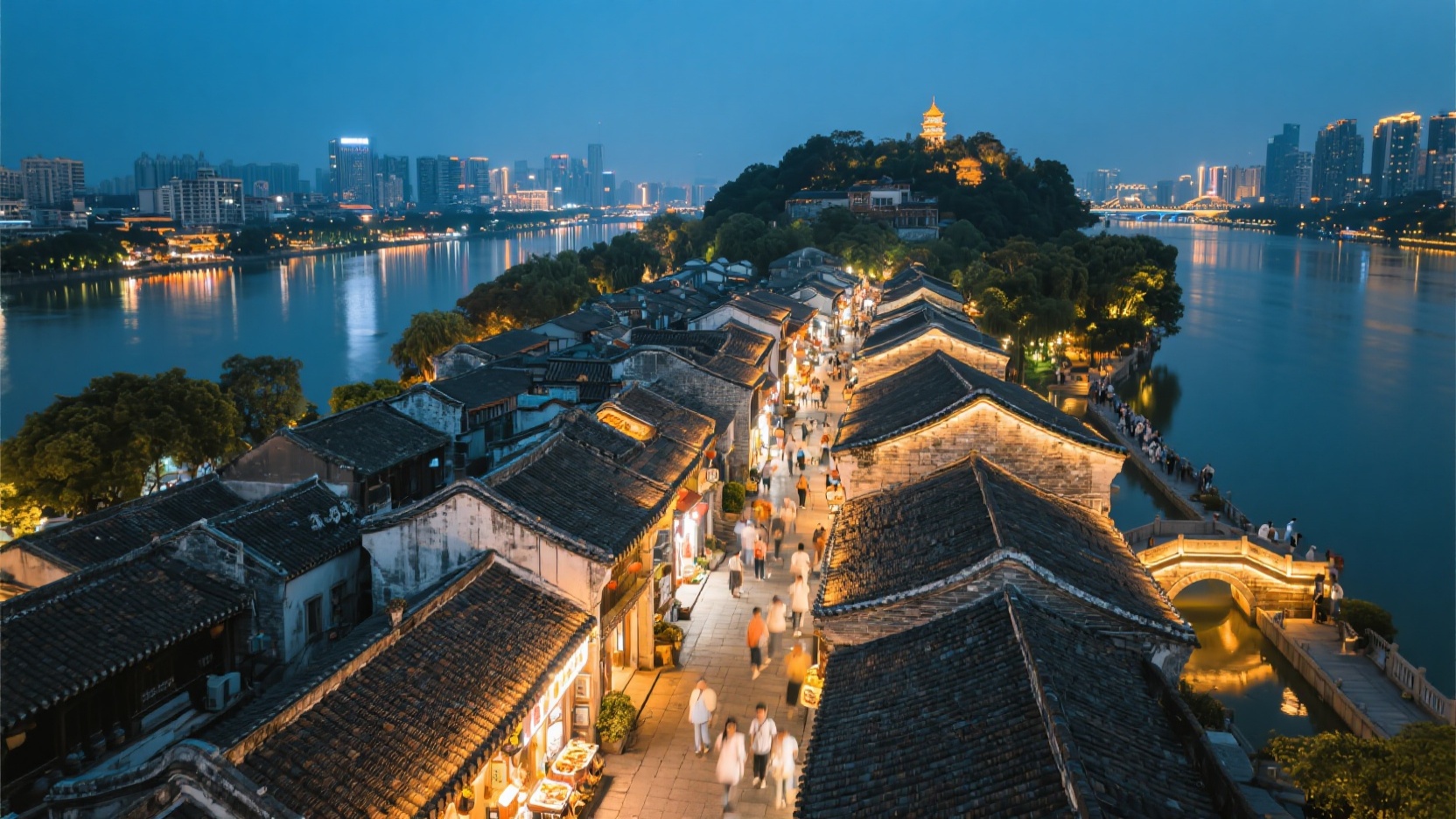
This two-day, one-night itinerary allows you to experience Fuzhou's ancient houses, river views, and old-town charm all in one 48 hours, making it ideal for young travelers who arrive Friday evening or Saturday morning and return Sunday evening. The entire journey is connected by subway, bus, and walking, avoiding detours and wasting time queuing.
Day 1: High-density sightseeing in the city center, connecting traditional houses, local delicacies, and night views.
After arriving at Fuzhou Station or Fuzhou South Station in the morning, take Metro Line 1 directly into the city. Your first stop should be Sanfang Qixiang (Three Lanes and Seven Alleys). It's recommended to enter from the main entrance on Nanhou Street, quickly browse the main street, and then turn into side alleys such as Langguan Alley, Ta Alley, and Huang Alley. The former residence of Lin Juemin and the waterside stage offer a glimpse into the life and architectural layout of Fuzhou's literati; about two hours is sufficient. The middle section of Nanhou Street has time-honored shops like Tongli Rouyan (meat dumplings) and Yonghe Fish Balls, which can be used for quick refreshments. However, the main street is highly commercialized, so there's no need to stop at every shop; the real highlights are hidden in the side alleys.
For lunch, we went to the adjacent Daming Food Street. The stalls here are densely packed, making it perfect for a "small but varied" approach: start with a bowl of fish ball soup with meat dumplings, then get a plate of guobianhu (a type of rice noodle soup) with fried dough sticks, and finish with peanut soup or taro paste. Oyster pancakes and guangbing (a type of flatbread) are great for takeout, perfect for eating on the go. Laohua (a type of offal soup) is also a Fuzhou specialty, with a clear and flavorful broth, ideal for tourists who enjoy offal. It's recommended to walk around the street before deciding, as many stalls are quite similar; choosing a stall with a queue of locals is a safer bet.
Afternoon: Visit West Lake Park and the Provincial Museum to digest food, then head to Minjiang Lake in the evening.
In the afternoon, walk or cycle from Sanfang Qixiang to West Lake Park, then follow the wooden boardwalk to the Fujian Provincial Museum. The museum is free to enter, but advance reservations are required. The exhibitions on ancient Fujian civilization and cross-strait relations are the main attractions, making it a good indoor spot for an afternoon snack. If you're not interested in the museum, you can simply walk along the West Lake Park's lakeside path, which takes about forty minutes to return.
Take the subway or bus to the Minjiang River Heart before dark. The area from Youth Square and Jiefang Bridge to Zhongzhou Island is the most concentrated section of Fuzhou's night view. It is recommended to arrive at Youth Square half an hour before sunset to secure a good spot and watch the lights of Zhongzhou Island illuminate, then walk along the river towards Taijiang Wharf. This section of the river offers expansive views, more flexible photo opportunities than a cruise ship, and importantly, it's free and doesn't take up much time.
Day 2: In-depth exploration of the old town, Yantai Mountain—Shangxiahang—Cangxia without backtracking.
The next morning, we went directly to the Yantaishan Historical and Cultural Area. It has a completely different atmosphere from Sanfang Qixiang, mainly featuring modern Western-style architecture and hillside streets. Entering from Cangqian Road, we walked along Aiguo Road and Lequn Road, focusing on the stone houses, church, Lequn Building, and the former consulates of various countries. The old stone houses and church exteriors in the Cangqian Jiuli area offer great photo opportunities. It's less crowded on weekend mornings, perfect for a leisurely stroll, interspersed with cafes and creative shops – a much better experience than going in the afternoon.
At noon, walk from Yantaishan across Jiefang Bridge to Shangxiahang. Shangxiahang was an old commercial wharf on the Minjiang River, and many guild halls and merchant buildings are still preserved on both sides of Santong Bridge and Xing'an Bridge. You can have lunch here, ordering lychee pork, fried liver, and taro paste, along with a flatbread with meat filling. After lunch, take a walk along the Sanjie River, then turn onto Zhongping Road from the Zhang Zhenjun Ancestral Temple.
In the afternoon, we continued along Zhongping Road and through the Cangxia area, where old houses and newly built communities intertwine, making it a good spot for taking photos without slowing down the pace. We finished our trip around 3 PM and took the subway back to the train station, having plenty of time.
Useful Tips: Transportation Saving Cards, Packing Tips, Avoiding Queues
Transportation Savings Card: Fuzhou's urban attractions are concentrated, and Metro Lines 1 and 2 cover most routes. For weekends, it's recommended to purchase a one-day or multi-day metro pass, choosing according to your needs. If entering or exiting from Fuzhou South Railway Station, the metro ride to the city center takes about 40 minutes; a one-day pass is more cost-effective than a single trip. For short-distance connections, prioritize shared bicycles; walking from Shangxiahang to Yantaishan via the bridge is more convenient. Discounts are available for bus and metro transfers; Alipay or local transit codes are accepted.
Packing list: For two days and one night, bring only one 20-liter backpack, a pair of broken-in hiking shoes, sunscreen, an umbrella, a power bank, an empty water bottle, and a change of clothes. Fuzhou summers are hot and humid, so quick-drying T-shirts are more practical than cotton ones; in winter, add a windproof jacket. The paths in Sanfang Qixiang and Yantai Mountain are mostly paved with stone slabs, so new shoes or thick-soled shoes are not recommended.
Avoiding queues: The main street of Sanfang Qixiang is most crowded in the afternoon, so it's recommended to arrive before 9 AM. Take photos of the Nanhou Street archway first before entering the alleys. Daming Food Street is more crowded in the evening than at noon, so it's advisable to have a proper lunch and only eat snacks in the evening. In Shangxiahang, the lunch rush has shorter queues, so avoid the period between 12:30 PM and 1 PM. Yantaishan is peak photo-taking time on weekend afternoons, so arrive early if possible. Don't focus solely on trendy shops; small shops in the neighborhood are often more stable and reliable.