
Deep within the market lies the flavor of Dongguan: Ten handmade delicacies and seasonal specialties hidden away by old Dongguan residents in Xicun Market
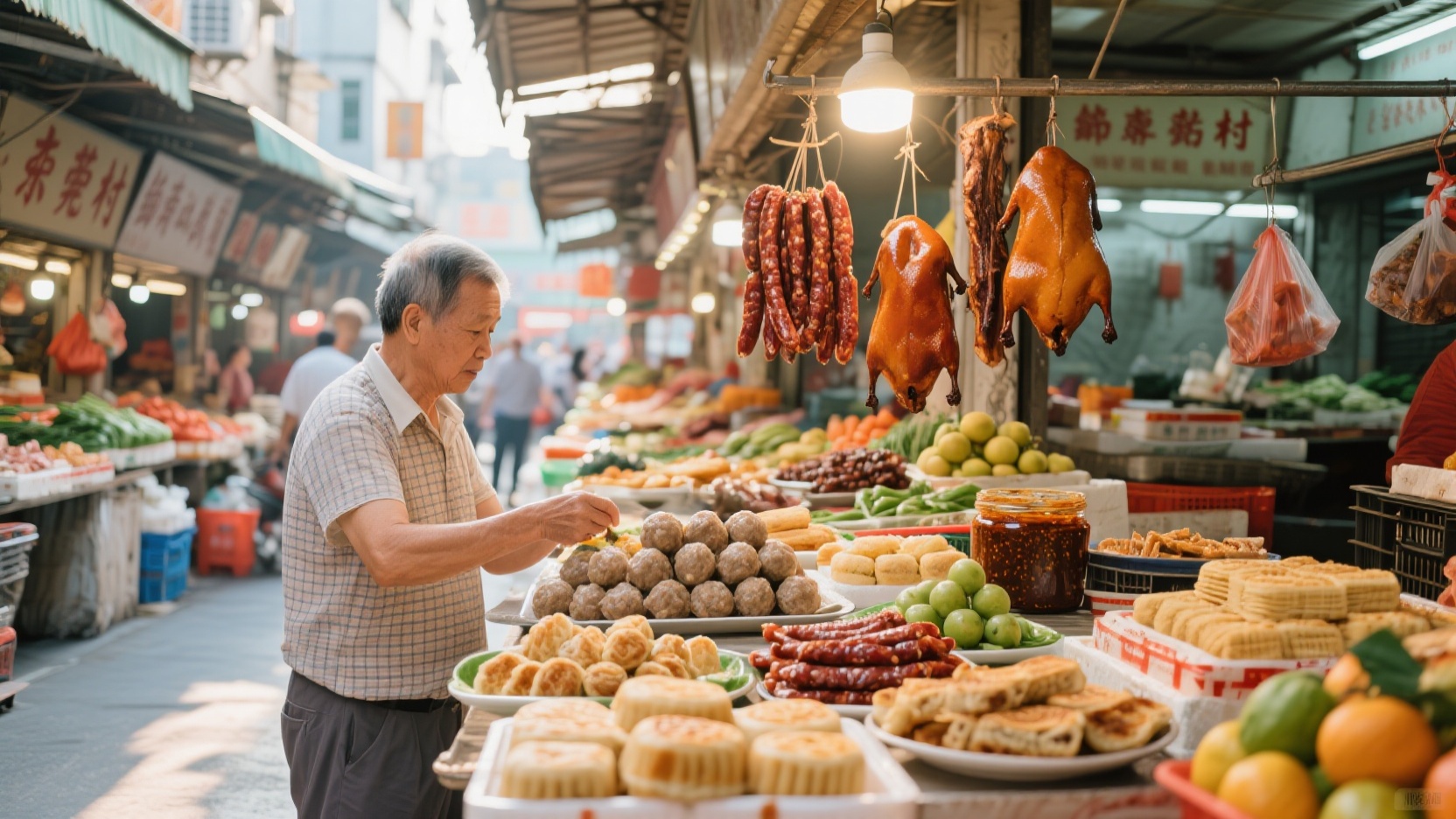
The true essence of Dongguan's culinary delights doesn't lie in chain stores or shopping districts, but in the sounds of meat being chopped that begin at six in the morning at Xicun Market in Guancheng. This market, which has been open for over thirty years, remains the primary source for locals to buy roast goose, stock up on preserved meats, and seek out handmade pastries. Just steps away, Guangming Market, despite several relocations, still maintains the traditional Dongguan style with its cooked food stalls and sauce shops. The following ten items are the most worthwhile "authentic local specialties" to take home from these two markets.
Xicun Market: A dining landmark for old Dongguan residents
The layout of Xicun Market is straightforward: the main entrance leads to the vegetable and fruit section, followed by stalls selling roasted meats, cooked food, fish balls and meatballs, dried goods and sauces, and pastries. It's busiest from 7:00 AM to 9:00 AM, with many stalls only operating in the morning and closing by noon. When shopping, don't worry about the size of the signs; just follow the local elderly people carrying empty bamboo baskets and wearing slippers, and you're unlikely to go wrong. As the weather cools, the roasted ducks and sausages hanging at the cured meat stalls will take up half the aisle, a sign that the market is entering its best-season.
Roast goose and char siu: The charcoal flavor is the key indicator.
The roast meat stalls are the soul of Xicun Market. Dongguan roast goose emphasizes "open-fire roasting over lychee wood, resulting in crispy skin and juicy meat," unlike the sweeter, crispy-skinned version in Hong Kong. Local roast goose focuses more on the balance of spices and meat aroma. When choosing a goose, check if the leg joints are translucent with oil, and if the skin is a deep reddish-brown with fine bubbles. After chopping it, ask the vendor to add a spoonful of original roast goose sauce. Recommended eating method: Do not vacuum pack and leave overnight. The best way to enjoy it is within 20 minutes of purchase, paired with rice noodles or white rice, when the fat is partially solidified for maximum flavor. For char siu, choose a half-fat, half-lean cut called "mei cha," cut into thick slices and served with bok choy; it's more juicy than all-lean cuts.
Daojiao meatballs and handmade fish balls: their bouncy texture depends entirely on the feel of the hand.
The meatball stalls in the market mostly source their meatballs directly from family workshops in towns like Daojiao and Hongmei. Daojiao meatballs are made by hand-pounding pork hind leg meat, mixed with a small amount of preserved vegetables and minced garlic. They are sticky when raw and become springy and garlicky after cooking. When choosing meatballs, check if the surface is moist and shiny; if they spring back when lightly squeezed, they are well-made. The best way to cook them is to simmer them in water or broth, avoiding boiling them over high heat, otherwise the freshness will be lost. The adjacent fishball stall often sells handmade dace fishballs and fish tofu. Fish tofu is often bought to make mustard green soup, a common summer staple for Dongguan residents; fish balls are suitable for adding to porridge, tossed in just before serving to maintain their tenderness.
Houjie sausages and Baisha oil duck: savory and fragrant dried by the north wind.
The preserved meat stalls at Xicun Market reach their peak season after the Autumn Equinox. Houjie sausages are short, thick, and oily, with a lean-to-fat ratio mostly between 3:7 and 4:6. They have a strong aroma of wine and high sugar content, making them suitable for slicing and steaming with rice. When selecting sausages, the casing should be firm and not sticky, and the cut surface should show translucent fat rather than yellowish fat. Baisha oil ducks are made from ducks over two years old and cured, resulting in firm, slightly salty meat. After purchasing, they should be soaked in warm water for 20 minutes before steaming or making porridge. Vendors usually offer cutting and vacuum sealing services, but it's not recommended to buy pre-cut pieces; processing the whole duck yourself makes it easier to determine its moisture level.
Crab sauce and fermented soybean sauce: the two pillars of traditional Dongguan seasonings
The sauce shop is tucked away in the northwest corner of the market. The mud crab sauce is a unique local savory sauce, dark brown in color, with a strong aroma of fermented river seafood. Once opened, it should have no sour smell, only a salty, fragrant aroma and a slight alcoholic scent. The fermented soybean paste is coarser than regular soybean paste, suitable for steaming fish and braising ribs. It's recommended to buy both sauces in small quantities and refrigerate them at home. The mud crab sauce is especially flavorful with poached chicken and steamed pork belly; the fermented soybean paste can be added to hot pot dipping sauce or stir-fried with ginger and water spinach.
Songgao (steamed rice cake), Aijiao (mugwort dumplings), and Dongtuan (winter dumplings): Handmade desserts should be enjoyed early.
The simple steamer stalls in the market are always crowded with people. Songgao (glutinous rice cake) is made from a paste of glutinous rice and regular rice, steamed until the surface is shaped like diamonds; it's soft and slightly sour. Aijiao (mugwort dumplings) are made with mugwort juice and filled with peanuts, sesame seeds, or red bean paste; they have a herbal aroma when you bite into them. Dongtuan (winter dumplings) only appear in large quantities around the winter solstice; they have a soft, chewy outer layer and either sweet or savory fillings. These kinds of snacks usually sell out before 10 a.m. When choosing, check if the color is natural; if the mugwort dumplings are too green, they may have been artificially colored. Steaming them for three minutes before eating will restore their softness; they should not be heated in a microwave.
Salty and sour flavors paired with seasonal fruits: a refreshing and crisp touch to cut through the richness
The salty and sour flavors of pickled fruits are a cherished snack memory for Dongguan children. Papaya, radish, mustard greens, and green mangoes are pickled in rice vinegar, sugar, and salt until crisp. When choosing fruits, check if the soaking liquid is clear and if the edges of the flesh are not soft. As for seasonal fruits, bananas, lychees, longans, and wampee from Machong take turns appearing. When buying bananas, choose the "Guoshanxiang" variety with a green stem and slightly curved body; when buying lychees, look for blunt, rounded thorns and a clear suture line. Don't just go for the biggest ones; small seeds and thick flesh are more important. Around noon, the fruit section often has clearance sales at wholesale prices, perfect for eating that evening.
Shilong maltose pomelo peel and candied ginger: a sweet treat you can take home.
Shilong maltose pomelo peel is made by repeatedly removing the bitterness from Shatin pomelo peel and then candiing it. It tastes sweet at first, then slightly bitter, with a hint of dried tangerine peel aroma. When choosing, look for intact, semi-transparent peels with evenly distributed sugar coating; if it's too hard, it has been stored for too long. Candied ginger is best enjoyed with a slice in the morning or chopped and brewed as tea. Both of these keep well and are among the few suitable souvenirs to pack in your luggage at the market.
Visiting the local market is the best way to experience a city.
Commercial districts may replicate the same brands, but wet markets won't. The roast goose stalls, meatball stands, and sauce shops in Xicun Market each use the same repetitive actions for two or three decades, solidifying Dongguan's soil, climate, and taste preferences into their food. There's no need to deliberately seek out "old brands"; just take a stroll in the morning, watch the stall owners chop ingredients, wrap glutinous rice balls, and scoop sauce from earthenware jars, and you'll understand the breakfast logic and lifestyle of a city. Before leaving Dongguan, consider leaving a morning for these damp, bustling passageways—that's where the most unguarded Dongguan truly is.