
The Flavors of Dalian Deep Within the Market: 10 Hidden Gems from Two Old Markets
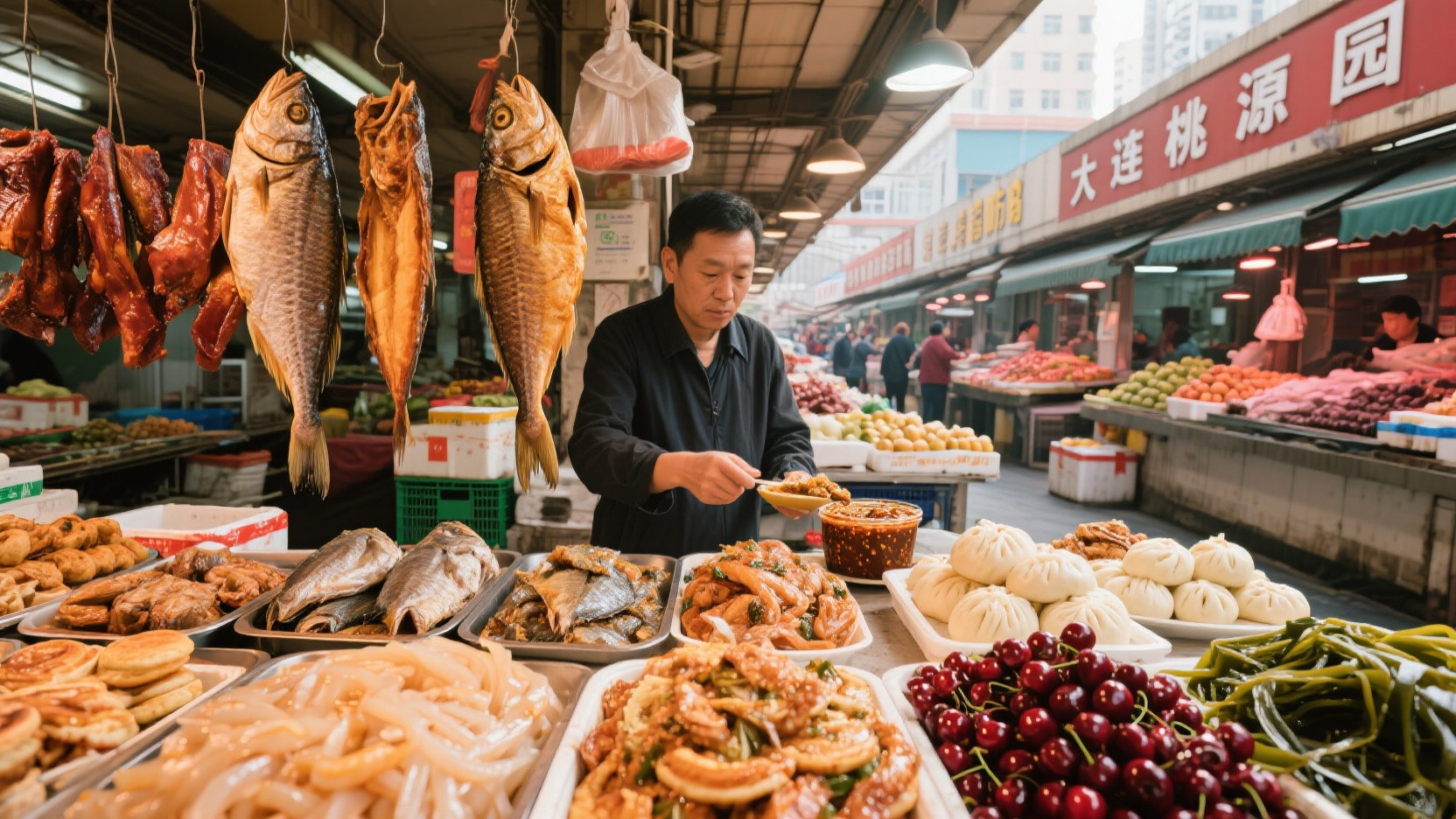
When looking for food in Dalian, don't just focus on seafood restaurants. Head to the Taoyuan Market and the Cooked Food Trading Center, two old-fashioned markets. The former is a vital shopping hub for residents of Zhongshan District, with clearly defined sections for vegetables, seafood, and cooked food. The latter is famous for its concentration of cooked food and dried seafood, with many stalls having been there for two or three decades. Both markets retain the bustling and direct atmosphere of old-style trading; the stall owners' answers to "how to eat" are often more effective than the menus. The following 10 items, hidden deep within the stalls, are closer to the tables of Dalian locals than the tourist areas.
Smoked mackerel and pan-fried mung bean jelly: the two main dishes at the cooked food stall
At the cooked food stalls, the first thing to look at is the smoked mackerel. Dalian people don't use heavy starch when making smoked mackerel. The mackerel is cut into thick slices, fried until crispy, and then dipped briefly in a sweet and sour sauce while still hot. It's best to let it cool before eating to allow the flavors to fully develop. When selecting mackerel, check if the cut surface is firm, and if the skin is a deep reddish-brown color without dripping oil; if it's black or bitter, it's likely due to overheated oil or re-frying with old ingredients. Once home, there's no need to heat it; it's best served with cornbread or plain porridge. If you can't finish it that day, you can refrigerate it, but don't freeze it, otherwise the meat will become mealy. The stall selling fried sweet potato starch noodles is often next to the smoked mackerel. The noodles are made from sweet potato starch and slowly fried in a pan with oil until both sides are crispy. Then, it's topped with diluted sesame paste, garlic juice, and a little soy sauce. Buy and eat it immediately; letting it soften will ruin the contrast between the crispy outside and the soft inside. Don't let the vendor pour the sauce over it beforehand; mix it as you walk for better flavor.
Seaweed jelly and seaweed buns: two seafood-based main dishes and snacks
Seaweed jelly is commonly found in the bean products section of farmers' markets. It's made from agar-agar, which solidifies into a translucent jelly after cooling, completely different from mung bean jelly. Good seaweed jelly is elastic, free of crumbs, and has a natural texture on the surface; it doesn't crumble when shaken. Cut into pieces and topped with minced garlic, cilantro, white vinegar, and a little chili oil, it forms the base for cold dishes in Dalian from spring to early autumn. For a stronger flavor, drizzle with a small amount of shrimp paste, but avoid using soy sauce, as it will mask the delicate aroma of the agar-agar. Also worth noting in spring are sea lettuce buns. Sea lettuce is a seasonal seaweed, chopped and mixed with a small amount of pork or used as a vegetarian bun. Choose freshly steamed ones; the dough shouldn't be sticky, and the bottom shouldn't be hard. When you break them open, the filling should be green, with a strong sea flavor but not too salty. After cooling at home, you can pan-fry them again with a little oil for a crispy bottom and moist filling; don't buy too much at once, as the seaweed filling will have a strong fishy smell if left overnight.
Shrimp paste and dried mackerel: Two storage logics in the savory food stall
At the pickled and preserved vegetable stalls, shrimp paste is the benchmark by which Dalian locals judge the quality of an established shop. It has smaller granules and a stronger fermented flavor than regular shrimp paste, and its color ranges from grayish-white to light pink. When buying it, stir it with a wooden spoon; the consistency should be neither too thin nor too runny, and it should cling to the spoon. If it's too salty or dark, it's likely old stock. The easiest way to eat it is to add half a spoonful to steamed egg custard, or stir-fry it with tofu or dip it in scallions—use a small amount, mainly to enhance the flavor. Dried mackerel is the mainstay of the dried seafood section. Good dried mackerel is semi-dried but not tough, with an intact body, a whitish or pale yellow cut surface, and no rancid taste. Before eating, soak it in water for two hours, cut it into sections, and pan-fry it, or cook it with dried radish; do not steam it directly, otherwise it will be overly salty. Both are suitable to buy and enjoy at home, but their storage logic differs: shrimp paste continues fermentation even after refrigeration, so press the surface firmly after opening; dried fish should be hung in a ventilated place, and can be sealed and frozen in humid southern weather.
Old-fashioned oven-baked fruit and pickled cucumbers: a handmade stall with both sweet and savory flavors.
You can still find traditional roasted dough sticks at the snack stalls in the cooked food market. They're small squares, covered in sesame seeds, and roasted to a golden brown. Choose freshly roasted ones; when broken open, they have a wheat and oily aroma and aren't cloyingly sweet. They'll become tough if left out too long, so buy enough for a day or two. They pair better with tea than coffee; dipping them in condensed milk masks the old-fashioned fermented flavor. At the pickle stalls, focus on pickled cucumbers—they should be dark green, crisp when bitten, and the skin shouldn't be soggy. They're suitable for a light breakfast or as a side dish with stewed fish; buy small quantities, and they won't look out of place mixed with shrimp paste. When buying pickles, remember to ask the vendor for extra sauce; let it sit at room temperature for half a day at home to allow the sauce flavor to infuse again.
Cherries and wakame seaweed: a seasonal treat to conclude the season.
As June arrives, the main attraction in the fruit section of the market is undoubtedly Dalian cherries. Whether it's the Red Lantern, Meizao, or Shamidou varieties, the selection principles are consistent: bright green stems, firm and crisp flesh, and no cracks in the skin. A darker color doesn't necessarily mean sweeter, and there are significant differences between varieties. Eat them chilled or pitted and mixed with thick yogurt; do not cook. Fresh wakame and salted kelp from the seaweed section are also worth buying. Choose thick leaves with abundant mucilage, and smell the characteristic seaweedy odor rather than a sour or rancid one. Blanch fresh wakame for half a minute, then add minced garlic, balsamic vinegar, and a touch of sugar—a more refreshing option than Japanese side dishes. Kelp stewed with tofu can also reduce some of the fishy smell. If you see bundles of dried kelp with a white frost on the surface, don't worry; that's mannitol leaching, indicating it hasn't been bleached.
Visiting the local market is the best way to experience a city. In Dalian, these two old markets not only sell vegetables, but also showcase the sea breeze, the changing seasons, and traditional craftsmanship. The same bunch of cherries may have different names at different stalls, and the same jar of shrimp paste may have varying degrees of saltiness. Instead of relying on reviews, ask "How do you eat it?" The stall owners will give you more specific answers than any travel guide.