
How do you choose where to eat in Chongqing? I've broken down the hardest decisions.
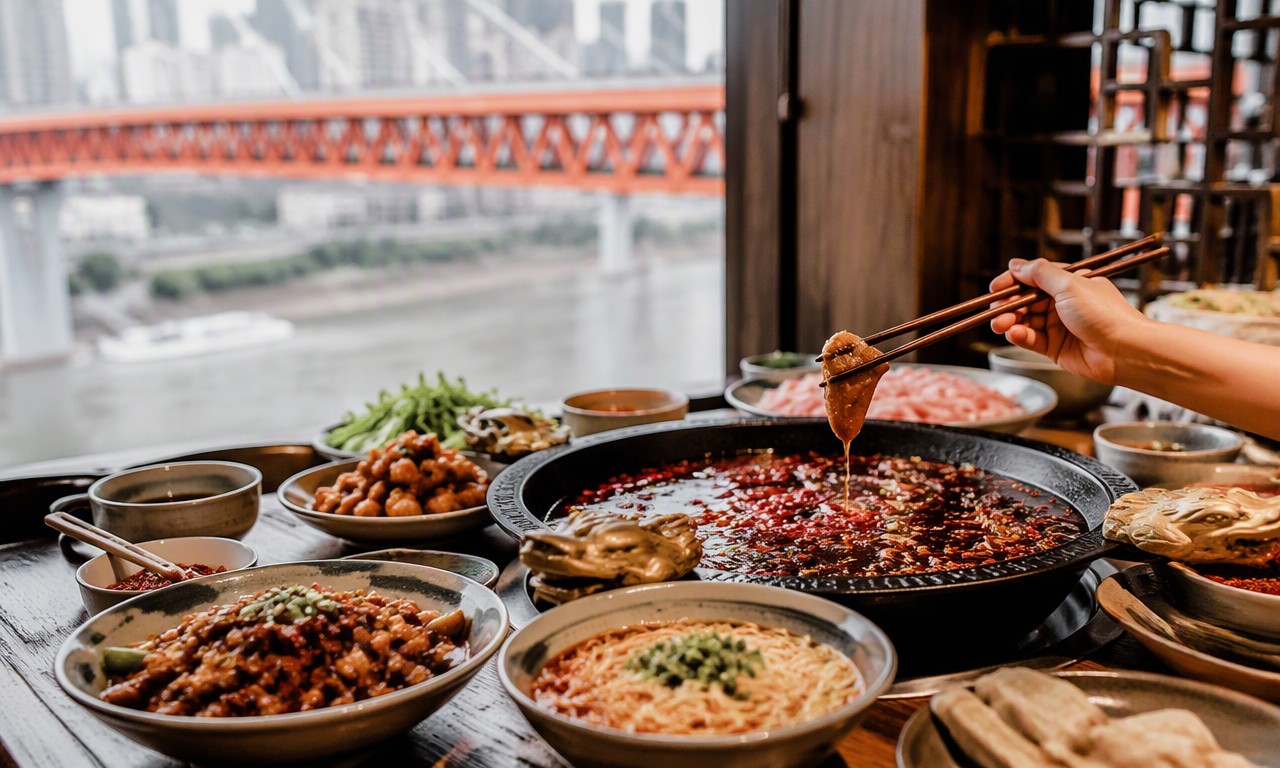
The hardest part about eating in Chongqing isn't finding good food, but rather the limited time, diverse tastes, and varying budgets. Reading countless guides only adds to the confusion. This article aims to answer the core question: given your own constraints, how can you eat without wasting a single meal? This isn't a recommendation list, but rather a decision-making path. Simply match it to your own situation to find the best route.
Branch 1: You only have one meal, so first figure out the difference between "ritual" and "daily routine".
Having only one meal means you can't try everything; you have to cut back. Most guides will tell you "you absolutely must eat hot pot," but if you don't have a strong preference for hot pot, or if you can get decent Sichuan and Chongqing hot pot back home, this meal can be replaced with something more everyday. The criterion is simple: do you want to post on social media to prove "I've been to Chongqing," or do you want to experience the kind of hot pot that locals actually go to after get off work? For the former, choose a traditional Chongqing hot pot restaurant, order the nine-compartment pot, not the half-and-half pot, and enjoy a proper meal of spicy broth; for the latter, choose Chongqing noodles with pig's trotter soup, or a bowl of tofu rice with braised pork belly—cheap, quick, and authentic.
If you're traveling alone, I strongly suggest avoiding crowded hot pot restaurants; the one-pot-per-table format isn't suitable for solo diners. When you're alone, eating from individual bowls like noodles, tofu rice, hot and sour noodles, or maocai (a type of Sichuan hot pot) is much more comfortable, and you can have a satisfying meal for just a few dozen yuan per person. If you're traveling with parents or a partner, hot pot is the perfect choice because it fosters interaction and is great for chatting while you eat. Remember: since you only have one meal, don't try to eat too much. Choose a route and stick to it; it's less likely to leave you with regrets than trying a little bit at every place.
Branch Two: If you have one day, divide it into three segments: morning, noon, and evening. Leaving blank spaces in between is the key.
A full day is the perfect time to experience Chongqing's cuisine, but many people overschedule their meals, resulting in not being able to enjoy any of them. My suggestion is to eat breakfast as a main meal, have local specialties for lunch, and only have hot pot or Sichuan-style dishes for dinner. You must leave some time in between for walking, drinking tea, and digesting.
Head out around 7 or 8 am, find a small noodle stall downstairs in a residential building. Don't look at the decor; look for locals in pajamas in the queue. Order two liang (100g) of noodles with a fried egg, starting with mild spiciness—don't go straight for the "extra spicy" level. After eating, take a walk up the nearby hills and slopes. Around 10 am, find an old teahouse and sit down for a cup of covered-bowl tea—that's the local rhythm. For lunch, choose a tofu rice or braised dish restaurant. Order a serving of tofu, a serving of braised pork belly, and a serving of vegetables; it'll cost a few dozen yuan per person, a satisfying meal. Continue walking in the afternoon, no proper meals planned, maybe a side of ice jelly or cold noodles from a roadside stall. Before 6 pm, head to a hot pot restaurant or a Sichuan-style restaurant—no queues, and you can even take a walk to enjoy the night view afterward. This way, your day is well-paced, not rushed, and not too full.
Branch 3: You have three days to proceed by following the steps of "Establish coordinates - Expand branches - Fill in gaps".
Three days and two nights is the starting point for a deep experience, but many people waste time repeatedly eating the same kinds of food, such as three meals of hot pot and three meals of Chongqing noodles. Actually, the three days should be broken down like this: Day 1: Establish a basic framework by eating only two things—one meal of Chongqing noodles and one meal of traditional hot pot—to understand the "bottom line" and "top line" of Chongqing flavors. Day 2: Expand your horizons by trying "middle-ground" dishes like Sichuan-style dishes, braised dishes, tofu rice, and pig's trotter soup, one meal for lunch and one for dinner, leaving some space in between. Day 3: Fill in the gaps. If you crave something sweet, try brown sugar glutinous rice cakes, ice jelly, or cold noodles. If you want souvenirs, buy freshly made fried dough twists or hot pot base. Finish with a bowl of Chongqing noodles before leaving.
The budget is well-organized within this itinerary: three days of budget-friendly options, where you can eat very well for just a few dozen yuan per person per meal; a mid-range option involves spending a little more on hot pot and Sichuan-style dishes, ordering a few hearty dishes, bringing the average cost to around 100 yuan per person; a high-end option could include one meal at a river-view restaurant or a private room at a time-honored establishment, but my suggestion is to limit this to just one meal, leaving the other two for smaller, more local eateries, otherwise you'll miss out on the most precious aspects of Chongqing's culinary delights. For families with children: include at least one non-spicy option each day, such as tofu rice, pig's trotter soup, or clear soup wontons, to prevent your child's digestive system from becoming a bottleneck in the trip.
Branch Four: Taking care of parents and taking care of children are two completely different scenarios; don't confuse them.
When taking your parents to eat in Chongqing, the key words are "respectable" and "easy." Parents may not be able to handle spicy food, nor may they want to wait in long lines, so choose restaurants with tables and chairs, a clean environment, and adjustable spiciness levels. For hot pot, you can order a half-and-half pot, but don't explain too much about "locals only eating the spicy broth"—making sure your parents are comfortable is paramount. For lunch, prioritize restaurants serving braised dishes or established Chinese restaurants with soup, vegetables, and meat; a mid-range price per person is perfect. In the evening, consider a restaurant with a river view, where you can sit longer and enjoy the night view while you eat. This experience is more important to your parents than how spicy the food is.
Traveling with kids follows a different logic, with the core principles being "quick and easy" and "having a backup plan." Children can't sit still for long, so choose hot pot restaurants that serve food quickly and offer drinks and snacks; for noodles, order clear broth or slightly spicy, and pair it with a brown sugar glutinous rice cake as dessert. Make sure to include places like ice jelly shops or cold noodle stalls where you can easily stop and rest. Avoid restaurants with queues exceeding twenty minutes; if the children get hungry or sleepy, the entire trip will fall apart. For families with children, at least two main meals over three days should be eaten in shopping malls or air-conditioned restaurants, ensuring better hygiene and restroom facilities. In short: travel with parents on a "stable" itinerary, travel with kids on a "flexible" one; investing your budget in ambiance and convenience is more worthwhile than spending it on trendy restaurants.