
Avoid Chengdu Accommodation Mistakes | Don't Be Fooled by Travel Guides! Locals Test These 3 Popular Areas, These 4 Are the Really Worth Staying In
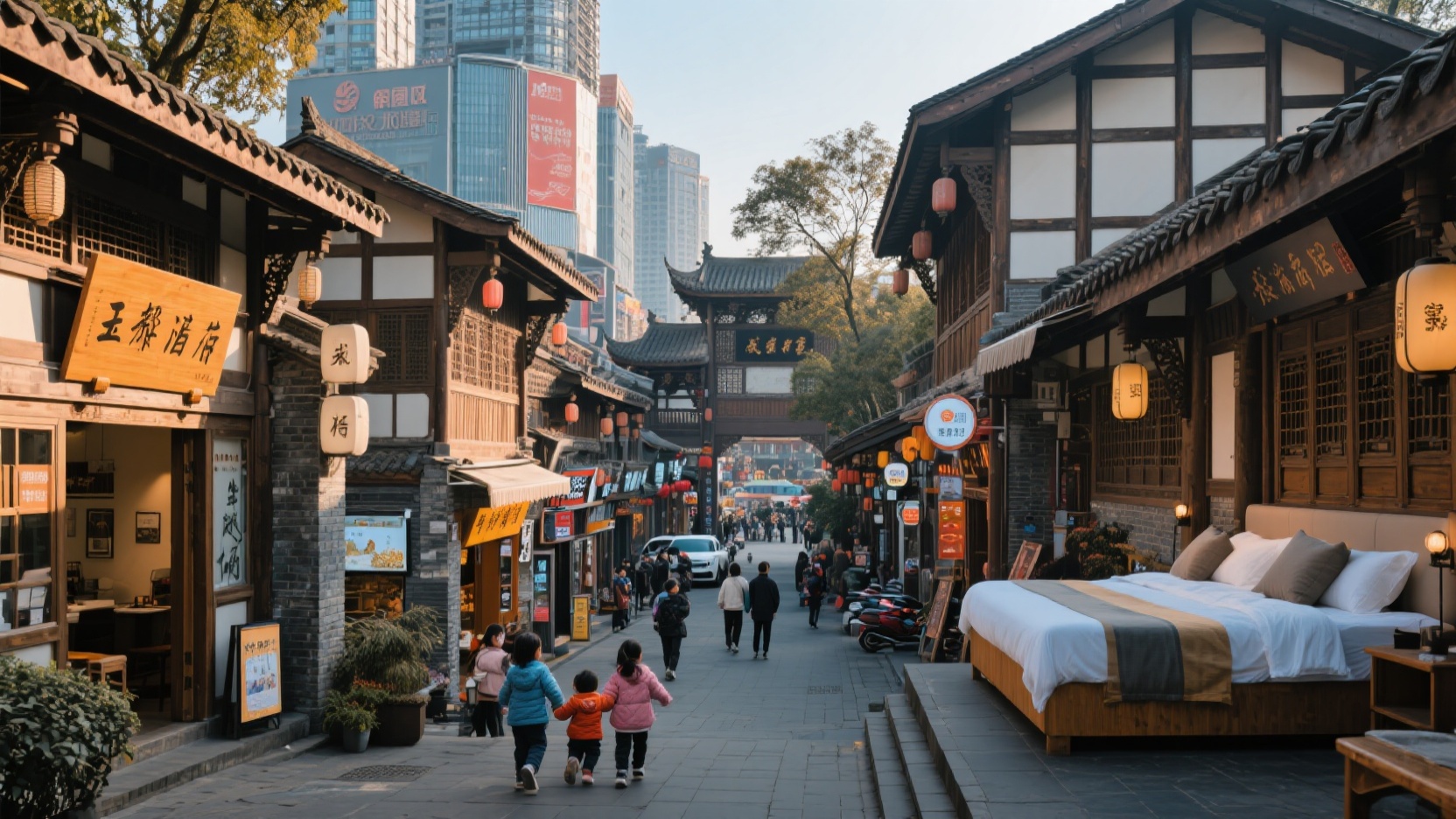
Staying in Chunxi Road or Taikoo Li in Chengdu is like throwing your sleep into a hotpot – that's the last thing I wanted to yell after being woken up at 2 AM by the horns of ride-hailing services and the wheels of tourists' suitcases downstairs. Many travel guides treat accommodation like a must-visit spot, but accommodation isn't about buying things in the surrounding area. Staying in the wrong area will cause problems with commuting, safety, and sleep. As a local editor who has lived in Chengdu for many years and traveled there countless times, I don't recommend following guides to stay in trendy areas. This article will clearly explain how to avoid these pitfalls and recommend truly suitable areas to stay in.
I. Chunxi Road/Taikoo Li: The Cosmic Center for Tourists, a High-Priced Noise Trap for Locals
Travel guides always say that staying near Chunxi Road is convenient for getting around, but locals almost never choose to stay in this area. During the day, it's packed with people; at night, it's a constant barrage of ride-hailing services, food delivery drivers, nightclub closures, and garbage collection vehicles – anyone with a light sleep will be exhausted. While Kuanzhai Alley and Jinli seem close, the rush hour traffic is incredibly congested, and transferring to the subway involves a long walk with luggage. Parking is expensive and difficult; even temporary parking on the street will almost always result in a ticket.
Returning to a hotel late at night isn't necessarily unsafe, but there are many drunk people around in the early hours, and women walking alone are more likely to be approached. Most accommodations are guesthouses catering to tourists, with poor soundproofing and varying levels of cleanliness. For the same price, you can find much more comfortable accommodations in the less central area. If you're not just going shopping, staying here is not good value for money.
II. Kuanzhai Alley/Kuixinglou Street: Romance on the stone-paved road, a nightmare for luggage draggers
The alleyway sounds beautiful, but in reality, dragging a suitcase along the cobblestone streets can wear out your wheels. The surrounding area is mostly converted guesthouses from old residential buildings, lacking elevators and soundproofing. Tourists downstairs take photos until late at night, making a quiet rest a luxury. While the subway Line 4 exit seems close, the guesthouse is tucked away in a side alley, requiring a ten-minute walk after exiting the station, making taxi drivers reluctant to drive in.
After 10 PM, the park lights dim, and the side alleys become eerily quiet. The CCTV coverage is sparse, making it a little unsettling to walk back to your accommodation alone. Eating options are convenient but touristy; for truly delicious local restaurants, you have to venture out of this area. Parking is virtually nonexistent, which will drive anyone with a car crazy.
3. Jinli/Wuhou Temple: Lively during the day, but changes after dark.
Many people believe that staying near scenic spots offers a cultural atmosphere, but Jinli is a completely different world after the lights are off compared to during the day. Once the shops close, the surrounding old streets are deserted and dimly lit. Turning into the alleys from Wuhouci Street after 9 PM can be unsettling. It's a bit of a walk from Gaoshengqiao Station on Metro Line 3 to Jinli, and taxis are congested during the day and pick and choose passengers at night. The older hotels in the area have outdated facilities, while newer guesthouses are mixed in with residential buildings, and the hallways are generally unremarkable.
Most of the food options are tourist trap restaurants, which are mediocre and expensive; locals wouldn't stay in this area just for the food. If your itinerary focuses on Wuhou Temple and Jinli Ancient Street, you can visit during the day, but it's really not worth the crowds for accommodation. Parking is scarce, so if you're driving, it's best to skip it.
IV. Yulin/Fangcao Street: The perfect local neighborhood for foodies and night owls
This area is perfect for those who enjoy exploring alleyways to find food, couples, and young solo travelers. There aren't any major tourist attractions, but right downstairs you'll find a wet market, skewer shops, small bars, and decades-old restaurants – a glimpse into the daily lives of locals. Even at midnight, people are still eating late-night snacks on the streets, making the local atmosphere even more vibrant than in tourist areas. Transportation is convenient; there are stations on both Metro Lines 1 and 8. It takes about 20 minutes by subway to Chunxi Road and about 25 minutes by taxi to Kuanzhai Alley.
There are plenty of restaurants nearby, from snacks at the Yulin Market to community cafes on Fangcao Street, ranging from affordable to mid-range, where you can eat very well for just a few dozen yuan per person. Returning to the hotel late at night is safe; the streetlights are on, and convenience stores and barbecue stalls often stay open very late, with plenty of pedestrians. Parking is limited, especially in older residential areas, but there are public parking lots nearby. It's not recommended to drive large vehicles through narrow alleys.
5. Niushikou/Panchenggang: Quiet amidst the hustle and bustle, worry-free for both family and business.
Suitable for families with parents and children, those driving, or tourists needing to catch a train at Chengdu East Railway Station. The Panchenggang area has many new residential communities, wide roads, and is quiet at night. The Niushikou area retains many old Chengdu restaurants, offering a good balance of dining and accommodation without being noisy. It's about a 10-minute ride to Chunxi Road via Metro Line 2, and about a 10-minute taxi ride to Chengdu East Railway Station, making catching a high-speed train very convenient.
There are plenty of restaurants nearby. Niushikou has well-established noodle shops and hot pot restaurants, and Panchenggang has community shops, so you don't need to take a taxi to the shopping district for every meal. The area is safe at night, with excellent security at residential complexes and street surveillance. Parking is the biggest advantage of this area; many hotels have underground parking, and there are also relatively plenty of roadside parking spaces, making it suitable for tourists traveling by car.
VI. Jianshe Road/Eastern Suburbs Memory: A happy old home for students and young people.
Suitable for students, young friends in groups, or those on a budget but still wanting a satisfying meal. Jianshe Lane Snack Street isn't just for tourists; students from the University of Electronic Science and Technology of China and locals also frequent it. Grilled pig brains, fried chicken, and tangyouguozi (a type of fried dough) are all concentrated here. Dongjiao Memory is a great spot for taking photos; you can stroll around day and night. Metro Line 8 is convenient; it takes about 20 minutes to Chunxi Road and about half an hour by taxi to the Panda Base.
There are plenty of restaurants nearby, and you can eat until you're stuffed for just a few dozen yuan per person, but be aware of the queues. Safety is relatively good late at night, as this area stays open quite late, is frequented by young people, and has good lighting. Parking is difficult, especially near Jianshe Lane where the roads are narrow and parking spaces are limited. If you're driving, it's recommended to park at your accommodation and take a taxi or subway to get there; this area is more lively and has a more vibrant atmosphere.
7. South Railway Station/Tongzilin: A high-quality choice for catching flights or high-speed trains, and for business travel.
Suitable for those catching early flights, heading to Tianfu Airport or Shuangliu Airport, or traveling with elderly people and children who want a more settled environment. Tongzilin is a long-established upscale residential area in Chengdu, with clean streets, a large expatriate population, and mid-to-high-end restaurants. It's quiet at night. Metro Lines 1, 7, and 18 intersect here. It takes about 15-20 minutes to Chunxi Road, and the metro to Shuangliu Airport is quick. Tianfu Airport is also directly accessible via Line 18.
The surrounding area offers a diverse range of dining options, including Japanese, Western, and Sichuan cuisine, mostly at mid-range prices, suitable for those who don't want to eat spicy food every day. Safety is excellent late at night, thanks to the well-established community and robust security. Parking is convenient, with ample underground parking spaces at hotels and commercial areas, making driving a hassle-free experience. This is one of the best solutions for those who "don't want to stay in a scenic area but are also worried about it being too remote."
In closing: Don't ask the locals if I didn't tell you.
First, looking at the straight-line distance on a map is useless. In Chengdu, traffic jams and subway transfers should be calculated "door-to-door". Don't believe the description of homestays that say "five minutes' walk to the subway entrance".
Secondly, if you want to see the night view from a high-rise hotel, you might as well choose a quality hotel in a secondary core area; while guesthouses in the old town may look nice in photos, soundproofing and cleanliness are the real issues.
Third, self-driving tourists should prioritize finding parking spaces. Parking around Yulin and Jianshe Lane food streets is terrible, while Niushikou and Tongzilin are safer options.
Fourth, women traveling alone don't need to venture into bustling commercial areas. Hotels in established residential communities and near major subway stations are actually safer, making it more reassuring to return home late at night.
Fifth, spring and autumn are the most comfortable seasons. In winter, when staying in an old house, pay attention to air conditioning and hot water. In summer, avoid windowless or top-floor guesthouses, otherwise it will be stuffy and noisy.