
No more agonizing over accommodation in Chengdu | Blogger's firsthand review of homestays and chain hotels in three major areas (with a quick selection checklist for three key questions)
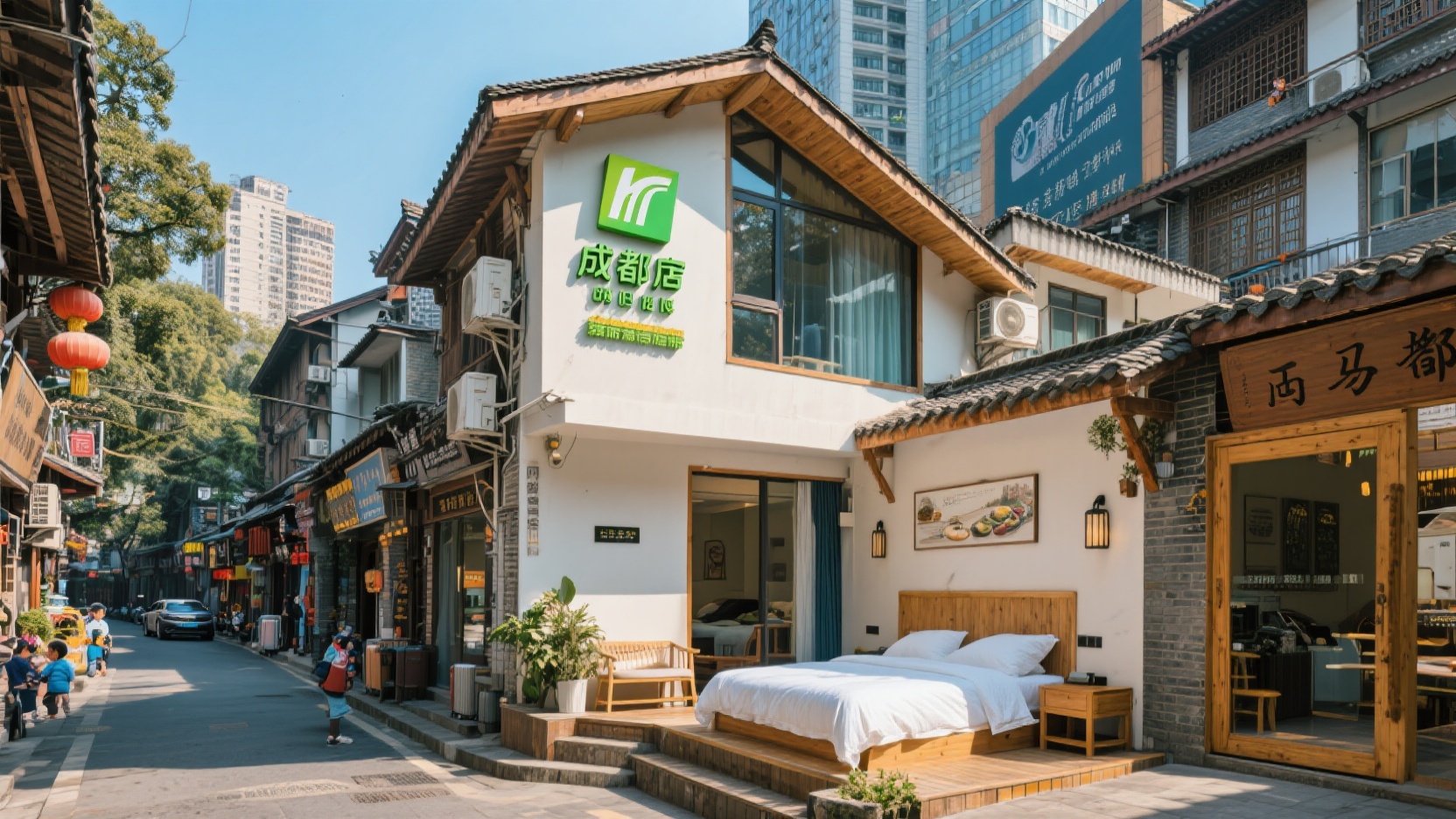
After staying in Chengdu for more than ten nights, I've condensed my accommodation dilemma into one sentence: it's not about "which is better" between guesthouses and chain hotels, but rather "which better suits your itinerary for the day." This time, I won't be recommending any trendy lists; instead, I'll be comparing boutique guesthouses and chain hotels in the same area across three budget tiers: budget, comfortable, and quality. I'll provide my conclusions based on six dimensions: location, soundproofing, cleanliness, breakfast, parking, and luggage storage.
Budget-friendly options: Luomashi and Wenshu Monastery areas – chain stores are more durable.
This area best resembles the foundation of old Chengdu, with numerous residential buildings, dense streets and alleys, and a strong local atmosphere. Boutique guesthouses are often hidden in older neighborhoods, with the advantage of being close to Wenshu Monastery, subway stations, and late-night food stalls, offering a vibrant local scene right outside your door. However, the inherent drawbacks of older buildings are also obvious: no elevators, poor sound insulation (you can hear the sound of slippers from upstairs and cats meowing in the alleys); cleanliness depends entirely on the landlord, and bedding is prone to dampness during humid seasons; breakfast is mostly obtained from nearby shops; parking spaces are extremely difficult to find, which can be frustrating for travelers with cars; luggage storage requires prior arrangement with the landlord, and if your flight is delayed, you may have to temporarily store your luggage at the convenience store across the street.
Budget chain hotels in the same area may not have particularly unique rooms, but they offer consistent standards. They're generally located near main roads or subway stations, with moderate soundproofing, though more reliable than older residential areas. Hygiene is generally up to standard, and the laundry service for bedding is more controllable than in private accommodations. Breakfast is mostly unavailable or only includes simple pastries, but you can find something at the breakfast stalls downstairs. Parking depends on whether the hotel has partnered parking spaces, but it's generally easier than in guesthouses in alleyways. The front desk usually offers same-day luggage storage. The conclusion is straightforward: for budget travelers who aren't looking for a "stay in a photo shoot of old Chengdu," chain hotels are the more reliable option in this area.
Comfortable budget segment: In the Yulin and Tongzilin areas, guesthouses and chain stores are roughly equal.
Yulin and Tongzilin are the areas I most frequently stay in, half tourists and half locals, with cafes, wet markets, and skewers shops all mixed together. Boutique guesthouses in this price range are usually converted from old houses, with small courtyards or terraces, located deep in the alleys, allowing you to truly experience the slow pace of Chengdu life. However, the shortcomings of guesthouses in this price range are still in soundproofing: old brick walls don't absorb sound, and conversations next door sound like they're right next to your ear; the cleanliness details can be done very well, but the mattresses and linens are not as durable as those in professional hotels; some guesthouses offer handmade light meals for breakfast, which is a nice bonus, but most don't include breakfast; parking is still a problem, with few spaces in the alleys and high fees; luggage storage needs to be confirmed in advance, and many guesthouses don't have a separate front desk.
Comfortable chain hotels in this area are usually close to subway stations or main roads. While their locations may not have the same "community feel" as guesthouses, they excel in efficiency. Soundproofing is significantly better than older guesthouses; hygiene is standardized, with bedding and bathrooms generally impeccable; breakfast is often buffet style, with hot food and coffee; parking is usually available through partner parking lots or underground spaces, making it convenient for travelers with cars; luggage storage is available 24 hours a day at the front desk. There are no absolute winners in this segment: those who travel light, enjoy visiting local markets, and want to experience the atmosphere of old Chengdu should choose boutique guesthouses; those who drive, are light sleepers, need receipts, and prefer efficient routes should choose chain hotels.
Quality-oriented budget segment: Located along the riverbank of Wangping Street and Taikoo Li, high-end chain sleep services have a firmer bottom line.
Accommodation in this budget range is concentrated around Wangping Street, the Fuhe River, and Taikoo Li, areas with the highest concentration of scenic spots and nightlife in Chengdu. High-end guesthouses or designer apartments are often located on high floors with excellent views, some even offering river or city skyline vistas, and are in extremely central locations. However, soundproofing in high-rise apartments is greatly affected by the building structure; glass curtain walls and lightweight partitions can amplify corridor noise. Cleanliness is generally not bad, but service details are not as consistent as high-end chain hotels. Breakfast is often just coffee and bread, or not provided at all. Parking requires using nearby commercial underground parking, which is expensive and involves a walk. Luggage storage is usually handled by a concierge or self-service, and may not be convenient after check-out.
High-end chain hotels in the same area might not have the most photogenic room designs, but they excel in six key areas: location within walking distance of the core business district; professional-grade soundproofing and bedding; strict hygiene management; a rich breakfast selection with both Chinese and Western options; ample underground parking; and excellent luggage storage and concierge services. In conclusion, if your quality-conscious budget prioritizes design and photography, you can accept minor variations in details when choosing a designer-run guesthouse; however, if you prioritize sleep, efficiency, and a presentable lifestyle, high-end chain hotels have much higher standards.
Blogger's Summary and Practical Tips
Looking at it from different angles, the "guesthouse feel" and "hotel feel" of accommodations in Chengdu each come at a price. For budget options, prioritize hygiene and location; for comfort, consider whether you prioritize a sense of lifestyle or efficiency; and for quality options, prioritize a good night's sleep over design. Here are three practical tips: First, when driving into the old city, choose chain hotels with parking spaces, as guesthouse parking is generally limited; second, for early morning or late-night flights, you'll need to store your luggage, and chain hotel receptions are more reliable than guesthouses; third, if traveling with elderly people or children, avoid guesthouses in older buildings without elevators, as climbing stairs will be tiring.
Finally, make a quick choice based on three questions: Do you want socializing? Do you want breakfast? Do you want an invoice? These three "yes" will determine where you sleep tonight.