
Eat at the Right Time in Chengdu | 8 Locally Popular Foods That Will Only Be Available Once They're Out of Season (with Tips to Avoid Common Mistakes) I Selected After Four Rounds of Research Based on
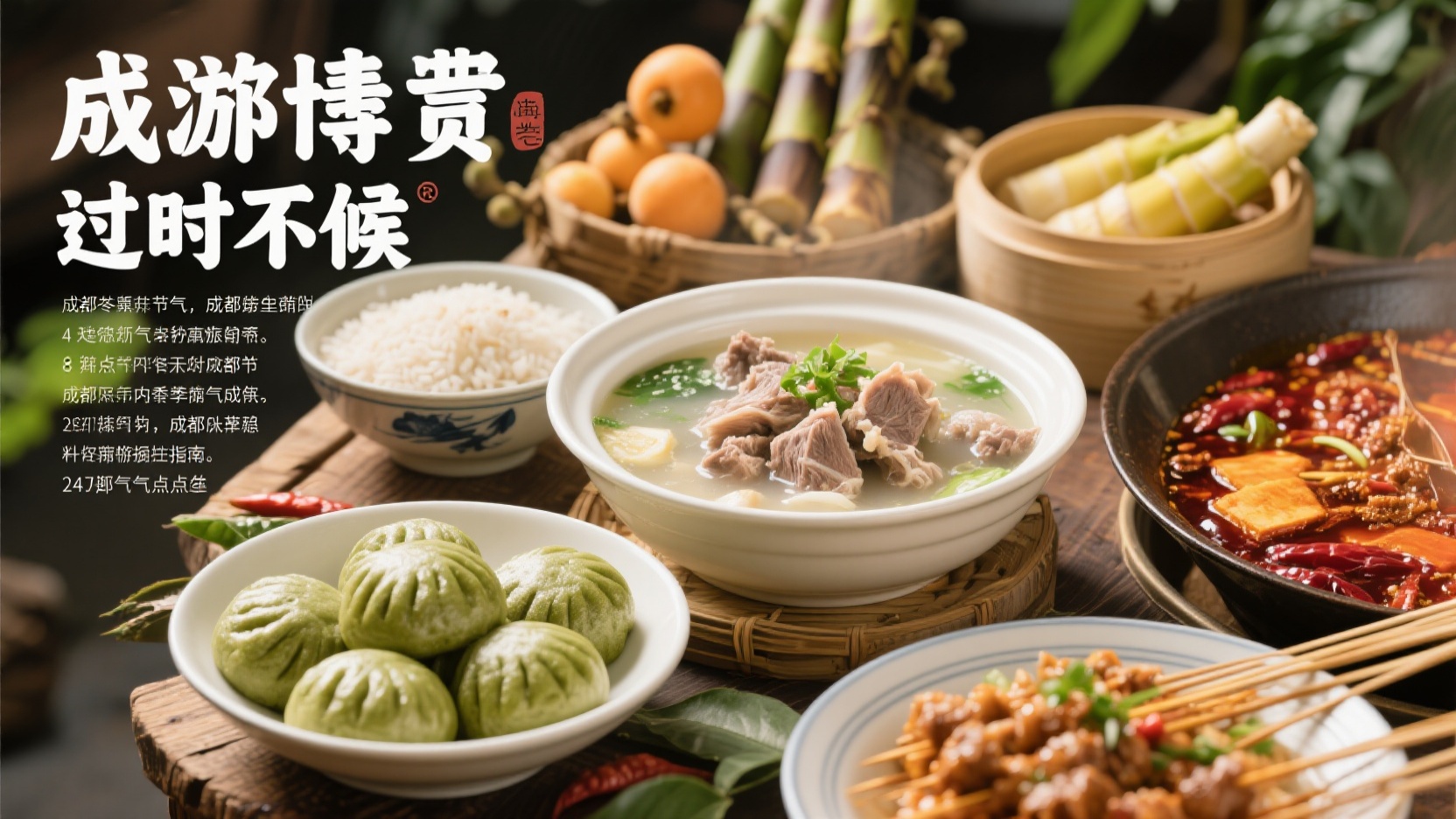
When looking for food in Chengdu, the worst thing isn't queuing, but "coming at the wrong time." The biggest mistakes I made were going for mutton soup in August and loquats in February, only to be met with the owner's curt reply, "It's not the right time yet." Later, I retraced my steps through Chengdu and the surrounding areas according to the 24 solar terms, finally identifying these limited-time delicacies that can only be enjoyed at the right time. Each dish is labeled with "why it tastes best only at this time of year," along with the subtleties locals pay for it. This post only covers things that are "once they're gone, they're gone."
Spring Equinox & Qingming Festival | Mugwort Buns and Thunder Bamboo Shoots
Around the Qingming Festival, in the fields of Chongzhou and Dayi, near Chengdu, the tenderest shoots of mugwort just sprout. Locals make mugwort buns by blanching the tender leaves, pounding them to extract the juice, and then kneading it with glutinous rice flour until their hands and bowls are smooth. At this time of year, the mugwort doesn't yet have that bitter, fibrous texture; if picked after Qingming, the skin will harden and become bitter. The savory filling consists of minced cured pork, pickled mustard greens, and wild scallions, steamed on banana leaves. When freshly steamed, a small bite releases a burst of grassy aroma mixed with the fragrance of cured pork. My advice for avoiding these pitfalls is: pre-packaged, frozen, and re-steamed mugwort buns in the city center have thick skins and little filling; try to find stalls that sell freshly picked mugwort and steamed buns, as the vendors often still have unwashable grass stains on their hands.
At the same time of year, Lei bamboo shoots bring the first taste of "mountain air" after rain to the Chengdu Plain. In Wenjiang and Pengzhou, Lei bamboo shoots begin to sprout from the Jingzhe (Awakening of Insects) period and are at their tenderest before Guyu (Grain Rain). Locals buy them by pinching the base of the shoot with their fingernails; they only buy if the pinch goes in easily. The cooking method isn't heavy on flavor; instead, they're often braised in white oil or made into soup, with only a little lard and salt, emphasizing their natural sweetness. Out-of-season bamboo shoots have coarse fibers and a strong earthy taste, which can't be salvaged.
Summer Solstice and Grain Full | Loquat and Bitter Bamboo Shoots
After the start of summer, what Chengdu locals crave most is undoubtedly the "Big Five Star" loquats from Longquanyi and Shuangliu Taiping. From mid-May to early June, the loquats picked in the early morning still have a layer of fuzz on their skin. They don't leak juice when peeled, and when bitten, they have a tangy fragrance from the sunshine and dew. Locals say that to eat "dew-covered loquats," you must pick them early in the morning and eat them that same day; only then will the aroma be truly vibrant. Those huge but bland loquats from other regions sold along roadsides in tourist areas are often passed off as "Longquanyi loquats." Look for bright green stems and intact blooms to avoid being fooled.
After the start of summer, bitter bamboo shoots begin to be transported to Chengdu from Emei and Ya'an. This is a "cooling vegetable" for Chengdu people in the summer. The key to preparing bitter bamboo shoots is to blanch them first, then soak them to remove excessive bitterness, leaving only a slight sweet aftertaste on the tongue. Locals most often prepare bitter bamboo shoots in pickled cabbage soup and stir-fried bitter bamboo shoots with minced meat; the soup should be clear, and the minced meat should be stir-fried until slightly dry. After the Lesser Fullness of Grain (Xiaoman), bitter bamboo shoots become too tough to chew, and the bitterness turns into a rough, astringent taste, completely losing their delicate, slightly bitter-sweet flavor.
Autumn Equinox and Frost's Descent | New Rice and Osmanthus
Around the Autumn Equinox, rice harvesting begins on the Chengdu Plain. The new rice is moist, and when steamed, each grain is distinct, carrying a fresh, green aroma. Locals eat this new rice with minimal side dishes, often opting for a bowl of plain white rice with pickled vegetables in chili oil, and a bowl of thick rice porridge that clings to the bowl. The emphasis is on "rice that's cooked until crispy at the bottom and rice porridge that's thick enough to cling to the bowl"—a texture that aged rice can never replicate. For a more ceremonial experience, head to a farmhouse in Pidu or Wenjiang to witness a "new rice feast."
Osmanthus blossoms in the eighth lunar month are a limited-time ingredient in Chengdu's autumn that's easily overlooked. In the Guihu area of Xindu, a long-established osmanthus-appreciation spot, locals pick the blossoms when the golden osmanthus is in full bloom to make osmanthus jelly or osmanthus fermented rice. The aroma of golden osmanthus is mellow but not cloying, making it suitable for cooking. A major taboo in its preparation is overcooking. Once the fermented rice boils, sprinkle in a handful of fresh osmanthus blossoms and turn off the heat; the aroma is perfectly enhanced by the steam. Overcooking will cause the aroma to dissipate, leaving only the color. Out-of-season osmanthus is available only in candied form, which has a dull aroma and lacks any freshness.
Winter Solstice & Minor Cold | Pea Shoots and Lamb Soup
For Chengdu locals, winter begins with pea shoots after the first frost. Unfrost-kissed pea shoots have thin stems and tender leaves but lack flavor. After the first frost, the leaves thicken, and the sweetness increases dramatically. Locals always blanch a handful of "two-tooth pea shoots" at the end of their mutton soup, hot pot, or even a bowl of vegetarian noodles—the kind with short stems, thick leaves, and so juicy they're ready to be squeezed. They only need to blanch them for three seconds; any longer and they'll wilt. At the market, you should buy those with dew still on them and upright leaves. Out-of-season greenhouse pea shoots have tough, fibrous stems and won't have that characteristic sweetness when blanched.
Lamb soup around the Winter Solstice is a highly valued seasonal dish in Chengdu. The traditional lamb soup from the Xiaoguanmiao area is milky white thanks to long simmering of lamb bones and meat, not "technology." Locals insist on "drinking the soup first, then eating the meat, and finally cooking the vegetables," using only dried chili powder, salt, and cilantro as a dipping sauce, avoiding fermented bean curd. A truly good soup should be a pale yellowish-white, leaving you feeling refreshed. On the Winter Solstice itself, queues can be as long as half an hour, but the ingredients are readily available and the broth is fresh. After the Winter Solstice, the broth tends to be too salty, and the meat isn't as flavorful as during the season. My personal experience suggests that going within a week before or after the Winter Solstice is the safest bet.
Blogger's Summary and Practical Tips
These eight seasonal delicacies share a common thread: the ingredients themselves aren't rare, but what's rare is the short ten days or so when they taste their best. Chengdu locals don't chase after trendy restaurants; they follow the local customs and the seasons. Eating according to the seasons is the right way to experience a city.
Here are some practical tips: First, the best time to enjoy spring mugwort buns and bamboo shoots is from the Awakening of Insects to Grain Rain, with the most reliable harvest around Qingming Festival; second, loquats are best enjoyed from mid-May to early June, and bitter bamboo shoots shouldn't be waited until after Grain Buds; third, new rice and osmanthus flowers are best enjoyed from the Autumnal Equinox to Frost's Descent, so make reservations in advance at farmhouses; fourth, mutton soup for the Winter Solstice and pea shoots after the first frost are best experienced within a week before or after the Winter Solstice. Visiting Chengdu out of season won't stop you from experiencing the vibrant city, but you'll miss out on these local flavors hidden in the local calendar.