
Should you visit Beijing during peak season or off-season? Let me show you the pros and cons from both.
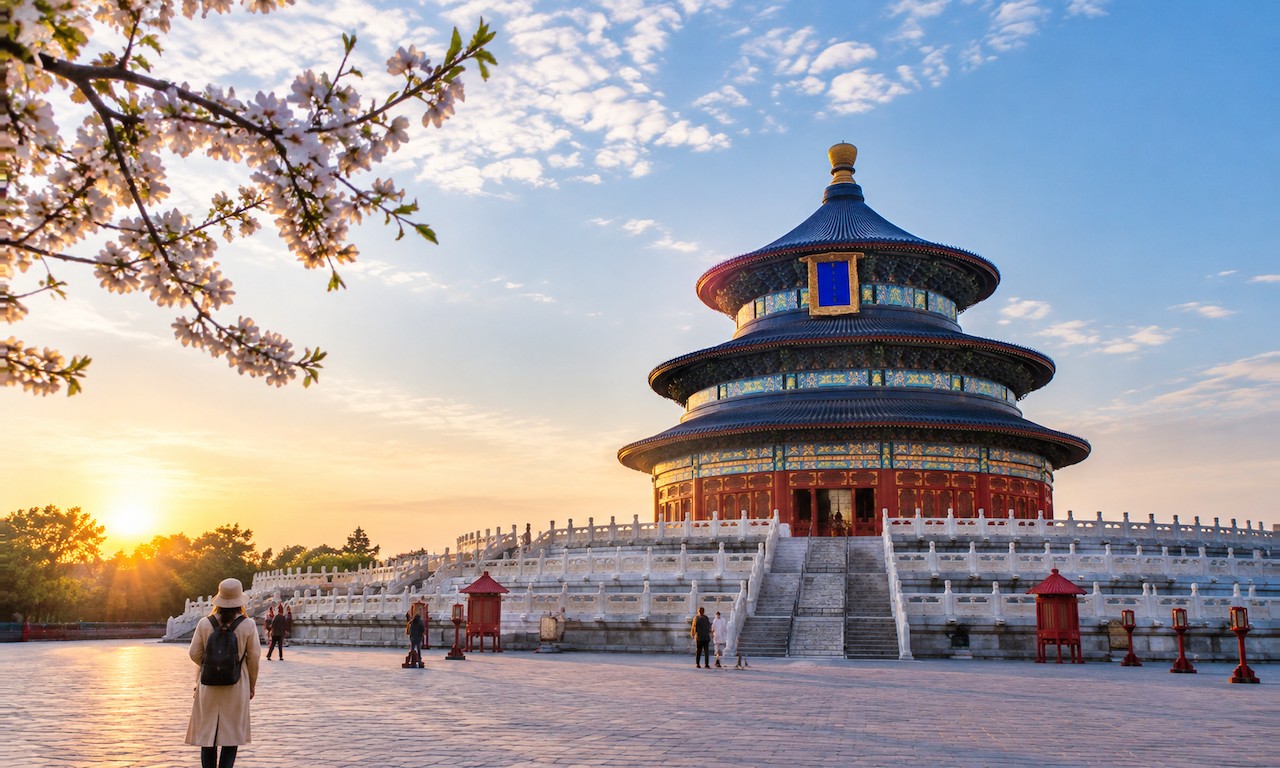
This article aims to answer a question that many readers struggle with before their trip: Is it better to visit Beijing during peak season or off-season? How big is the difference between weekends and weekdays? Which is more convenient, a group tour or independent travel? These questions seem simple, but they directly determine whether your trip is a "heavy lifting" or a "refreshing vacation," and also how much you can save on your budget. Below, we'll use six of the most frequently asked questions to present both the "most travel guides' opinions" and "actual experiences" side-by-side.
Go during peak season vs. go during off-season
Most travel guides will tell you that "Beijing is beautiful all year round, with spring and autumn being the most beautiful seasons; summer is too hot and winter is too cold." This statement itself isn't wrong, but it avoids mentioning the true cost of peak season. In reality, while the Forbidden City, Summer Palace, and Temple of Heaven are indeed beautiful with flowers and trees in April and May, they are also incredibly crowded, requiring you to "shuffle around the gates," and taking photos is basically just group shots. The Forbidden City in the off-season (December to February of the following year) has a serene atmosphere, especially on snowy days. The red walls and yellow tiles against the white snow, with half the crowds, allow for a leisurely stroll and a completely different experience. In terms of cost, off-season accommodation is generally a level cheaper than peak season. Mid-range hotels can drop from several hundred yuan per person to just over a hundred yuan per person. While entrance fees aren't that much different, the savings on accommodation can buy you several decent hot pot meals. If you don't specifically want to see spring flowers and autumn leaves, visiting Beijing in the off-season offers far better value than in the peak season.
Going on weekends vs. going on weekdays
Most travel guides will tell you, "Beijing's attractions are open every day, it doesn't matter what day of the week you go." In reality, Beijing on weekends and weekdays are two completely different cities. On weekdays, before 10 am, the Forbidden City, National Museum of China, and Summer Palace have manageable crowds, allowing you to carefully examine the exhibits without the hassle of crowding, and security checks are quick. On weekends, during the same time slots, popular special exhibitions might require a half-hour wait, and places like Prince Gong's Mansion and Nanluoguxiang are practically packed with people. Especially for the National Museum of China and the Forbidden City, weekend reservations are often fully booked several days in advance, and sometimes you can even snag a reservation on the weekday itself. If you are self-employed, retired, or can take annual leave, I strongly recommend scheduling your visits to the core attractions on weekdays and reserving the weekend for activities like strolling through hutongs and relaxing in parks—activities that don't require tickets.
Group tours vs. independent travel
Most travel guides will tell you, "Beijing has convenient transportation, so independent travel is fine; you'll get ripped off on group tours." This statement is only half true. While independent travel in Beijing is indeed easy, with a well-developed subway system and clear signage for major attractions, the time commitment is often overlooked: planning routes, booking tickets, and researching reliable restaurants can add up to half a day's work. If you're traveling with elderly people or children, or only visiting for two or three days, a reliable small group tour is a more convenient option, allowing you to rest on the bus and avoid having to research the guides yourself. However, the risks of large group tours—early morning rushing and visits to shopping stores—are real. The criteria are simple: if you can handle all the bookings yourself and are willing to walk 20,000 steps a day, go for independent travel; if you don't want the hassle and aren't fixated on in-depth explanations, choose a reputable small group tour, and avoid "value day trips" that are significantly below market cost.
Living within the Second Ring Road vs. living outside the Fifth Ring Road
Most travel guides will tell you, "Staying in the city center is convenient for getting around, while staying in the suburbs is cheaper but too far." However, the actual costs need to be calculated carefully. Hutong guesthouses or mid-range hotels within the Second Ring Road generally cost around 100-200 yuan per person per night. The advantage is that Tiananmen Square, the Forbidden City, Jingshan Park, and Shichahai are all within walking distance or two or three subway stops, and you can even go for a walk in the evening to digest your food. Chain hotels outside the Fifth Ring Road cost tens to a little over a hundred yuan per person, which seems tempting, but the subway commute to and from the city takes at least 40 minutes each way, and during rush hour, standing all the way makes it hard to enjoy sightseeing. The money saved on room fees may be eaten up by fatigue and time costs. A compromise is hotels near the Third Ring Road and subway transfer stations, costing around a hundred yuan per person. Maintaining the basic requirement of "having a subway right outside your door" is more practical than blindly pursuing the city center or being overly greedy for cheap accommodations.
Three-day itinerary vs. five-day itinerary
Most travel guides will tell you that "you need at least five days to see Beijing, three days is too rushed." In reality, three days and five days are suitable for completely different people. Three days is suitable for first-time visitors who only want to see the "capital symbols": the first day is the Forbidden City and Tiananmen Square, the second day is Badaling or Mutianyu Great Wall, and the third day is the Summer Palace plus a hutong (traditional alleyway). You'll get to take all the photos you want, it's tiring but highly fulfilling. Five days allows you to slow down the pace, adding "second-tier" attractions like Prince Gong's Mansion, the National Museum of China, the Temple of Heaven, and Yonghe Temple. You can also allocate a day for a trip to Tanzhe Temple or the Ming Tombs in the suburbs, and catch a play or stand-up comedy show in the evening. If you have average stamina but enjoy detailed exploration, five days might not be enough; if you just want to check off landmarks, three days is perfectly feasible. Don't force yourself to extend the trip just because a guide says it's "not enough"; the number of days should match your stamina and the density of your interests.
Taking the subway vs. taking a taxi
Most travel guides will tell you that "Beijing's subway is the most convenient option, no need to take a taxi." While the subway is indeed less congested, air-conditioned, and has wide coverage, the actual riding experience varies from person to person. During peak hours, lines 1 and 10 require some mental preparation to get on, and the transfer stations often leave you feeling exhausted. Taking a taxi or ride-hailing service is actually not expensive during off-peak hours; a trip from the East Third Ring Road to the West Second Ring Road costs a moderate amount, but it saves a lot of energy, especially after a tiring shopping trip. The worst thing to do is take a taxi during peak hours, getting stuck in traffic on the ring roads watching the meter tick up – it's slower and more expensive than taking the subway. The practical approach is: use the subway between major attractions; for distances within three kilometers, with two or three people traveling together, and outside of rush hour, definitely take a taxi – the cost per person isn't exaggerating.
Go to a well-known time-honored brand vs. go to a local community restaurant
Most travel guides will tell you, "When you come to Beijing, you must eat at time-honored restaurants; that's the authentic experience." These restaurants certainly have an irreplaceable sense of ritual, and some Peking duck restaurants and hot pot shops still maintain their excellent craftsmanship. However, in reality, many of these restaurants have long queues during peak hours, the environment is often noisy, and the service is mediocre; you might not feel it was worth the wait. Community eateries offer a different approach. They're tucked away in residential buildings, with simple menus, but they excel in fresh ingredients and reasonable prices. A meal for a few dozen yuan per person can provide a hot, home-style Beijing meal, such as eggplant noodles, stewed ribbonfish, or cabbage and tofu. My suggestion is: choose one or two of your most desired time-honored restaurants and eat there during off-peak hours, saving the rest of your meals for community eateries near your accommodation. This allows for a more relaxed experience and is more budget-friendly.