
This 3.8km city walk in Zhangjiagang is a must-see autumn cultural and artistic destination that I walked four times with my camera before recommending (with two side paths to avoid pitfalls).
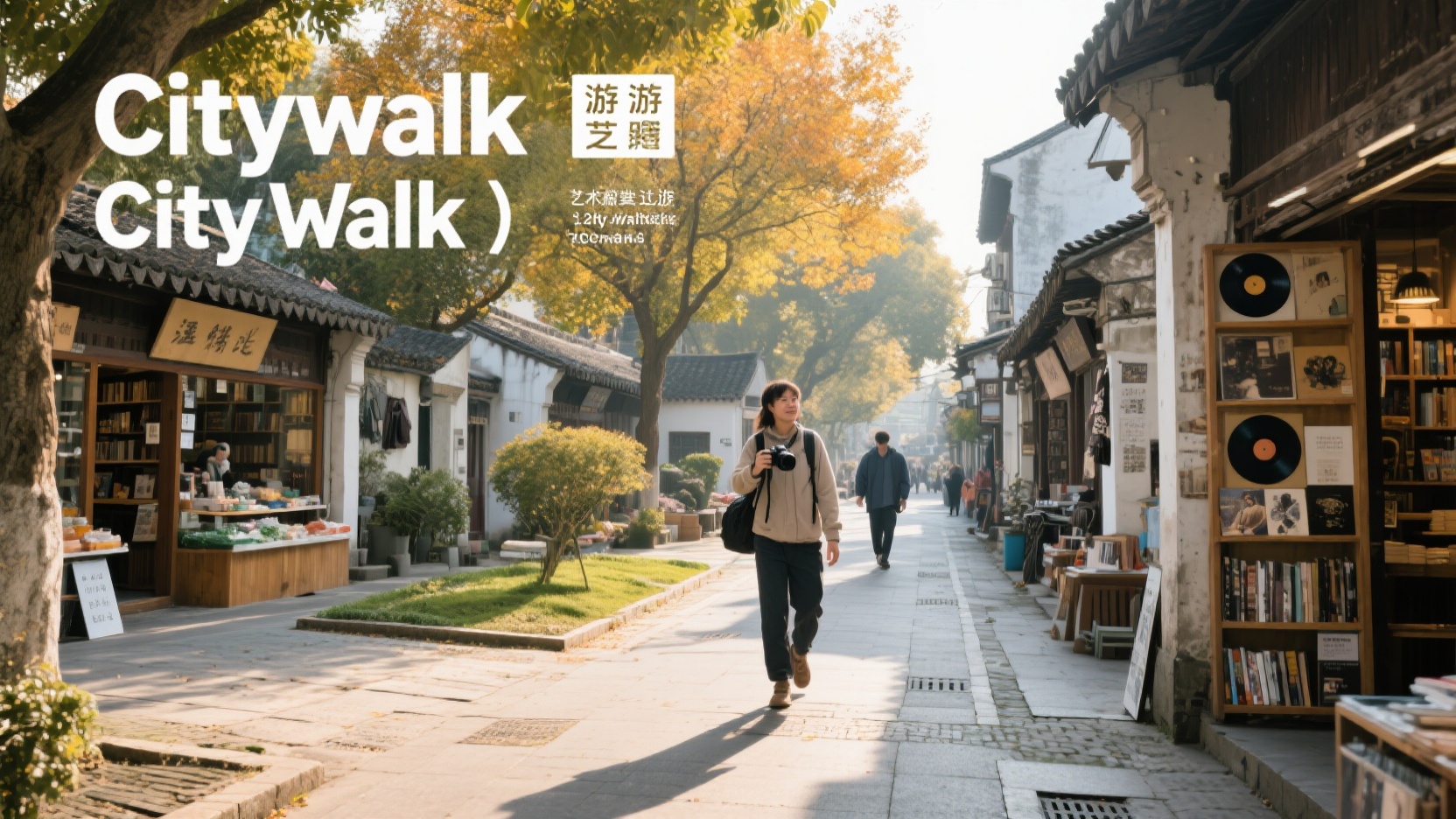
On my third visit to Zhangjiagang, I gave up driving and instead entered through the most inconspicuous entrance to the vegetable market in Yangshe Old Town, leading to a 3.8-kilometer cultural and artistic Citywalk. This route doesn't pass through any paid scenic spots, but it connects old houses, vinyl record shops, vintage clothing stores, pocket parks, and independent bookstores into a flow where you can stop and daydream at any time.
A word of caution: if you're looking for a sophisticated commercial street, this might not be for you. The old buildings here have weathered facades, and there's occasional puddles at the back entrance of the market, but it's precisely this unpretentious, everyday feel that makes Zhangjiagang's cultural fabric tangible. I walked the following route on sunny days, rainy days, and a weekend morning, finally confirming the best lighting on an autumn evening.
Starting point: Don't enter from the main gate of the old street. Turn into the underrated Yangshe Lane from Yiwan Morning Noodles (0-0.6 km, about 10 minutes on foot).
Once you've located yourself near "Yangshe West Street," don't rush to find tourist attractions. I usually sit down at a roadside noodle shop without a sign and have a bowl of red soup noodles to wake me up. This shop only serves breakfast, and locals stand at the door eating with their bowls in hand—it's the perfect starting point for your trip.
After finishing the noodles, turn north into a narrow alley called "Yingfang Lane". Here are several old houses with gable walls dating from the late Qing Dynasty and early Republic of China, and the brick carvings on the lintels still show intertwined foliage patterns. The alley is very narrow, and electric bikes have to squeeze through sideways, but it is precisely this scale that has preserved the living radius of the old Yangshe neighborhood.
The blogger's camera position: Standing in the middle of the alley, using a telephoto lens to capture the superposition of the old house's gable wall and the modern buildings in the distance. Why it's worth stopping for 5 minutes: This conflict of "old negatives on new buildings" is one of the very few fragments in Zhangjiagang's urbanization process that hasn't been erased.
The first main route: walk along the Dongheng River into Gudu Port, where old houses and pocket parks share the same riverbank (0.6-1.8 km, about 20 minutes on foot).
Emerging from the alley, walk east along the Dongheng River. The river isn't wide, but the walkways on both sides are well-maintained and quiet. On your right, you'll pass a small building in the Republican era style with exposed brick walls. It may now be a community cultural center, closed to the public, but the exterior is well-preserved. The wooden railings of the second-floor balcony have clearly been repainted repeatedly, and the color is no longer even.
Continuing on, I walked to the pocket park where the Gudu Port and Dongheng River meet. There's a large camphor tree there, and the benches under it are often empty. I always sit here for 10 minutes, watching elderly people carrying groceries walk by the river, and occasionally young people jogging with headphones on.
The blogger's camera position: Standing on the north side of the pocket park, with camphor trees in the foreground, the old house's gable wall in the middle ground, and distant high-rise buildings in the background. Why it's worth stopping for 5 minutes: This is the only spot on the route that can simultaneously capture the four layers of "river, trees, old house, and new city," and the light is best after 3 pm.
First route: Enter through the back door of the market and collect sound samples of local life (approximately 0.4 km round trip, 8 minutes walk).
When you reach the middle of the Gudugang Trail, you'll smell a mixture of cooked food and vegetable scraps. Don't ignore it; that's my top recommendation for a side path. Enter through the back door of a local market, pass the seafood section, then the cooked food section, and finally return to the riverbank through a side entrance.
Don't approach this place with a tourist's mindset. I usually spend 10 minutes observing the vendors chopping vegetables, packing them, and chatting with regular customers. These sounds and actions are more honest than many deliberately staged "local art" exhibitions.
Blogger's camera position: Standing at the corner of the cooked food area, using a 35mm lens to shoot the vendor's hand movements and the steam from a low angle. Why it's worth stopping for 5 minutes: The market is the most tender part of this industrial city; its rhythm has not been altered by the tourist economy.
The second main route: Within a hundred steps, you'll find independent bookstores, vinyl record stores, and vintage clothing stores (1.8-2.6 kilometers, approximately 15 minutes on foot).
Returning to the riverbank and continuing east, the pace suddenly slows down when you reach a small street shaded by sycamore trees. I privately call this street "Zhangjiagang's Short Street" because it's only a few hundred meters long, yet it hides three small shops worth making a special trip to stop at.
The first shop is an independent bookstore with a small storefront. Literature, history, and art books are displayed near the window. The owner doesn't look up often, but if you ask, "Do you have books by local authors?" he'll pull out a few well-preserved used books from under the counter. The second shop is a vinyl record store that also sells pour-over coffee. The demo area has only two seats and is usually empty. The third shop is a vintage clothing store, tucked away on the second floor diagonally opposite the bookstore; you need to knock to get in. None of these three shops have prominent signs; you can find them simply by the street name.
The blogger's camera angle: Standing at the bookstore entrance, using a framing composition to include the wooden window on the second floor of the vintage clothing store. Why it's worth stopping for 5 minutes: This density of "a spiritual outlet every three steps" is extremely rare in a county-level city, indicating that Zhangjiagang's youth culture is spontaneously growing.
Second branch: Turn into the alley to the Republican-era building and warehouse café (approximately 0.5 km round trip, 10-minute walk)
After leaving the vintage clothing store, don't continue east. Walk back 30 meters to a narrower side alley. The entrance is half-blocked by an old bicycle that's been parked there for years, but the alley opens up into a bright and spacious area. A two-story building in the style of the Republic of China era stands at the end, with the word "slow" handwritten on the wall. Next to it is a café converted from an old warehouse.
This coffee shop doesn't offer a menu; the owner will make you a hot Americano or cold brew depending on the day's temperature. I went three times, and each time I sat in the courtyard, with residents' bedsheets drying overhead, and someone practicing the erhu somewhere nearby.
The blogger's camera angle: shooting upwards from the courtyard towards the small building, juxtaposing clothes drying on the roof with the carved railings from the Republican era. Why it's worth stopping for 5 minutes: Travel guides rarely document this kind of "mixed-style scene," but it truly reveals the undesigned, authentic layers of Zhangjiagang's old town.
End point: Stop at the pocket park to watch the full sunset before deciding what to have for dinner (2.6-3.8 km, about 20 minutes walk)
Walking about 1 kilometer back along the main road, you'll reach a small pocket park facing west. It has no name; locals call it the "Riverside Pavilion." In the evening, the chess players leave, leaving the pavilion empty, perfect for watching the sun set over the old town skyline.
I suggest ending here and not rushing to eat in the shopping district. Walk two blocks south, and you'll find a small restaurant that only serves local home-style dishes. It's only a few dozen yuan per person, and their steamed dishes and braised pork are quite good. I won't write down the name here; you can easily find it by listening to locals chat.
The blogger's camera position: on the stone steps of the pavilion, using a slow shutter speed to capture the reflection on the river and the streetlights shining in the distance. Why it's worth stopping for 5 minutes: After a day of walking around, you'll find that Zhangjiagang's culture and art aren't on architectural blueprints, but in these corners where people pass by and linger.
The blogger concludes: This 3.8-kilometer route isn't for everyone. If you're looking for a perfectly organized list of must-see spots, you might find it difficult to navigate using just the text; however, if you enjoy the unexpected thrill of stumbling upon a vinyl record store after being lost for half an hour, it will reward you far more than you anticipated.
Practical Tips: ① It is recommended to start on a weekday afternoon, as some shops only open in the afternoon on weekends; ② Wear non-slip shoes, as there may be water stains at the back gate of the market and along the riverside path; ③ Bring enough batteries for your camera, as there are not many charging points along this route; ④ You don't need to complete both side routes in one day, just choose one and save the other for another time; ⑤ If you are particularly interested in old buildings, please keep your distance when taking photos, as most are private residences or offices.