
These 7 hidden gems in Yinchuan | A list I only dared to write after three trips (not the internet sensations)
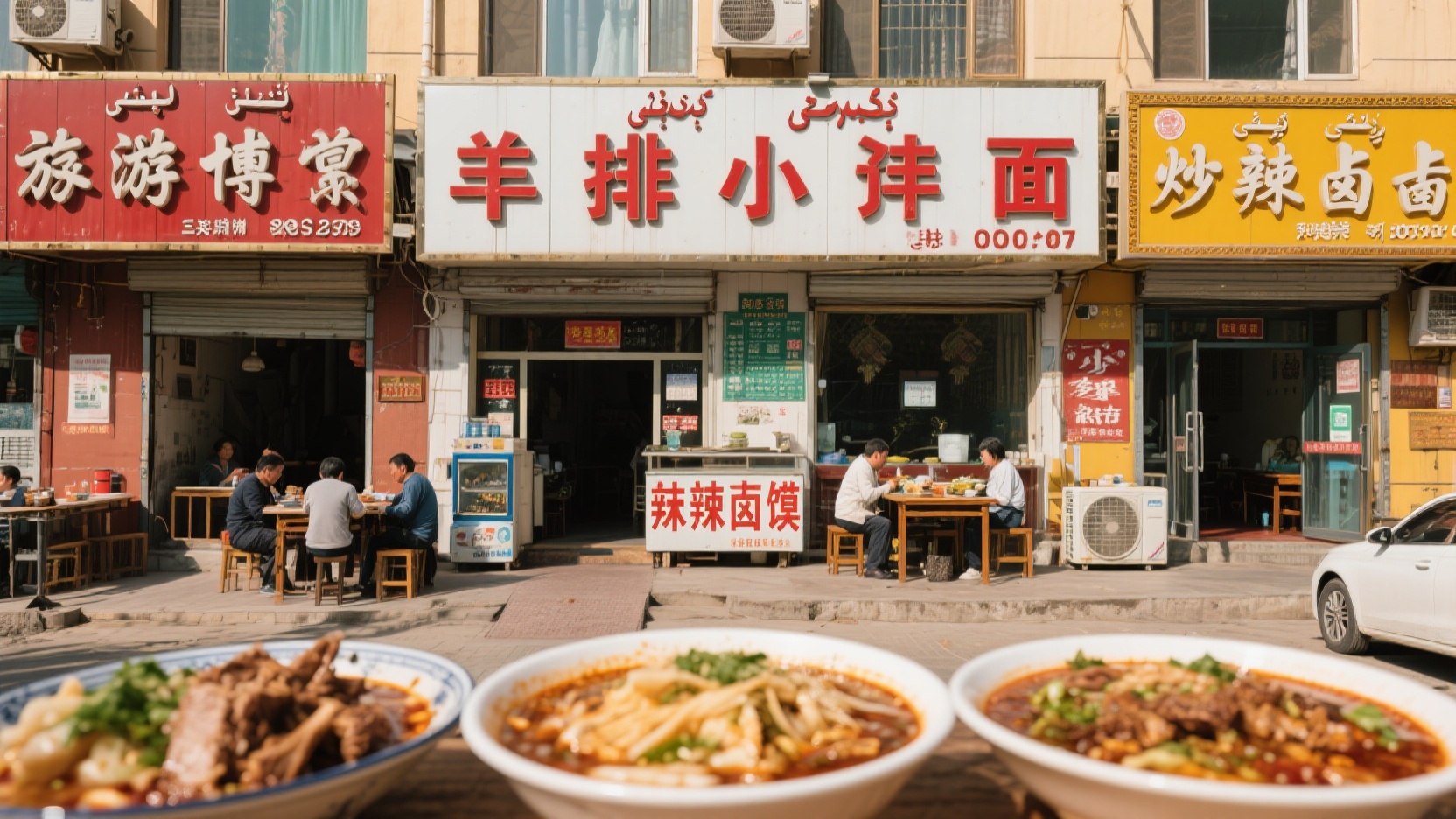
On my first trip to Yinchuan, I followed the list and tried three different hand-pulled noodles restaurants. My local friend immediately remarked, "You're only eating the touristy, queue-up versions." Later, I made three more trips to Yinchuan, specifically exploring the old neighborhoods, school back gates, and market edges in Xingqing and Xixia districts, revisiting the small restaurants that locals actually frequent after get off work. None of the restaurants on this list were on the must-eat list, they weren't marketed through short videos, and they didn't even have proper signs.
1. A lamb chop noodle shop hidden next to the community's bicycle shed, only open until 2 PM.
I stumbled upon this shop while getting lost in an old neighborhood in Xingqing District. Two pots were set up outside: one for stewing lamb ribs, and the other for making noodles. The owner used to work as a cook in a state-run canteen; after retiring, he converted his ground-floor apartment into a shop, and most of his customers were his old neighbors from upstairs and downstairs. The broth for the lamb rib noodles wasn't clear; it was a rich, slightly sour soup with lamb fat and tomatoes. The noodles were freshly torn, and their uneven thickness actually made them absorb the sauce better.
The signature dish is "Lamb Ribs Noodles," and I recommend adding a side of stewed radish. How to order: Just say "small bowl, three lamb ribs, extra cilantro," and the owner will automatically give you a spoonful of chili oil. Don't go around noon, as it gets packed with office workers from the surrounding area. There's an old-fashioned market a three-minute walk away; you can buy half a pound of freshly fried dough sticks on the way, which go perfectly with the noodle soup.
II. Taxi drivers flock to the wok-fried dumplings stall; the wok's smokiness (wok aroma) is more important than reputation.
Stir-fried noodles are a common staple food in Yinchuan, but it's becoming increasingly rare to find shops that actually stir-fry them in an iron wok over high heat without blanching them beforehand. This shop, located deep in an alley, has only the words "Home-style Noodles" on its storefront. It gets even busier after 1:30 PM because taxi drivers changing shifts come in for a bowl before leaving. The second time I went, I specifically chose 3 PM, and the owner was still washing the wok, saying, "If you come now, you won't have to wait."
The signature dish is "Stir-fried Lamb with Flatbread". Ask the owner to stir-fry the flatbread strips a little drier. The amount of lamb isn't much, but it's delicious with its smoky aroma and garlic sprout flavor. There's a cooked food shop next door that's been open for twenty years. Grab some braised beef tendon on the way back to the hotel for a perfect pairing with Eight Treasure Tea.
Third, the braised lamb bones and trotters, which are only sold at the evening stall, are made in only one pot per day.
If I only had one night to spare for late-night snacks in Yinchuan, I would choose the braised mutton bone stall on this back street in the old city. There are no fixed seats, just plastic stools surrounding two metal carts. The owner only makes one pot of braised mutton bones a day, setting up his stall at 8 pm and usually selling out by 10 pm. The third time I went, I caught the last two servings, and the guy next to me said, "I've been eating here for six years, and I've never seen the owner open during the day."
The signature "braised lamb bones" must be eaten with your hands, and the marrow should be sucked out with a straw. The braising broth has a distinct flavor of Sichuan peppercorns and dried tangerine peel. The braised lamb trotters next door are also worth trying; they're so tender you can practically bite into them, but I don't recommend ordering too many—one per person is just right. A small shop a short way west sells sour jujube juice from Helan Mountain, which is much better at cutting through the richness than carbonated drinks.
IV. The limited-edition sweet sesame balls and freshly brewed eight-treasure tea are available only in the morning; for these classic flavors, you have to get there early.
Many travel guides list Eight Treasure Tea as a standard restaurant item, but locals prefer to drink it at the stalls next to the morning market. At the entrance of the morning market near Xita, there is a stall selling Tangma Ya (a type of fried dough twist) that only stays open until 9:30 am. The freshly fried Tangma Ya is crispy on the outside and soft on the inside, and the syrup is not artificially sweet but has a thick consistency with the aroma of brown sugar and sesame.
This shop doesn't have a fixed name; just look for the big black iron pot and the elderly ladies queuing to buy breakfast. Their signature "Tang Ma Ya" (a type of sweet pastry) is sold individually, and it's best eaten fresh out of the pot; it hardens when it cools. Right next to it is a cart selling freshly brewed eight-treasure tea, made with high-quality ingredients; you can see the rose jam and dried longan at the bottom of the pot. Buying a cup to go with the Tang Ma Ya is much more comfortable than going to a teahouse for a set meal.
Fifth, the spicy soup and cold noodles sold at the back gate of the school are the most popular with students.
Spicy hot pot has suddenly become popular in the last two years thanks to short videos, with many new stores opening in commercial districts. But the original flavor is actually hidden behind a school. A few middle school students took me to this spicy hot pot shop, which is busiest after school in the afternoon. The broth is a paste made of chili powder, spices, and sesame powder, which flavors everything. But the real test of skill is in the potato slices and bean curd sheets; the thinner the slices, the more flavorful they are.
The sign doesn't advertise set meals, but rather "vegetarian skewers"—you pick them yourself and count them at the end. The owner will warn you, "Don't push your limits with the spiciness; the broth will get saltier as it cooks." The yogurt at the nearby cold drink stall is a local brand, with a strong milky flavor, perfect for balancing the spiciness. A couple more steps ahead, there's a small window selling cold noodles; you can buy some to go, but don't eat it with the spicy broth, as it might upset your stomach.
6. Don't make hand-pulled mutton noodles; clear broth and fragrant meat are the true recipe's secret.
Hand-pulled mutton is a signature dish in Yinchuan, but true connoisseurs value the fundamentals of a bowl of mutton noodles even more. This shop, located downstairs in a residential building, offers only four types of noodles on its menu. The owner fries the toppings fresh every morning, dicing the mutton and serving it with potatoes, tofu, and diced green radishes. The broth is clear and flavorful, a result of the mutton bones and vegetables slowly releasing their freshness, rather than being based on MSG.
For the signature "Lamb Noodles with Sauce," I recommend ordering a small bowl and a tea egg. Don't just order this noodle dish; also grab a "Lamb and Vegetable Pancake" from the window next door. The pancake is baked and filled with cold shredded vegetables and minced meat, which perfectly complements the texture. Some toppings will sell out after 3 PM, so it's best to go early if you want to.
The blogger concludes: The truly delicious food in Yinchuan is mostly not found in bustling commercial areas, but rather on the ground floors of older residential buildings, behind school gates, and near morning and evening markets. These shops share common characteristics: flexible opening hours, short menus, and basic ambiance, but the taste has stood the test of time, tasting the daily meals of locals. After three trips to Yinchuan, the biggest takeaway is: don't apply trendy, internet-famous logic to this city. Eat slowly, queue with the locals, and you'll discover the authentic flavors.
Three ways to avoid pitfalls
First, avoid going during peak meal times. These neighborhood restaurants have limited seating and slow service; on weekdays, there's practically no wait between 12:00 and 1:30. Arrive before 11:30 or after 2:00 PM to see if the owner gives you an extra two spoonfuls of topping when they're not busy.
Second, don't just order the signature dishes. Many small restaurants have hidden gems at nearby food stalls, beverage stands, or breakfast carts. Eating at just one place can make you miss out on the fusion of different dishes. For example, small hand-pulled noodles with fried dough twists, or braised lamb ribs with jujube juice are the default combinations for locals.
Third, remember to bring cash. Some older stalls only accept small change, or the poor network signal means scanning a QR code can take a long time. I encountered signs saying they only accept cash at both the sugar candy stall and the braised lamb trotter stall, so having small change of up to fifty yuan on hand is very useful.