
Xuzhou's stomach is hidden in its wet markets | 9 authentic local specialties you must try in the morning at Fengchu Street
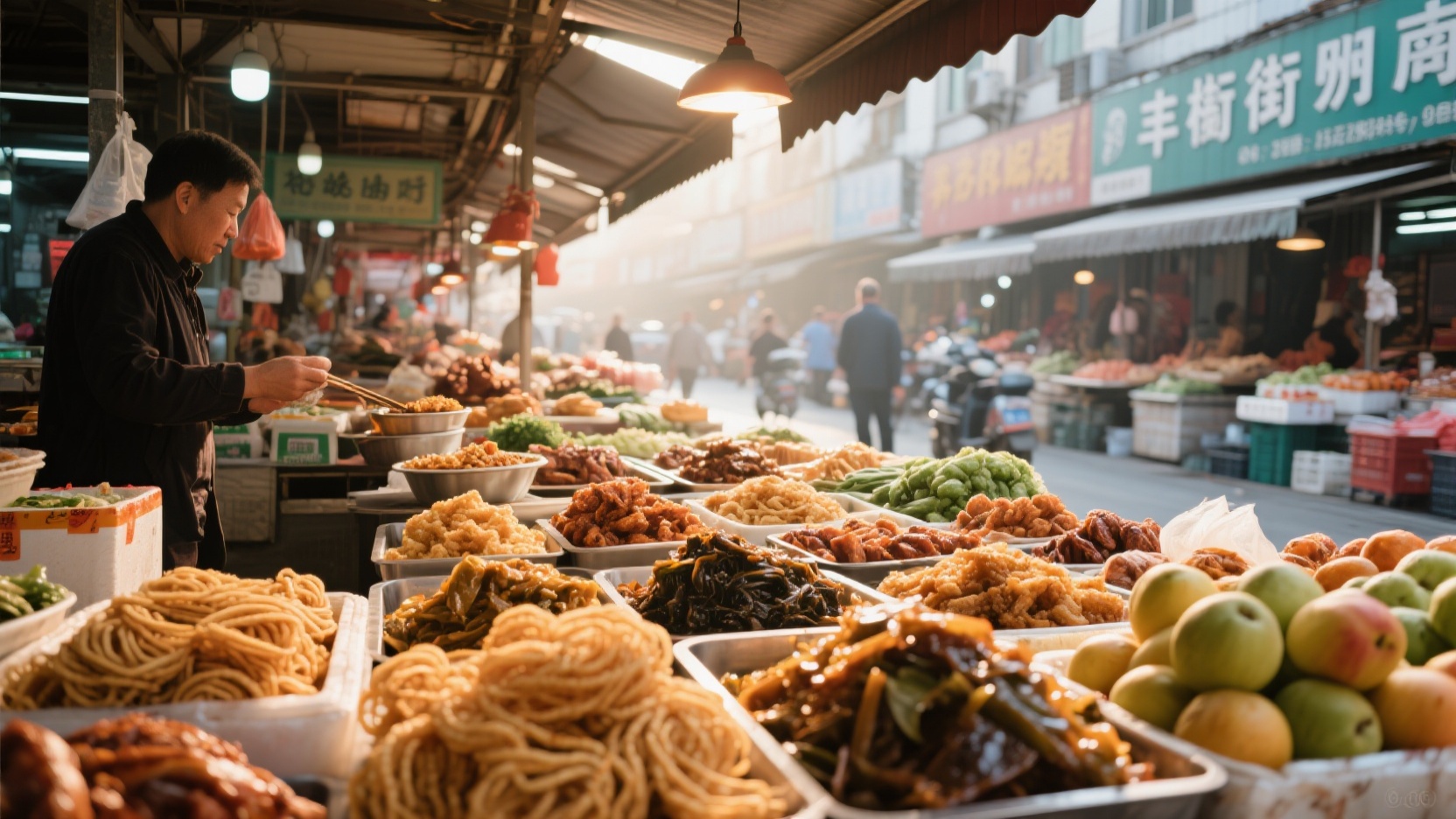
In Xuzhou, to judge whether someone is a discerning eater, don't look at how many trendy restaurants they've frequented; simply see if they're at a particular cooked food stall in the Fengchu Street market at 6 AM. As one of the most authentically local markets in Xuzhou's old city, Fengchu Street's mornings begin with the first pot of hot oil and the first shout of vendors. Most stall owners are seasoned veterans with two or three decades of experience. Many stalls lack proper signs, but the locals vote with their footsteps. Here are nine local specialties perfect for strolling around, observing, tasting, and taking home.
1. Braised pork belly and tiger-skin eggs from a cooked food stall
For the best braised pork belly, choose the middle section with skin, a good balance of fat and lean meat. The skin should be stewed until it becomes gelatinous and the lean meat is tender. Ask the vendor to scoop a piece from the broth and pour in a spoonful of the same broth, sealing the meat with the aroma of oil and soy sauce. For the tiger-skin eggs, choose those with fine, wrinkled surfaces and amber-colored egg whites; the more even the wrinkles, the more broth they absorb. At home, serve with a bowl of hot rice, topped with the braised pork belly and broth – a more rustic experience than most restaurant versions.
II. Freshly Fried "Sanzi" and Handmade "Laomo"
Choose fried dough twists that are golden in color, uniform in thickness, and do not feel soggy. Good fried dough twists will make a crisp sound when broken, and the cross-section will have fine air holes, indicating that the oil temperature and the dough resting time were just right. For the flatbread, buy freshly rolled and baked; the edges should be slightly charred, the center soft and chewy, and it should still have a wheat aroma even after cooling. These two are a hidden gem of a Xuzhou breakfast: roll a handful of fried dough twists in a flatbread, add a little pickled vegetables or chili sauce, and serve with a bowl of spicy soup—the crispness and chewiness occur simultaneously in your mouth.
3. The pickle stall's "dried radish and sweet pickled cucumber"
Xuzhou pickles are salty with a hint of sweetness, unlike the purely salty flavors of southern China. For dried radish, choose those with a natural soy sauce color, a glossy surface, and a springy texture when squeezed; too soft or too salty is not good. For sweet pickled cucumbers, choose those with thick flesh, no white core, and a soy sauce aroma that permeates the flesh; the edges should be translucent after slicing. As for how to eat them, chopped dried radish is best enjoyed with porridge to bring out its original flavor, while sweet pickled cucumbers paired with white rice porridge or fried rice can easily make you want to eat an extra bowl of staple food.
IV. The cured meat stall's "Xuzhou sausage and wind-dried chicken"
For handmade sausages, the ideal ratio is 30% fat and 70% lean. The casing should be firm and not hollow, and elastic when squeezed. When cut open, the fat should be translucent and the lean meat a rose-red color, indicating proper air-drying. For wind-dried chicken, choose chicken with slightly dry, non-sticky skin and rose-red meat, and a faint cured aroma rather than a rancid smell. Sausages are most fragrant when thinly sliced diagonally after steaming. Wind-dried chicken should be soaked in warm water to soften before steaming or stewing with cabbage; this allows the savory flavor to slowly release.
5. Radish balls and lotus root sandwiches at the fried food stall.
Choose radish balls that are fresh out of the pot, with a firm outer shell and fine radish shreds on the surface; they tend to become tough when cooled. For lotus root sandwiches, choose two slices of crisp lotus root stuffed with meat filling, using a thin, even batter, and ensuring there isn't too much oil inside the lotus root holes. They're best eaten hot, crispy on the outside and tender on the inside; if you take them home, reheating them in an air fryer or oven for three to five minutes will restore about 70% of their crispness.
6. The braised chicken and braised pig's trotters at the braised food stall.
For roast chicken, look for a bright red skin that isn't black. The chicken breast should be juicy when torn, and there should be a thin layer of gelatin between the skin and meat. For braised pig's trotters, choose the front trotters; they have springy skin, lots of tendons, and less meat, making them less greasy. Roast chicken is best enjoyed hand-torn and cold, with the breast meat mixed with cucumber or dipped in minced garlic. Pig's trotters can be served cold or cut into pieces and stir-fried with garlic sprouts; the gelatinous texture becomes even more fragrant when heated.
7. Vegetarian ham and tofu skin at the bean product stall.
Vegetarian ham is made by pressing tofu skin. A good quality ham should have a glossy surface and hold its shape when sliced; too dry and it will be hard, too wet and lacking in bean flavor. Choose tofu sheets that are evenly thick, resilient, and have a clear bean aroma; overly white sheets may have been over-processed. Vegetarian ham can be sliced directly and served as a cold dish; finely shredded tofu sheets, mixed with scallions, vinegar, and a little chili oil, are a common summer dish in Xuzhou.
8. The "Honey Three-Knife Pastry" and "Yangjiao Honey Pastry" from an old-fashioned pastry stall
Choose honey-glazed pastries with clear syrup, dense sesame seeds, and a non-sticky outer layer; the filling should be semi-liquid when bitten. Horn-shaped honey pastries are plump in shape, revealing an amber-colored filling when broken open, with a thin and flaky outer layer. Both are quite sweet and pair well with strong tea or black coffee to cut through the richness; buy in small quantities according to the number of people to avoid them becoming soggy and oily.
9. Seasonal fruit stalls selling "Dashahe apples and Fengxian white pears".
Fengxian Dashuhe apples are renowned for their thin skin and crisp, sweet flesh. Choose apples with a natural waxy coating, a firm feel, and a clear, crisp sound when tapped. Fengxian white pears, on the other hand, should have fine skin, small lenticels, and fresh stems. A light press on the shoulder of the pear should reveal its elasticity, indicating high juiciness. Apples are best eaten raw for their crispness; white pears can be juiced or stewed with rock sugar, a local way to moisturize dryness in autumn and winter.
Visiting the local market is the best way to experience a city. Trendy restaurants can be copied, but the vendors in the market who have been selling only one or two kinds of food for two or three decades, and the tacit understanding they share with the long-time residents, cannot be packaged. The lively atmosphere of Fengchu Street is the smallest unit of life for the people of Xuzhou, and also the city's most honest culinary archive.