
How many days are enough in Xi'an? Choose according to your needs and budget.
"How many days should I spend in Xi'an? How should I plan my trip? Where should I stay? How much should I spend?"—These are the most frequently asked questions before a trip. They deserve serious answers because Xi'an isn't a city where you can simply pile up attractions and expect to have a good time: it has a high density of historical information, attractions are scattered, and peak and off-peak seasons see significant differences in visitor numbers. If you plan in the wrong order, you'll end up seeing nothing but crowds; if you choose the wrong budget, you'll either waste time or stay in an out-of-the-way area. Below, I've broken it down into three categories: number of days, target audience, and budget. Find the one that fits you best and follow the steps.
Branch 1: First, match the dates to the corresponding numbers.
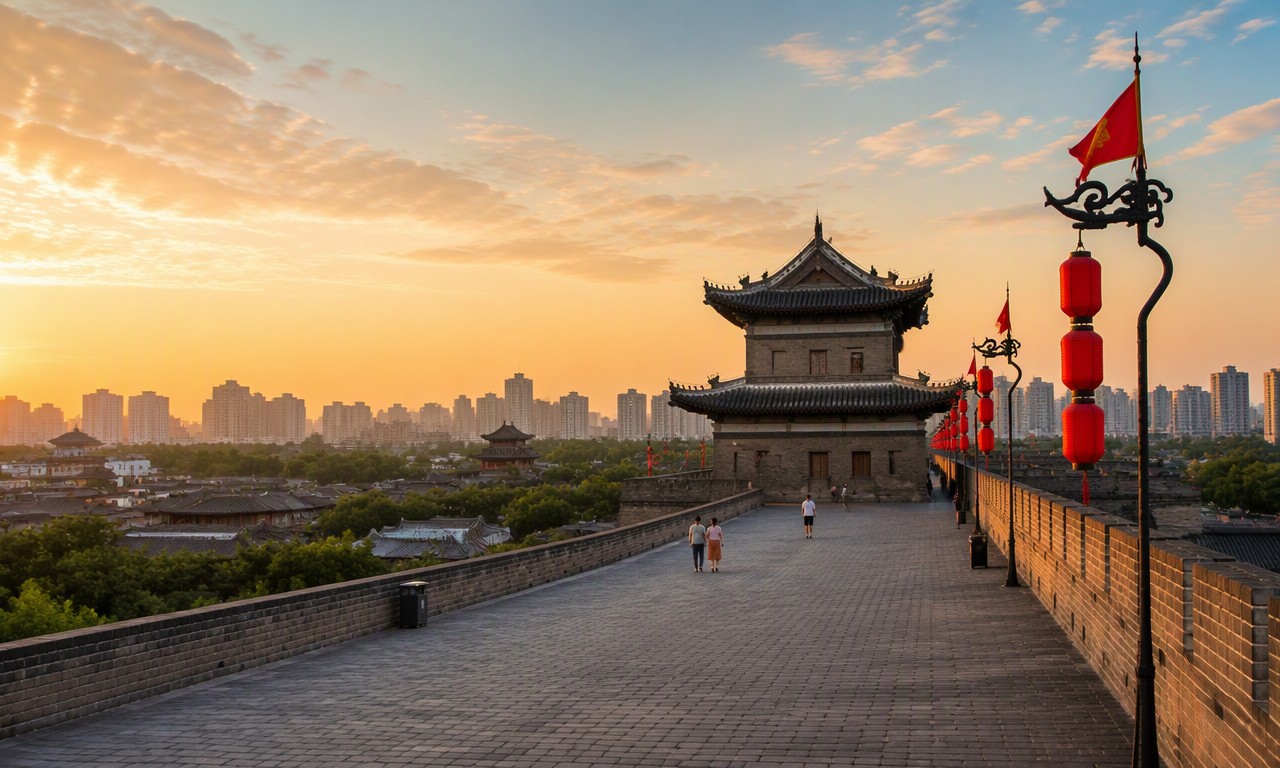
With only one day, don't be greedy; focus solely on the "Bell Tower—Muslim Quarter—City Wall" route. In the morning, take a walk around the South Gate section of the City Wall; the light is best around 10 AM, and there aren't many people. Have lunch in the North Gate area of the Muslim Quarter, but don't linger too long on the main street; head towards Xiyangshi or Dapiyuan for a meal. In the afternoon, allocate a full block of time to view the exterior of the Bell Tower and Drum Tower; you don't need to climb both, just choose one. Return to the South Gate of the City Wall in the evening to see the lights illuminated. The key decision for this one-day itinerary is to skip the Terracotta Warriors and the Shaanxi History Museum, as both require more than half a day; forcing them in will only result in a constant rush.
Two days will allow for much more time. On the first day, follow the "city center route" mentioned above. On the second day, go to the Terracotta Warriors in the morning, making sure to arrive 20 minutes before opening. Visit Pit 1 first, then return to see Pit 2 and 3; the order is crucial. After returning in the afternoon, go directly to the North Square of the Big Wild Goose Pagoda to wait for the evening musical fountain show. Many people ask, "Can the Terracotta Warriors and Huaqing Pool be done in one day?" Yes, but I don't recommend it, as you'll sacrifice comfort during your visit to Huaqing Pool. The recommended two-day itinerary is: one day in the city center and one day in the eastern part of the city; don't add anything else.
Three days is the most comfortable pace for Xi'an. The itinerary for the first two days remains the same, and there are two ways to explore the third day: For those interested in history, dedicate the entire day to the Shaanxi History Museum and the Forest of Steles, interspersed with visits to Shuyuanmen Pedestrian Street; for those traveling with children or elderly relatives, it is recommended to visit the Qujiang area on the third day, where the Tang Paradise and the Tang Dynasty Never Sleeping City are connected, and it is not sunny in the afternoon, while enjoying the lights at night.
Branch Two: Then, match the groups of people together.
For those taking children out, avoid following a "historical pilgrimage" route. Children lack patience for continuous viewing of artifacts, but they respond well to tangible objects. A better combination is: cycling along the city wall, watching shadow puppet shows or Qinqiang opera performances, enjoying snacks at the Muslim Quarter while strolling, and taking advantage of the evening lights and interactive performances at the Tang Paradise. The Terracotta Army is visually stunning for children, but explanations should be selective; don't let children stand by the pits for more than an hour.
When traveling with elderly people, the key is to control walking distance. Try to take taxis or hire a car between attractions; don't make them walk more than 300-400 meters continuously just to save a little money. Don't walk the entire length of the city wall; go up and down from the south gate. The ground conditions in the Muslim Quarter are not good, so elderly people should slow down when entering. Huaqing Pool is actually more suitable for elderly people than the Terracotta Army because it has gentle slopes, seating, and rest areas.
Solo travelers can explore more deeply. I would suggest setting aside most of a day for the Forest of Steles and the Academy of Literature. The stone inscriptions and calligraphy rubbings in the Forest of Steles are perfect for quiet contemplation alone. The Muslim Quarter is suitable for solo travelers because you don't have to cater to your companions' tastes, allowing you to try different meals along the way. The worst thing you can do when traveling alone is to join a tour group and follow a fixed route; Xi'an is best suited for travelers who want to control their own pace.
Branch 3: Then match the budget to the appropriate category.
For those on a tighter budget, staying near stations along Metro Line 2 further south is significantly cheaper than staying near the Bell Tower, and it's only a 20-minute drive into the city. Eating at affordable stalls in the Muslim Quarter is no problem at all; you can enjoy paomo (pita bread soaked in mutton soup), roujiamo (meat sandwich), liangpi (cold skin noodles), mianpi (cold skin noodles), and persimmon cakes for a very satisfying meal for just a few dozen yuan per person. As for attractions, you can climb the city wall without riding it; the Terracotta Army and the Shaanxi History Museum are must-sees; other paid attractions can be visited according to your interests.
For those on a mid-range budget, accommodation near the South Square of the Big Wild Goose Pagoda is a good option, as you can easily walk back to your place in the evening. Alternatively, you could choose a hotel north of the Bell Tower, which is close to the Muslim Quarter but avoids the noisiest areas. At this budget level, you don't need to skimp on food, but it's also not recommended to eat at expensive banquet-style restaurants on the main street of the Muslim Quarter. The money will be spent on the added cost of the new environment; it's better to spend it on getting in "earlier," such as being among the first to enter the Terracotta Warriors, which is more worthwhile than spending an extra meal.
For those with a generous budget, the most worthwhile expense in Xi'an isn't luxury hotels, but rather guided tours. Hiring a professional guide for the Terracotta Warriors and the Shaanxi History Museum offers a fundamentally different experience. Regarding accommodation, the mid-to-high-end hotels outside the South Gate offer the best locations, with views of the city wall at night. High-end hotels in the Qujiang area are suitable for those who want a slower pace, but if you only have two or three days, it's recommended to stay closer to the main tourist routes.
Branch 4: Finally, conclude according to traffic and season.
Xi'an's subway network is sufficient for tourists, but transportation to the Terracotta Warriors is a blind spot for many when planning their trips. There's no direct subway access; the safest way is to take a dedicated bus line from the east side of Xi'an Railway Station or book a legitimate day trip in advance. Don't be lured away by "day tours" offered on the street; those cheap deals often come at the cost of time spent shopping.
In terms of seasons, spring and autumn are the best times to visit Xi'an due to their temperatures. Summer is hot and sunny, so it's best to leave early and return early. Winter is cold, but the Tang Paradise area has a better atmosphere around the Lantern Festival. My assessment is: if you can only choose one season to visit, prioritize mid-April to early May, followed by mid-October to early November.