
Hidden Menu Items in Tangshan Markets: 10 Local Favorites from Hehuakeng and Shuguanglou
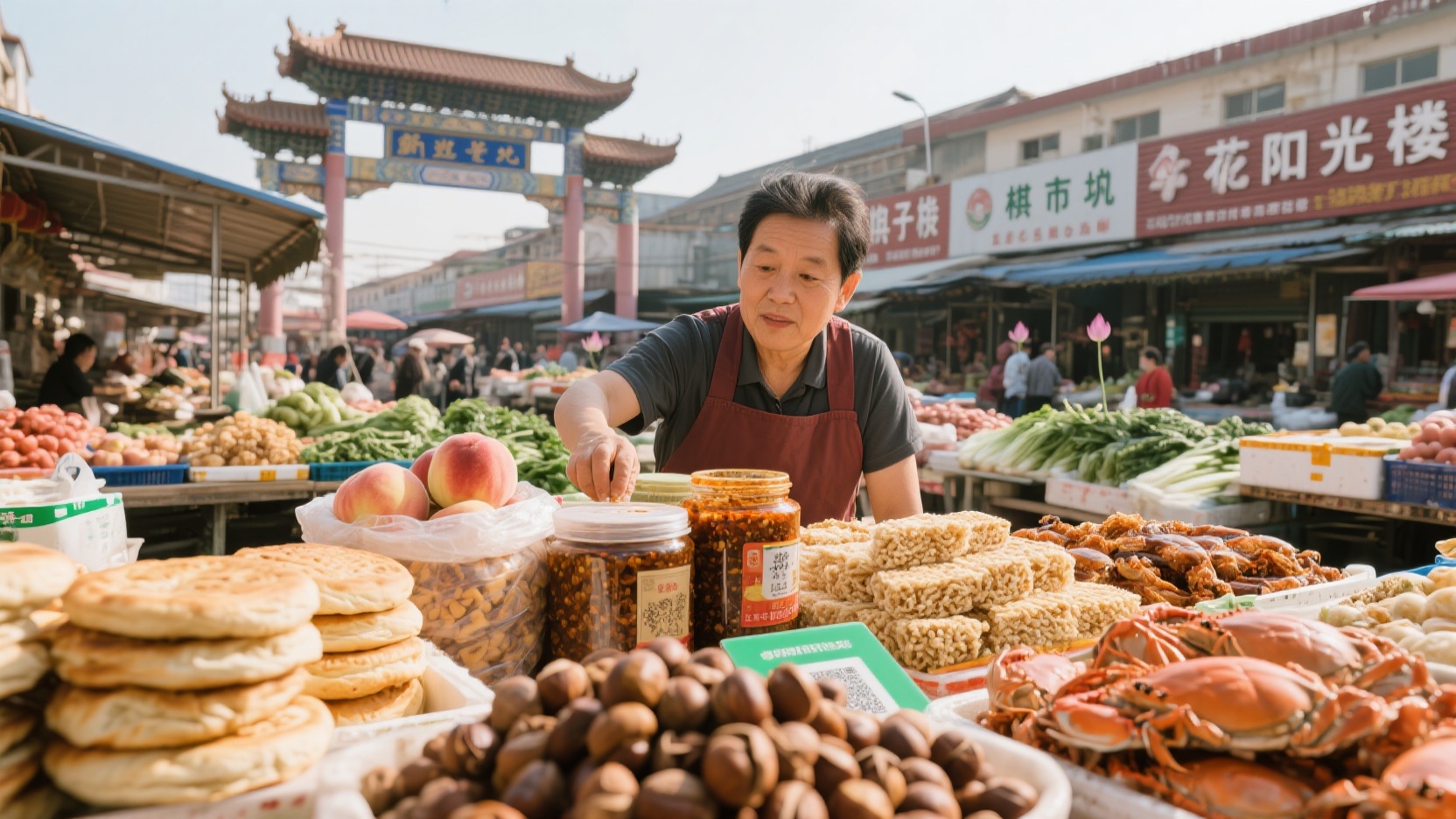
In Tangshan, if you want to find all the local specialties in one place—chess-shaped sesame cakes, fried dough twists, shrimp paste, and autumn chestnuts—you don't need to go to specialty shops; a short stroll through the Hehuakeng Market is enough. This market has been a wholesale and retail agricultural distribution center for decades, with its cooked food stalls and dried goods section best reflecting local flavors. On the other hand, the Shuguanglou Market is more community-oriented, with many temporary stalls run by local farmers in the early morning, offering fresh seasonal fruits and vegetables at a faster pace. These two markets, one bustling and the other tranquil, together reveal the most authentic essence of Tangshan's dining table.
Deli food stall: Chess Piece Sesame Cake and Wanlixiang Roasted Chicken
In the cooked food section of Hehua Pit Market, chess-piece sesame seed cakes are mostly plated according to their fillings: fresh meat, white sugar, red bean paste, and occasionally salt and pepper. When choosing, look for three things: whether the size is uniform, whether the sesame seeds are densely distributed, and whether the bottom is golden brown. Meat-filled chess-piece sesame seed cakes should be eaten hot; the outer shell is crispy, and the filling is juicy. If they cool, simply reheat them in the pan for two minutes. Sweet ones are more layered when eaten cold and go well with strong tea without being greasy. Wanlixiang roast chicken is commonly found in the same area; the skin is bright red and slightly dry. Choose chicken breast meat that is firm to the touch and has a mild smoky flavor. Tear it by hand and sprinkle with a little salt and pepper; it's chewier than cut into pieces and also suitable for sandwiching in a hot steamed bun.
Handmade desserts: Honey sesame candy and peanut brittle
Handmade pastry stalls always pile honey sesame candy on top. Judging quality is straightforward: it should be light yellow in color, with intact petal shapes, thin enough to be translucent, and neither crumbly nor sticky. It should be crisp in the mouth, with sweetness from honey, not saccharin, and no sour aftertaste. For peanut brittle, choose pieces with a dense cross-section and evenly distributed peanut pieces, avoiding those with an oily sheen, as this indicates dampness or over-frying. Both are best paired with local Tangshan flower tea; the tea balances the sweetness and adds more complexity than eating them alone.
Bean-flavored delicacies: Fried dough sticks and lazy tofu
"Gecha" is a unique mung bean pancake from Tangshan, available both freshly made and vacuum-packed in the market. For fresh consumption, choose pancakes that are light green in color, have no cracked edges, and have a distinct bean aroma. Cut them into diamond shapes and deep-fry to make "Gecha boxes," or wrap them around meat filling and steam. If you want to stir-fry, buy slightly thicker, larger Gecha and cook them with cabbage; they absorb the broth and become even more delicious. Lazy tofu is made by grinding green and yellow soybeans without removing the residue; it's usually sold in a cheesecloth bag, and has a bluish-white color and a slightly coarse texture. It doesn't keep well; stir-fry it with eggs or stew it with bok choy on the same day. It has a slightly grainy texture, but the bean aroma is strongest then.
Coastal Sauce: Shrimp paste, shrimp oil, and braised crab
Tangshan, located near the Bohai Sea, often overlooked gems in its pickle stalls are shrimp paste and shrimp oil. Choose shrimp paste that is grayish-pink, oily on the surface, and free of black spots; it should have a pungent, salty aroma without any fishy or foul smell. Common ways to enjoy it include steaming eggs with shrimp paste or cooking it with tofu—a touch is enough to enhance the flavor. Shrimp oil is perfect for dipping sliced pork or mixing with shredded radish. In spring and autumn, some stalls also offer braised crab or mantis shrimp; choose those with bluish shells, intact segments, and clear brine. These are best enjoyed with drinks or porridge, but due to their high salt content, it's best to consume them in moderation.
Pickled vegetable jar: Yutian mustard greens and pickled garlic
Yutian mustard tubers are often sold sliced or whole at pickle stalls. When choosing, squeeze them by hand; those that are firm, have little salt residue, and an even soy sauce color indicate they are thoroughly pickled and have a good crispness. After buying them, slice them finely, add sesame oil and a little vinegar, and serve with congee or noodles for a refreshing treat. For pickled garlic, choose those with intact skins, a clear broth, and a crisp texture without being too spicy. If the stall also sells pickled cucumbers and radishes, you can buy a small amount together, but locals in Tangshan prefer the crispness of the mustard tubers and the sweet aftertaste of the pickled garlic.
Seasonal fresh produce: Qianxi chestnuts and Leting peaches
After autumn arrives, stalls selling Qianxi chestnuts in the market often display their selection in open burlap sacks. When choosing chestnuts, shake them first; those that make a dull sound are more juicy and fresher. Next, check for a dark brown skin with visible fuzz and no insect holes at the tip. Raw chestnuts can be boiled or roasted at home; steaming concentrates their sweetness. If you happen to be there in June or July, Leting peaches are the star. Choose peaches with a greenish-yellow skin tinged with red, flesh that easily separates from the pit, and a deep aroma. The firmer ones can be left for a day or two to soften and ripen before peeling and eating; they'll be bursting with juice.
Visiting the local market is the best way to experience a city.
The wet market is a living archive of a city's flavors. The sweet, salty, savory, and glutinous textures of Tangshan aren't found on menus or in display cases, but rather beside the pickle jars in Hehua Pit and the chestnut piles at the Shuguanglou morning market. Watching the vendors cut dough twists, recommending today's shrimp paste, and hearing shoppers casually say, "I'll steam eggs at home," brings you closer to the authentic rhythm of local life than any travel guide. To truly understand a city, start with a morning stroll through its wet market—go empty-handed, leave with a full bag; the flavors you experience will last longer than any photograph.