
It's not summer! Qingdao winter food guide | Local's firsthand experience: avoid these pitfalls! Don't be fooled by travel guides anymore!
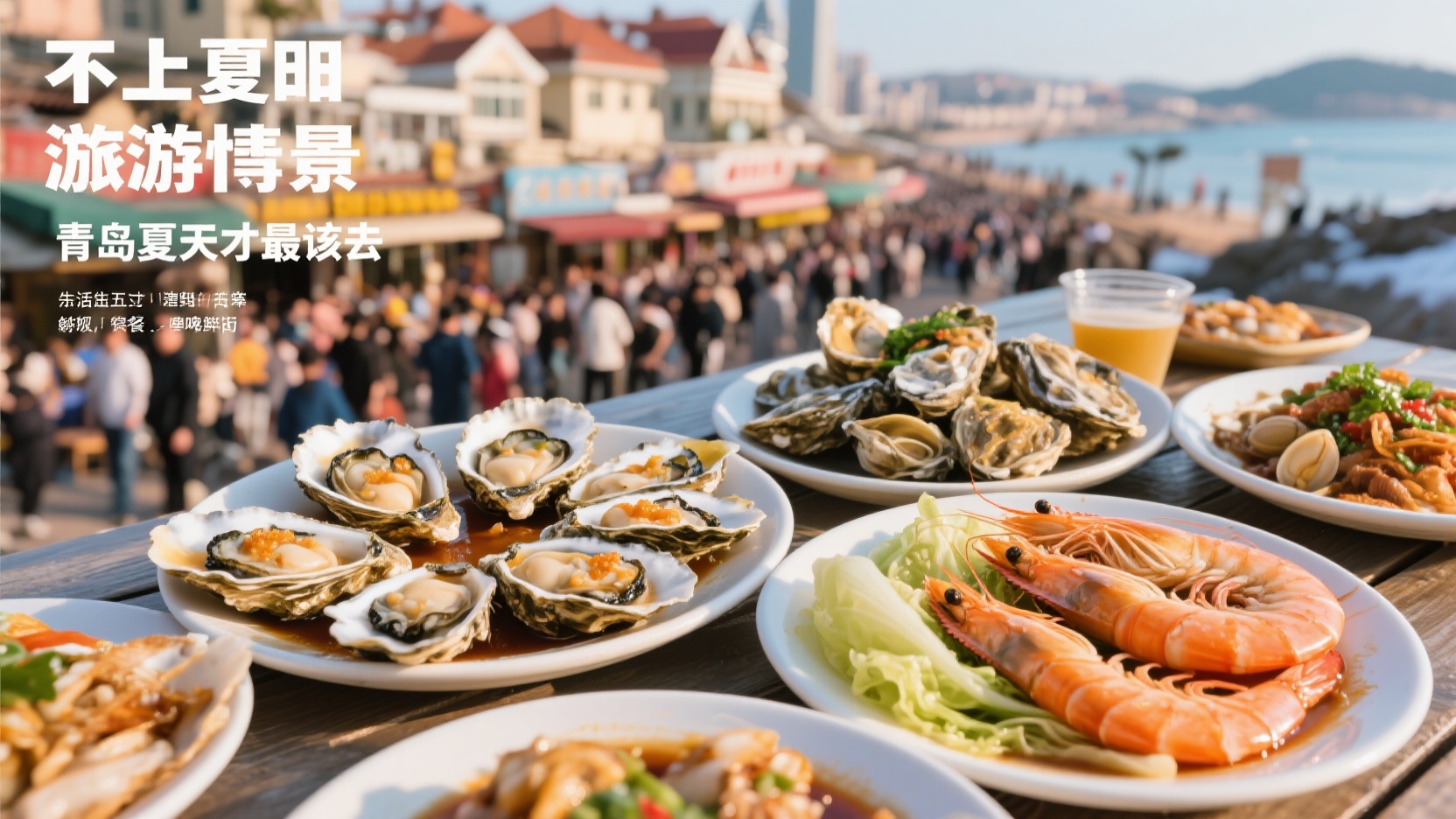
Don't be fooled by travel guides that say "Qingdao is best visited in summer." As a local who has lived in Qingdao for over five years and visited more than twenty times, I've been so crowded at the Beer Festival in July that I couldn't even get a hot meal. What I truly look forward to each year is the quiet, deserted period from after the first snowfall to before the winter solstice, which is often overlooked by tourists. There's an old saying in Qingdao: "Oysters in cool water, clams in hot water," meaning that oysters are plumper the cooler the weather, and clams are most delicious in the hottest part of summer. So this article won't cover the fishing season or trendy seafood dishes; it will simply talk about some of the best winter foods to eat in Qingdao, categorized by four meals a day.
Breakfast: Steamed egg with shrimp paste and Wanggezhuang steamed buns; sweet millet porridge is just a cover.
After a light snowfall, when the north wind blows across Jiaozhou Bay, locals bring out the shrimp paste from the bottom of jars. The low temperatures of winter fermentation reduce the pungent, fishy smell of summer, giving it a savory, slightly sweet aftertaste. The most traditional way to eat it isn't simply dipped in scallions, but rather a small spoonful of shrimp paste mixed with two eggs, steamed, and served with thick slices of Wanggezhuang steamed buns. The buns are torn by hand and dipped in the shrimp paste sauce from the steamed eggs; one bite offers a satisfying combination of rustic texture, savory flavor, and warmth.
Sweet millet porridge isn't the main dish in this breakfast, but it's there to warm things up. Qingdao's sweet millet porridge is savory and ginger-flavored; a bowl of it on a winter morning makes even the harshest sea breeze feel warm. Tourists often pair it with soy milk and fried dough sticks in the summer, but this combination of fermented grains and whole grains is actually the foundation of old Qingdao's winter diet. Don't underestimate this breakfast; it can keep you going for a whole morning on the beach.
My first bite of lunch: shrimp stewed with cabbage. Only cabbage from Jiaodong after the first frost truly deserves to be called "fresh."
Many people mistakenly believe that there are no vegetables to eat in Qingdao during winter. In fact, the Jiaodong cabbage that has been touched by frost is at its sweetest and most tender, retaining its moisture and becoming soft and tender when cooked. Paired with small prawns or mantis shrimp—which are scarce in winter but kept by local fishermen—no broth is needed; the cabbage will release its own juices, and the shrimp oil will slowly simmer, turning the soup a light reddish hue.
How do locals prepare this dish? They always start by placing a piece of cabbage leaf soaked in shrimp oil on top of their rice, then peel the shrimp. Don't underestimate this seemingly bland dish; summer cabbage is very moist, and no matter how you cook it, it just doesn't quite have the same flavor. It's only in winter that you can truly "cook" it to achieve its gelatinous texture. If you order this dish outside of winter, locals will just smile and say you're in a hurry.
Lunch main course: Oyster and tofu soup; the simpler the cooking method, the fresher the winter flavor.
Oysters are at their fattest before the winter solstice, their shells bursting with meat. In Qingdao, people don't immediately think of grilling oysters with garlic; instead, they make an oyster and tofu soup. They cut firm tofu into cubes, boil water, add the oyster meat, cook for a few seconds, then turn off the heat and sprinkle only with white pepper and cilantro. The simpler the preparation, the less likely it is to ruin the freshness of winter.
Why is it best to eat oysters during this season? Because oysters are considered "watered-down" in summer, with thin meat and bland flavor. Only when the water temperature drops below 10 degrees Celsius do they begin to store glycogen in preparation for winter, resulting in a completely different level of freshness and taste. Locals typically eat them with rice soaked in the soup, or with half a fried bread slice, enjoying the soup and oysters together – much more satisfying than a seafood platter. After finishing this soup, you'll understand why old Qingdao residents say, "Winter is the true season for oysters."
Afternoon tea: Grilled oysters with warm Jimo rice wine; avoid draft beer in winter.
Afternoon tea isn't just about desserts. Along the docks and seafood markets in Qingdao during winter, you can often see oysters grilled on small stoves until they just begin to open. No opening the shells, no garlic sauce—the essence lies in the original broth that emerges during grilling. Locals call it "freshness first, then richness." The oysters themselves are already flavorful enough; any extra seasoning would only overpower them.
The tea must be served in a porcelain bowl warmed to 50-60 degrees Celsius, not draft beer. Jimo Laojiu is a local Qingdao yellow wine; it's meant to be warmed in winter to ward off the cold and soothe the stomach, but in summer it can cause heartburn. Tourists who are still drinking ice-cold beer in winter are basically "out of touch." This afternoon tea set isn't expensive, but it's the perfect way to enjoy the winter sea breeze of Qingdao as a snack. It's not ideal for taking photos, but it's definitely perfect for sitting down and savoring slowly.
The first half of the late-night snack: wontons with microwaved grilled meat; the stronger the wind, the more you need to sit on a small stool.
In Qingdao, the liveliest places late at night in winter aren't shopping malls, but roadside wonton stalls. The wonton wrappers are thin, the broth is just seaweed, dried shrimp, and a touch of soy sauce, and the meat filling is sparse but perfectly springy. What truly captivates locals is the row of microwave-grilled meats next door—meat tendons, chicken hearts, and shank, brushed with sauce and grilled until the edges are slightly charred. This combination of roadside wontons and microwave-grilled meat is hard to replicate anywhere else.
In summer, people mostly eat wontons to sober up, but winter is when they truly come to life. The cold wind blows the steam from the wonton soup into a white mist; sitting on a small stool, huddled up, eating a bowl is the most genuine form of comfort for Qingdao locals after get off work. Don't ask which stall is the best; just sit down at the one where local taxis stop frequently. The stronger the sea breeze at night, the better the wontons taste.
Late-night snack: Sun-dried mackerel with cornbread; the winter north wind is the only secret ingredient.
Sweet-dried mackerel isn't made with added sugar. Fresh mackerel is gutted, rinsed with seawater, and then hung to air dry naturally in the north wind. In Qingdao, from the time of Minor Snow to the Winter Solstice, the low temperatures and dryness result in a slightly yellowish surface and firm flesh. When steamed and eaten, it has a subtle sweetness. Drying mackerel in summer often leads to it becoming oily and rancid, making it a completely different experience. Therefore, it's no exaggeration to say that sweet-dried mackerel is a winter-exclusive flavor.
How do locals pair it? They steam sun-dried mackerel into sections, serve it with cornbread and a small dish of scallions dipped in shrimp paste. A bite of cornbread, a bite of fish, a bite of scallion—that's the hearty, rustic flavor of winter. This late-night snack isn't trendy, but it best illustrates that "Qingdao isn't lacking in food in winter, it's just that you haven't come at the right time." After this meal, your understanding of this city will be completely different.
In conclusion
First, don't ask locals "What can you eat in Qingdao in winter?" If you haven't tried oysters, sun-dried mackerel, and shrimp with cabbage, don't say you've been here.
Second, when visiting Qingdao in winter, avoid ordering seafood platters at the Beer Street. They're expensive and don't reflect the season. Locals rarely drink chilled draft beer in winter.
Third, when choosing oysters, it's best to look for locally sourced ones from around the time of Minor Snow to Winter Solstice. These oysters have milky white flesh and firm edges, and are not necessarily the bigger or fatter they are.
Fourth, Jimo Laojiu must be drunk warm. Do not add ice or mix it with Sprite, as that would be a waste.
5. Wild wonton stalls usually set up late at night. When sitting on a small stool, keep an eye on your bag, as the wind can cause oil splatters to fly around. Don't wear white clothes.