
Avoid trendy artsy spots in Ningbo | Locals' list of places to avoid: A 5km walking route is the real heart of old Haishu District
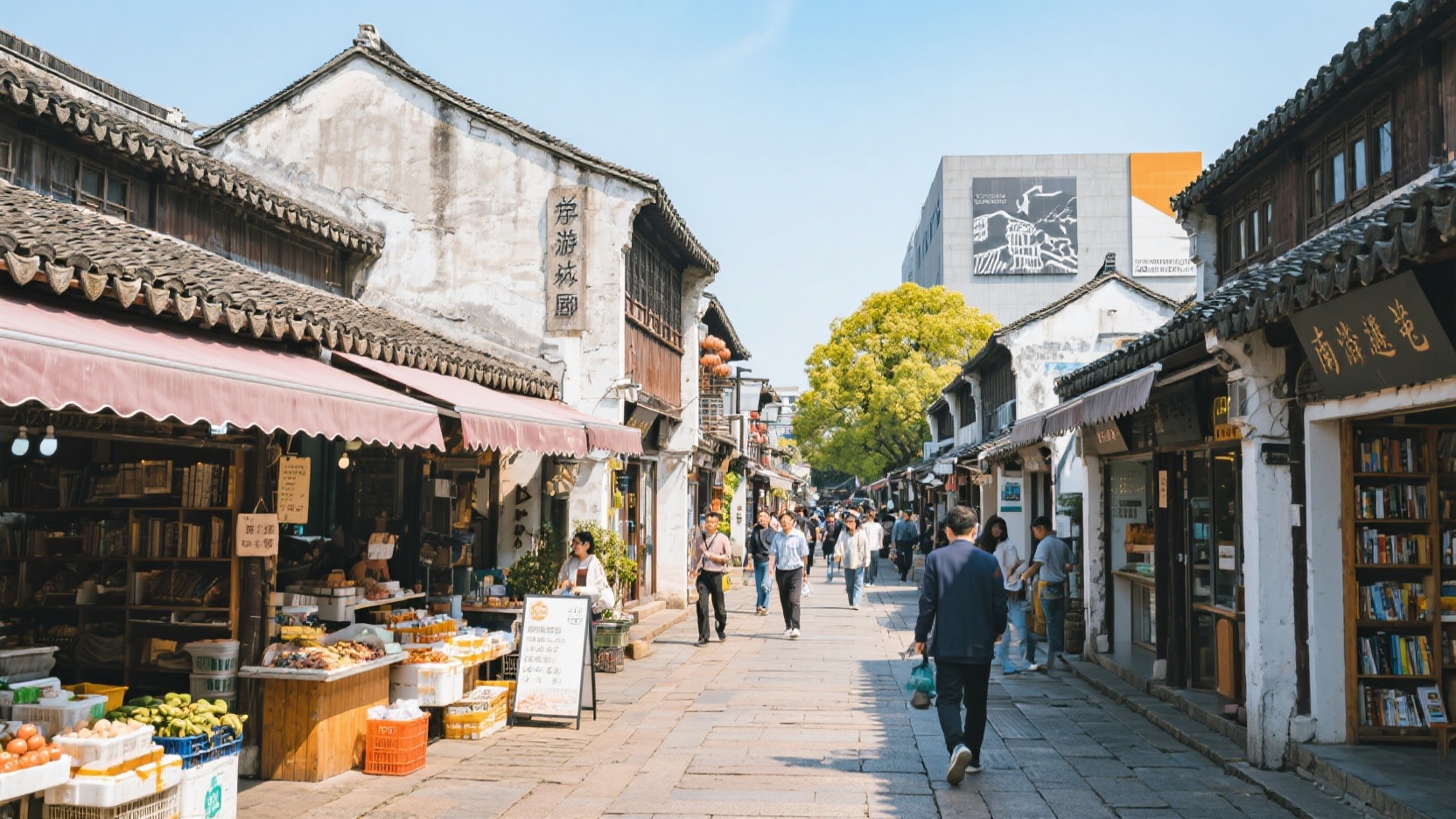
When planning a "cultural and artistic tour" in Ningbo, locals are most afraid that travel guides will list Nantang Old Street, the Old Bund Bar Street, and Gulouyan as the top three destinations—these are places we usually pass by without even going in.
It's not that these things have no value, but rather that they've long been rewritten into homogenized templates by online traffic: the cobblestones are new, the snacks are the same nationwide varieties, and the camera is full of people. The truly artistic elements that belong to Ningbo are hidden in the alleyways, markets, old factories, and riverside walkways of old Haishu District. The five-kilometer walking route below is a local's daily routine that I walk every week—not as a check-in, but as part of "living life."
Avoid these pitfalls: Locals won't even go into these three "cultural photo spots" if they're passing by.
The biggest problem with Nantang Old Street is that it feels "fake old." The renovated street is indeed suitable for taking travel photos, but locals can tell at a glance that it lacks the authentic atmosphere of old Ningbo. No matter how long the queue for fried dough sticks is, it can't hide the fact that the street is full of homogenized tourist souvenirs.
The old Bund bar street is drab and noisy during the day and chaotic at night. Taking photos relies entirely on filters and specific angles. Getting to the riverside is often interrupted by touts trying to solicit business. If you want to see the old Bund, only visit the Ningbo Art Museum and the riverside promenade; you can skip the main street.
The pedestrian street along the Drum Tower was so crowded you couldn't even hold your phone up. The shop signs were all incredibly flashy, but the content was no different from any other imitation ancient street in the country. The real attraction of Ningbo Drum Tower lies in the Yongfeng Warehouse ruins and the side of the city gate, not the main alleyway packed with grilled squid.
A 5-kilometer walking route: from Xiaowen Street to the confluence of the three rivers, without turning back.
This route is about five kilometers long. It's recommended to start walking it in the spring or autumn after 3 pm when the light is softest and you can avoid the morning rush hour at the market and the evening rush hour at the bar street. It's suitable for people who don't want to queue, aren't obsessed with taking "spectacular" photos, and prefer to experience local life.
The order is: Xiaowen Street—Yongshou Street—Zhongshan Park—Yuehu Farmers Market—Independent Bookstores by Yuehu Lake—Yongfeng Warehouse Ruins outside Gulou—1844 Heyi Art and Life Center—Ningbo Art Museum—Sanjiangkou Trail. Each stop should be within a 15-minute walk; there's no rush.
Xiaowen Street—Yongshou Street—Zhongshan Park: Old street entrances and community parks
Xiaowen Street and Yongshou Street retain the essence of the old city: plane trees, old door panels, bamboo poles for drying clothes, and old women sitting at their doorsteps shelling beans. Stopping for ten minutes allows you to see the orderly life without uniform shop signs, rather than a "Republic of China style" setting.
The best spot to photograph is the plane tree-lined street at the intersection of Yongshou Street, where the afternoon sunlight will be oblique. Near the Nine-Bend Bridge in Zhongshan Park, you can capture glimpses of everyday life in Ningbo, such as people playing chess and singing Yue Opera. For food nearby, choose the old-fashioned shops at the alley entrances that only serve breakfast and lunch; try their savory soy milk, glutinous rice balls, and roasted vegetable rice cakes—the price ranges from a few yuan to over ten yuan per person.
Yuehu Farmers Market—Independent Bookstore: The Vibrant Energy of the Market and the Tranquility of the Bookstore
Yuehu Market is a "folk art gallery" I frequent. The shimmering ribbonfish in the seafood section, the dark brown of the pickled vegetables, and the warm lights in the cooked food section are more captivating than any trendy wall. Stopping for ten minutes, even if you don't buy anything, just watching how the vendors arrange their produce and quote prices in Ningbo dialect is the most authentic local art.
For the best shooting location, try backlighting in the seafood section to photograph the silver carp, or take pictures of the steaming food in the cooked food section. Avoid shooting directly in the vendors' faces. Nearby, you can grab a bowl of noodles or a bowl of salted pickled rice cake soup – both affordable and filling. Turning from the market to the independent bookstores by Moon Lake, you'll instantly transition from the vibrant atmosphere to tranquility.
That bookstore has been open for many years. It's not big, and it doesn't sell any gimmicky cultural or creative products. Its selection of local cultural and literary books is consistently good. Stop for ten minutes, flip through a few pages, and watch the sunlight from the courtyard stream in through the windows. Take your camera from the steps at the bookstore entrance or by the window; don't use flash so as not to disturb those reading. The nearby coffee shops are mid-range; you can choose whether or not to drink there.
The area surrounding Gulou—1844 Creative Park: The real story of old factory renovation
The Drum Tower isn't off-limits; it's just not the touristy, popular route. Instead, walk to the outer perimeter and first visit the Yongfeng Warehouse Ruins, a Yuan Dynasty storage site. The stone railings and sides of the tower are much cleaner than the main street. Stop for ten minutes; there are fewer people, and you'll have more space to take photos.
For a better viewpoint, take a photo of the Drum Tower from the stone railing of the Yongfengku Ruins, looking up at its silhouette. Alternatively, walk east to the outer edge of Gongyuan Road, avoiding the main street signs. Nearby dining options include Ningbo glutinous rice balls or noodles in the alleys surrounding the Drum Tower, costing around ten yuan per person.
Walk along Heyi Road from Gulou to the 1844 Heyi Art and Lifestyle Center. This area was converted from old factories and warehouses and hosts exhibitions, small theaters, and local art events from time to time. Stop for ten minutes to admire the transition between old and new buildings. The steel structure staircase in the atrium is very photogenic. The restaurants in the park are mid-to-high-end; you won't regret not eating there after your visit.
Ningbo Art Museum - Sanjiangkou Trail: Avoid the bar street and watch the sunset
The Ningbo Art Museum, converted from an old ship dock, has an exterior that's worth seeing. It also hosts regular exhibitions of local art. A ten-minute stop could be spent exploring just one exhibition hall, or you could simply take a photo from the steps outside the main entrance without going inside. Shooting from below on the steps is best done in the evening when the light is ideal.
After leaving the art museum, don't turn into the main bar street of the Bund. Instead, walk along the Sanjiangkou (Three Rivers Estuary) promenade to see the confluence of the Yongjiang, Yaojiang, and Fenghuajiang rivers. Around sunset, street performers sing old songs, which is much more relaxed than the commercial performances in the bars. Position your camera under the Yongjiang Bridge or along the riverside railings to capture the changing colors of the sky at the confluence of the three rivers.
For food nearby, you can try the grilled vegetable rice cakes and ashe-juice dumplings at the riverside stalls, or walk to the snack shops near Raffles City; they're all reasonably priced. It's about five kilometers from here, and it's just getting dark, a good time to wrap things up.
In closing: 5 tips you shouldn't ask locals about.
1. Don't go to Nantang Old Street and Gulou Pedestrian Street on weekend afternoons, as they will be so crowded that you will wonder why you came. If you must go, pass by before 7 a.m. to see if the streets are empty.
Second, this walking route is best suited for spring and autumn. In summer, it is recommended to start after 5:30 pm. In winter, choose a sunny afternoon. Avoid walking through Yuehu Market on rainy days, as the ground is slippery and the smell is strong.
Third, remove the "Old Bund Bar Street" from the cultural list and only keep the Ningbo Art Museum and the riverside promenade. You will see a completely different Sanjiang Estuary.
Fourth, when taking photos of people in the market, avoid taking pictures of faces. Buy some small items first, and the vendors will be much nicer to you. In bookstores, don't pose for photos; just browse quietly as a sign of respect.
Fifth, there is no entrance fee for this five-kilometer stretch. Wear comfortable shoes and bring a few dozen yuan in change for snacks. Don't be swayed by the "Old Ningbo Specialty" signs on the street.