
Nanjing 3-Day 2-Night Trip: Avoid Pitfalls | Don't Be Fooled by Travel Guides Anymore, Local Tested Itinerary Corrections and Avoidance Checklist
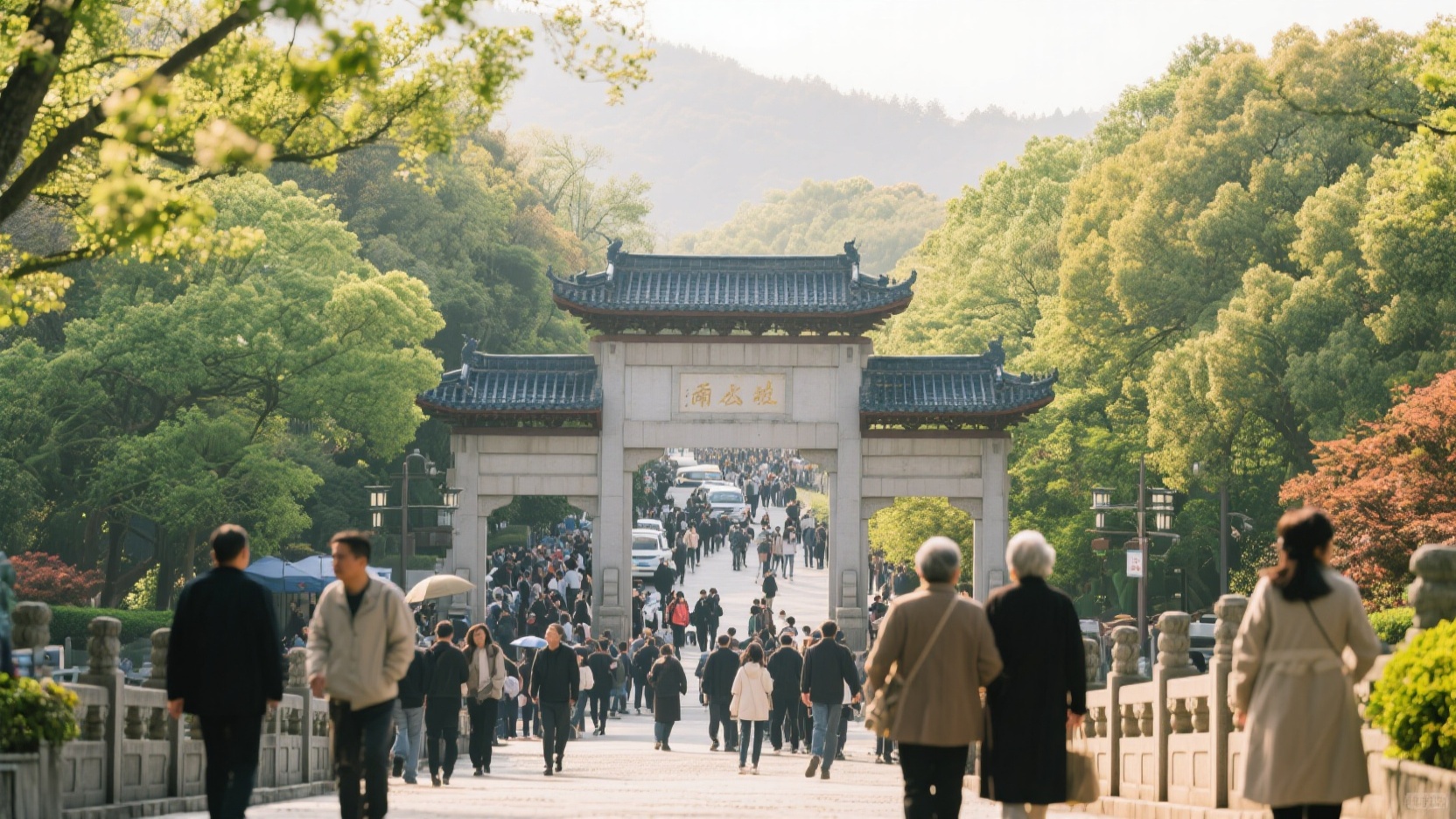
During the National Day holiday, I once took a friend on a "classic 3 days 2 nights" itinerary, visiting Sun Yat-sen Mausoleum, Ming Xiaoling Mausoleum, and the Music Terrace on the first day. We arrived at 10 a.m. and didn't manage to squeeze out of Ming Xiaoling Mausoleum until 1 p.m. We didn't even get to touch the steps of the Music Terrace.
Many online Nanjing travel guides cram all the attractions from the three administrative districts into a single day, completely ignoring cross-district commutes and long queues. Nanjing is best enjoyed at a leisurely pace, not a rushed, checkpoint-based experience. Below, we've broken down the most widely circulated route segment by segment, giving you a revised, local-style version.
Don't force yourself to visit "Zhongshan Scenic Area" on day one: it's not that it's bad, it's just that you're doing it the wrong way.
Travel guides often say, "Morning visit to Sun Yat-sen Mausoleum, afternoon visit to Ming Xiaoling Mausoleum, evening visit to the Music Terrace." In reality, during holidays, there are two queues from the subway station to the memorial hall at Sun Yat-sen Mausoleum, and the road to the mausoleum is basically blocked after 9 pm, so walking is worse than taking a taxi. As for the most beautiful stone elephant road and Zixia Lake at Ming Xiaoling Mausoleum, most people only walk to the mausoleum palace and then turn back.
The most worthwhile thing to see at the music stage is the pigeons taking flight, not the crowds. If you arrive around noon, the pigeons are already full and too tired to fly. Thirty minutes is enough at this time, but it's not worth waiting an hour at the entrance. Locals prefer Liuhui Pavilion and Qianhu Lake, which are quieter and free.
Correction: Zhongshan Scenic Area is now separated. Arrive at Ming Xiaoling Mausoleum before 7:30 am, enter from Plum Blossom Valley, and walk along Stone Elephant Road to Zixia Lake; head to Sun Yat-sen Mausoleum at 9:30 am to be among the first visitors; the Music Terrace is optional, or you can opt to eat vegetarian noodles at Linggu Temple instead.
The second day, from the Presidential Palace to 1912, Confucius Temple, and the Qinhuai River, was a day marred by traffic congestion.
This route crosses the old city districts of Xuanwu and Qinhuai. Zhongshan East Road and Jiankang Road are mostly one-way streets, and traffic jams during holidays are unbearable. The queue at the Presidential Palace in the morning is longer than the security check. Once inside, a quick 40-minute visit is sufficient; there's no need to spend two hours there.
1912 looks like an empty shell during the day; the bar street only comes alive at night. Going during the day is like browsing a row of closed shops. The core of Confucius Temple isn't "shopping," but "crowding." Guides suggest taking a night cruise on a painted boat, but you'll have to queue for one to two hours, and all you'll see on the boat is your phone screen.
The truly worthwhile attractions are the nearby Zhan Garden, Bailuzhou Park, and the Wengcheng (outer city wall) of Zhonghua Gate. In the evening, walk along the Qinhuai River from Wuding Gate to Dongshuiguan; it's less crowded, free, and more comfortable than taking a pleasure boat. The Presidential Palace can be replaced by the Six Dynasties Museum or the Jiangning Textile Museum.
The third day, consisting of "Nanjing Museum - Laomendong - Memorial Hall," is the easiest time to fall into reservation traps.
The Nanjing Museum is free but requires reservations, and during peak season, same-day reservations are almost impossible. The guide suggested arriving around noon, but there were no tickets available on-site, so I had to go to Laomendong instead, only to find it also packed with tourists.
Laomendong is a place you can visit, but avoid going at noon or in the evening. Before 9 a.m., the alleys are still quiet; grab a sesame seed cake and a bowl of soy milk there—it's much better than queuing for those trendy street food stalls. The Nanjing Museum and the Ming Palace Ruins are on the same day; book the earliest show, and then head to Wuchaomen Park afterward.
The memorial hall is easily accessible, but the queues are unpredictable. It's recommended to choose only one "must-see" and avoid trying to visit all three. Flexibility on the third day is more important than simply checking off must-see spots.
Those trendy restaurants with two-hour queues don't really require you to kneel down to eat there.
The recommended dishes in the guides—duck blood vermicelli soup, beef potstickers, and soup dumplings—often have queues of up to two hours. The taste isn't terrible, but it's not irreplaceable either. Any random restaurant near Nanjing that's been open for over five years would easily score 70 or 80 out of 100.
What you really need to avoid are the areas "within scenic spots" and the "top three spots on travel guides." The duck blood soup at Confucius Temple, the plum blossom cake at Laomendong, and the famous queue king at Kexiang are all for tourists. If you want to eat there, go early or avoid peak hours; the queues are much shorter after 2 PM.
Locals tend to frequent neighborhoods like Hongmiao, Nanhu, Suojincun, and Wufu Street, where they can easily browse the wet market and used bookstores after their meal. The food may not be fancy, but there's no need to queue and you won't feel ripped off.
Indigenous Optimized Version: 3 Days 2 Nights + 1 Day Flexible Alternative
Day 1: Arrive at the Stone Elephant Road of Ming Xiaoling Mausoleum before 7:00 AM, enter Sun Yat-sen Mausoleum at 9:00 AM, have noodles at Linggu Temple for lunch, walk along the Zijin Mountain Greenway to Liuhui Pavilion and Qianhu Lake in the afternoon, and return to the city center for dinner at Hongmiao or Zhujiang Road. Don't make the music station the core focus.
Day 2: Morning: Six Dynasties Museum or Jiangning Textile Museum; Lunch: Off-peak lunch at Kexiang; Afternoon: Walk from Zhonghua Gate Wengcheng to Laomendong; Evening: Visit Bailuzhou Park; Evening: Stroll along Dongshuiguan to Wudingmen. Pass through Confucius Temple without stopping.
Day 3: Book the earliest visit to Nanjing Museum, leave before 11:00 AM to go to Wuchaomen Park, have noodles at Nanhu for lunch, digest your food at Qingliangshan or Gulou Park in the afternoon, and watch the sunset at Nanjing Eye or Yuzui Wetland in the evening.
Optional extra day: If you stay an extra night, you can go to Yanziji-Muyan Riverside-Wumadu, or Laoshan and Tangshan. These are more local weekend destinations with fewer tourists.
In closing: 5 tips I didn't tell you, including 10 things you shouldn't do.
First, avoid visiting Sun Yat-sen Mausoleum and Ming Xiaoling Mausoleum on weekends and holidays. Also, remember that Zhongshan Scenic Area is quite large, so wear shoes that can support a three-kilometer walk. The shuttle buses within the scenic area are more reliable than taking a taxi.
Second, don't eat duck blood soup or buy loose salted duck at Confucius Temple, and don't consider the painted boats a "must-try" experience. Walking along the river is the local perspective.
Third, don't believe the nonsense that "you can snag a ticket at the Nanjing Museum on-site," and don't schedule the memorial hall and the museum on the same day. Both will exhaust your legs, and you'll be completely wasting your afternoon.
Fourth, don't look for nightlife during the day in 1912, and don't take the midday in Laomendong as a shortcut. Mornings and late nights are more comfortable than daytime.
Fifth, don't ask locals "where is the most authentic" and then turn around and queue up. Also, don't rush around Sun Yat-sen Mausoleum and Nanjing Eye during the summer midday. Spring and autumn mornings and evenings are the most comfortable times to visit Nanjing.