
A leisurely trip to Jiaxing with parents | A 5-day, 4-night guide to avoid pitfalls for senior citizens (including a choice between an ancient town and a hot spring).
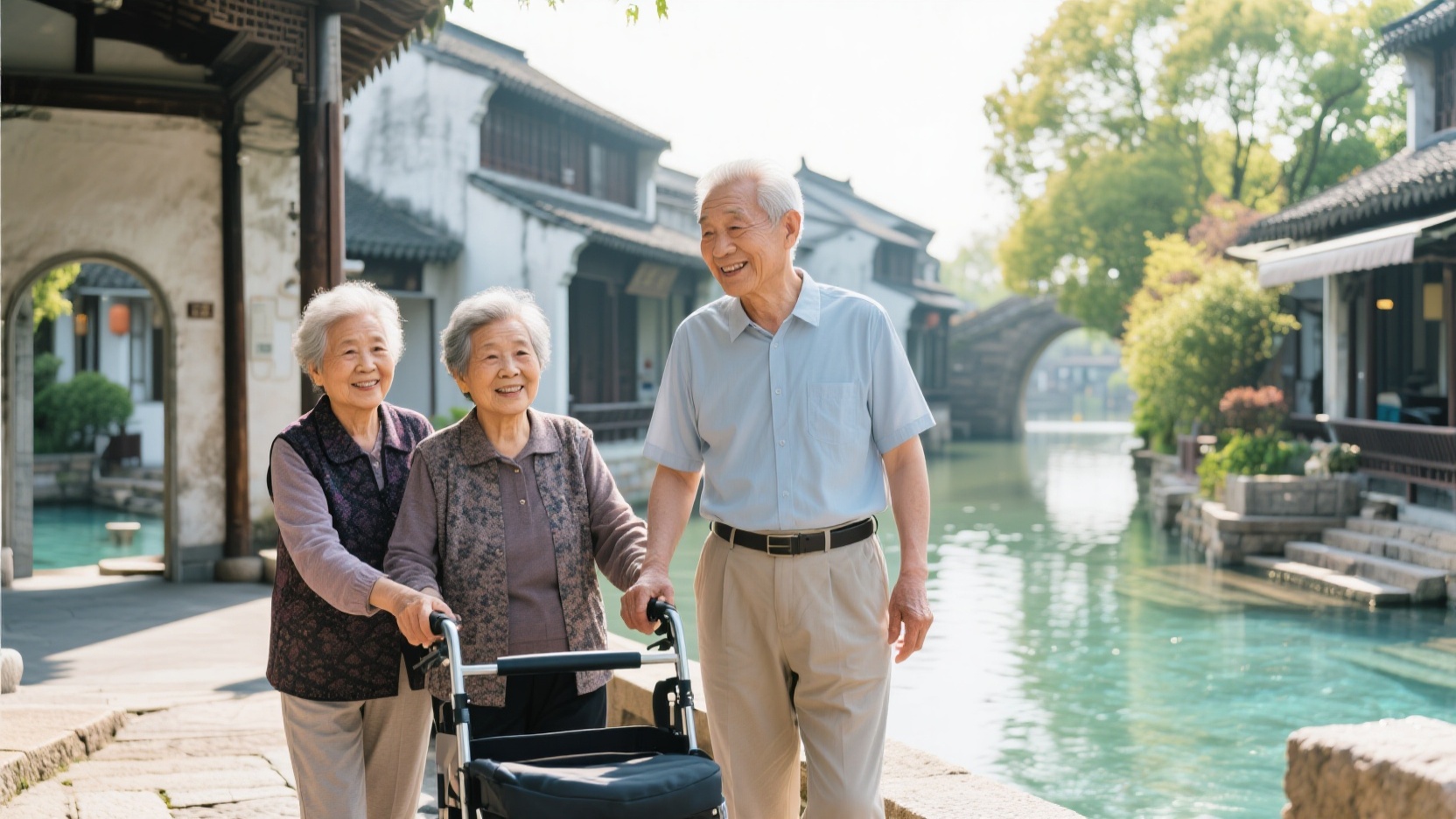
This is the third time I've brought my parents to Jiaxing. The first two times, I crammed Nanhu Lake, Yuehe River, Zicheng, and Meiwan Street into one day, but before we even had dinner, they waved their hands, saying they couldn't walk anymore. This time, I completely changed it to a slow-paced trip for the elderly, with "one stop every half day and a two-hour nap at the hotel in the afternoon." After 5 days and 4 nights, for the first time, the two elderly people said on their own initiative, "We want to come again next time."
I. After three failed attempts, I finally understood: Jiaxing is suitable for senior citizens, but you need to take a different approach.
Jiaxing's old town is small, with flat roads, a high density of public restrooms, and many free parks, making it generally senior-friendly. However, typical itineraries often combine Nanhu Lake, Yuehe River, Zicheng, and Meiwan Street into a day trip, easily exceeding 10,000 steps in actual walking. When traveling to Jiaxing with parents, the real considerations aren't the number of attractions, but rather elevator accessibility, the spacing between restrooms, walking distances, and proximity to hospitals.
This time, I chose a hotel between Yuehe and Nanhu, keeping all locations within a 15-minute drive and about a 10-minute drive from the nearest top-tier hospital. Each day, I only planned one key location in the morning and one lighter location in the afternoon, returning to the hotel for lunch and a rest at noon. It turned out that slowing down actually helped my parents remember more details.
II. 5-day, 4-night extremely slow itinerary: 1-2 key locations per day, with no lunch break without fail.
We arrived on the afternoon of the first day and only explored the Yuehe Historic District. The main alley is gentle, with continuous benches along the river, allowing elderly people to easily find a place to sit and watch the boats. The toilets are close together, which is especially important for elderly people with prostate problems. I didn't plan any night tours to avoid catching a chill in the evening breeze.
The next morning, we went to Nanhu Huijing Garden and took a boat to the island in the middle of the lake. The pier has an accessible ramp, so wheelchairs can be pushed onto the boat. However, there are steps near the Yanyu Tower after boarding the boat, so it's recommended to only walk on the outer platform and near the Red Boat. We returned to the hotel for lunch and a rest. After 4:30 pm, we went to the Zicheng Ruins Park. The trails are flat, and it's about 200 meters from the parking lot to the main entrance, making it relatively easy for people with mobility issues.
The third day is the most flexible day of the trip, offering the choice between an ancient town and a hot spring. Xitang Ancient Town is suitable for parents who appreciate old architecture, but it's best to go on a weekday morning and only walk along the covered walkway to avoid spending too much time on the stone-paved streets. The hot spring is more suitable for seniors who are sensitive to cold joints. Choose one with an indoor heated pool and reclining chairs, and soak for about 40 minutes to avoid hypoglycemia.
On the morning of the fourth day, we went to Meiwang Street and strolled along the waterfront promenade. When we got tired, we went to a teahouse to sit. In the afternoon, we visited Fanli Lake Park, where there were plenty of benches and shady trees along the lake, and restrooms were generally available within 500 meters. On the morning of the fifth day, depending on the elderly person's condition, we chose Pingshan Park or an indoor museum. The museum had a complete elevator and clean restrooms, making it a suitable place to wrap up our trip before returning home.
3. Day 3: Choose between the ancient town and the hot springs: Personal experience and tips to avoid pitfalls
If you choose Xitang Ancient Town, make sure the elderly person gets off at the visitor center first, and then the driver parks the vehicle, as there is a walking distance from the parking lot to the scenic area entrance. The covered walkway is very popular, and wheelchairs can be a bit bumpy; it's recommended to use a folding wheelchair or have the elderly person walk slowly along the side of the road and avoid entering crowded shops.
If you choose a hot spring, ask before entering the changing room whether there are handrails in the soaking area, non-slip strips on the floor, and whether you can lie down in the rest area. The biggest fear for the elderly is dizziness after getting up from a hot spring. In my experience, the safest approach is to soak for 15 minutes, then rest, and sit for 5 minutes after getting up before walking. Have a family member accompany them throughout the soak.
IV. Small things that senior citizens care about: elevators, accessibility, toilets, walking distance, and hospitals.
Most indoor venues in Jiaxing city have accessible ramps and elevators, but some stone bridges and steps still exist in the old streets. When crossing the bridge in Yuehe Street, you can take the flat road on the outside instead, although it's a few dozen meters longer, it's more knee-friendly. It's recommended to check in advance whether the accessible facilities at the Nanhu cruise ship terminal, museums, and hot spring changing rooms are open.
I limit my walking distance to no more than 3,000 steps per segment; if I exceed that, I take a taxi or a shuttle bus within the scenic area. My two-hour nap at the hotel every day isn't laziness, but rather to allow my heart, lungs, and joints time to recover. Taking my parents' blood pressure and checking their ankles for swelling before bed has become a routine for me.
Many people overlook the hospital aspect. When traveling with elderly people, I make a point of noting the daytime and nighttime driving distances from the hotel to the nearest level-two or higher hospital. In Jiaxing this time, the hotel was about a 10-minute drive from a top-tier hospital during the day, and the emergency room access was easy to find at night, which made me feel more at ease than any popular tourist spot.
V. Blogger's Summary: Taking a trip to Jiaxing with parents – slow and deliberate isn't about settling, it's about being smarter.
When traveling with senior citizens, the biggest fear is being led astray by conventional travel guides. The value of Jiaxing lies not in visiting a few specific spots in a day, but in its ability to break the trip into smaller segments in the morning and afternoon, with time for a proper nap in between. Treating elevators, restrooms, and accessible pathways as attractions in advance is more important than memorizing routes.
VI. Practical Tips Checklist: 20 Packing Items for Seniors and 5 Types of Commonly Used Medications
Packing list (20 items): 1. Photocopies of ID card, medical insurance card, and senior citizen preferential treatment card; 2. Foldable lightweight wheelchair or walking aid; 3. Four-legged cane with seat; 4. Two pairs of non-slip soft-soled shoes; 5. An extra set of loose clothing depending on the temperature; 6. A light jacket or vest; 7. A thermos; 8. Commonly used medicines in individual containers; 9. A blood pressure monitor or blood glucose meter; 10. A portable toilet seat cover; 11. A foldable seat cushion; 12. A raincoat and a folding umbrella; 13. A night light; 14. Non-slip slippers; 15. A neck pillow or lumbar support; 16. Individually packaged snacks; 17. Wet wipes or hand sanitizer; 18. A mobile phone for seniors and an anti-wandering contact card; 19. Band-aids, iodine swabs, and nail clippers; 20. A foldable shopping bag.
Five categories of commonly used medications to remind you: Category 1: Cardiovascular and antihypertensive drugs, carry with you at your usual dosage; Category 2: Hypoglycemic drugs, take with a separate snack to prevent hypoglycemia; Category 3: Cold and fever reducers, especially important during seasonal changes; Category 4: Gastrointestinal antidiarrheal medications; Category 5: Topical medications for sprains and bruises. Before departure, ask your doctor for a medical record summary and medication list. Keep all medications in your carry-on bag, do not check them in.