
Eight seasonal delicacies in Hefei | It took three trips to try them all, especially during Qingming and Winter Solstice (a list of recommended dishes to avoid).
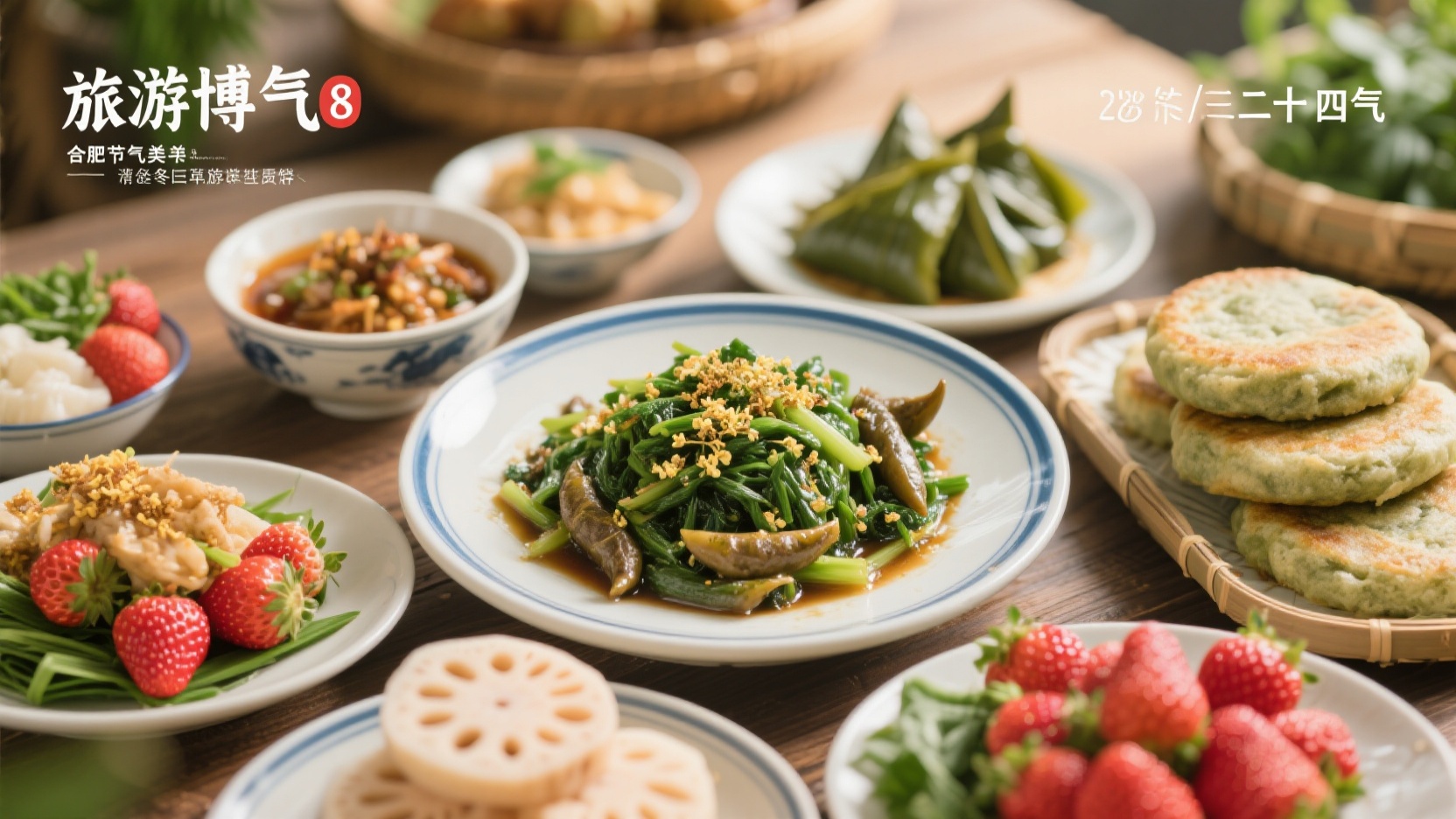
A week before Qingming Festival, I burned my lip on a mugwort cake on Guantang Road in Hefei, and that's when I realized one thing: the best food in Hefei follows the 24 solar terms. I visited Hefei three times, around Qingming, the summer solstice, the autumnal equinox, and the winter solstice, and each time the menu seemed to be refreshed by the solar terms. The same stall might sell mugwort cakes in spring, cold water chestnut salad in summer, and only steam rising from the steaming basket of meatballs in winter. This "once it's gone, it's gone" approach to food is the true, hidden gem of Hefei for locals.
The following eight dishes are seasonal specialties that I confirmed with local market vendors and restaurant kitchens after three trips. Many of them are not highly rated restaurants on review apps, but rather small stalls hidden at market entrances, in old residential areas, and along the shores of Chaohu Lake.
Spring Equinox and Qingming Festival: Wild grass sprouts are more fragrant than meat
Artemisia argyi cakes are a symbol of Qingming Festival in Hefei and the surrounding areas of Sanhe and Lujiang. Artemisia argyi only has tender shoots during this season, and it tastes best from ten days before to three days after Qingming. After that, the fibers become coarse, and the aroma turns bitter. Locals blanch the artemisia leaves, chop them, and mix them with glutinous rice flour and diced cured meat to form cakes. These are then baked on the side of a traditional earthen stove until one side is charred. The proper way to eat them is with a bowl of rice crust porridge. They are torn apart while hot, the oily cured meat mingling with the grassy aroma. They harden when cooled, so vendors will urge you to "eat first" if they see you taking pictures.
Around the time of Grain Rain (a solar term in Hefei), tofu with toon sprouts is a traditional "springtime dish" on the local Hefei table. Locals only use the first harvest of purple toon sprouts, which are blanched, chopped, and then placed on top of soft tofu, seasoned only with a few drops of local soy sauce and freshly ground sesame oil. No chili peppers or garlic are added; toon sprouts have a strong flavor, and too many seasonings would mask their delicate aroma. After Grain Rain, the toon leaves become tough, and local aunties will simply say, "That's not toon sprouts, it's tree leaves."
Summer Solstice and Minor Heat: Crispy fish caught from Chaohu Lake
From the summer solstice to the minor heat, the water chestnut shoots along the shores of Chaohu Lake are at their crispest and most tender. These aren't water chestnuts, but rather the tender stems of the water chestnut plant. Locals harvest them from the lake, blanch them, and then serve them as a cold salad with minced garlic, vinegar, and freshly fried rapeseed oil. The texture is a combination of water spinach and water shield, with a refreshing freshwater plant flavor. After the minor heat, they become tough. Tender water chestnut kernels also come into season around this time. Locals enjoy stir-frying them with river shrimp; the kernels still have a slightly watery taste, and biting into them feels like breaking through a thin shell, before the starchy texture fully develops.
Water caltrop sweet soup is a life-saving soup for Hefei's sweltering summers. Around the time of Lesser Heat (Xiaoshu), the hand-peeled water caltrop seeds are plump and round. After being lightly blanched in boiling water, a little osmanthus sugar and rock sugar are added, and it's served chilled. Locals prefer fresh, not glutinous, water caltrop seeds at this time of year; they are chewy, not powdery. Many small shops only sell it for three weeks, as the kitchen staff says peeling them is too laborious, and they switch to mung bean soup after the season ends.
Autumn Equinox and Cold Dew: The fragrance of osmanthus and the rich aroma of crab roe.
After the Autumn Equinox, the osmanthus flowers bloom in Sanshigang and Modian in Hefei, and locals make candied osmanthus and osmanthus-flavored glutinous rice lotus root. The lotus root must be a seven-hole starchy variety, stuffed with glutinous rice and cooked until it becomes stringy. Before serving, it's topped with the first batch of candied osmanthus. The freshly cooked lotus root segments are cut into thick slices, so that they'll still have a stringy texture when picked up with chopsticks. At this time of year, the focus is on the cool fragrance of osmanthus, not its cloying sweetness. Locals believe that "lotus root tastes better when it's cold," but the candied osmanthus must be freshly pickled; the aroma from the previous year will become like perfume.
After the Cold Dew solar term, the hairy crabs of Chaohu Lake enter their roe-rich season. People in Hefei have a clear understanding of Chaohu crabs: they can't compete with Yangcheng Lake crabs in size, but they're exceptional when stir-fried with rice cakes. The hairy crabs are cut in half, the cut surfaces are coated with starch, and then cooked with rice cakes and edamame until they turn a deep brown color. The rice cakes absorb the crab roe, and the crab meat's slightly fishy smell is infused with the savory sauce. Locals eat them without using any crab-eating tools, simply using their hands. They eat the rice cakes first, saving the crab shells for last to slurp up the sauce.
Winter Solstice and Laba Festival: Red in the greenhouse and white in the steamer
The strawberries harvested around the winter solstice in Changfeng are the most punctual sweet treat in Hefei's winter. Locals don't buy the stacks of strawberries at tourist attractions; instead, they take a bus to the Changfeng greenhouses to pick the first harvest – the ones that are "red to the core and green at the stem." These first-harvest strawberries are fragrant and crisp, perfect for washing and eating right after picking. Another local way to enjoy them is in sweet rice wine: halve the strawberries, mix them with freshly made sweet rice wine (not cooked), and eat them cold. The sweet and sour flavor perfectly balances the richness of the glutinous rice.
Around the twelfth lunar month, the steaming season begins for Zhuangmu Yuanzi (a type of glutinous rice ball) in northern Hefei. These balls are made with a translucent skin made from mung bean starch, filled with pork, and steamed fresh. The skin is chewy but not sticky. In Hefei city, people also make dried noodle Yuanzi: cooked noodles are rolled into balls with minced meat, scallions, and ginger, then deep-fried until golden brown. Dried noodle Yuanzi are only made in the twelfth lunar month because the noodles absorb water and easily turn sour, and they don't stay in the steamer when it's not cold. When the steamed Yuanzi come out of the steamer, locals will poke one with chopsticks to check if there is still hot juice inside the filling.
Blogger's Summary and Practical Tips
Eating in Hefei according to the solar terms will reveal that the main dishes at the same market change every month. Of these eight dishes, at least half only have a vague address on review apps, but if you go to the market entrance or near Chaohu Lake around Qingming, Summer Solstice, Autumn Equinox, and Winter Solstice, you're unlikely to miss it. The worst thing is thinking, "Since I'm here, I'll just eat whatever's available year-round," only to be honestly told by the kitchen staff that it's not in season.
Tips to avoid pitfalls: When buying mugwort cakes around Qingming Festival, choose freshly made ones, as the glutinous rice skin of vacuum-packed ones will turn powdery; for water chestnuts and gorgon fruit in summer and autumn, try to go to the market in the morning, as there will usually be leftovers in the afternoon; for Changfeng strawberries, don't buy the "freshly picked" boxes from roadside vendors, it's safest to pick them directly from the greenhouse; Zhuangmu dumplings and dried noodle dumplings appear in the twelfth lunar month, and many old shops only accept pre-orders during the Spring Festival, so it's recommended to inquire one or two days in advance.