
A Day to Experience the Flavors of Fuzhou: A Local Food Menu from Morning Potstickers to Late-Night Tofu
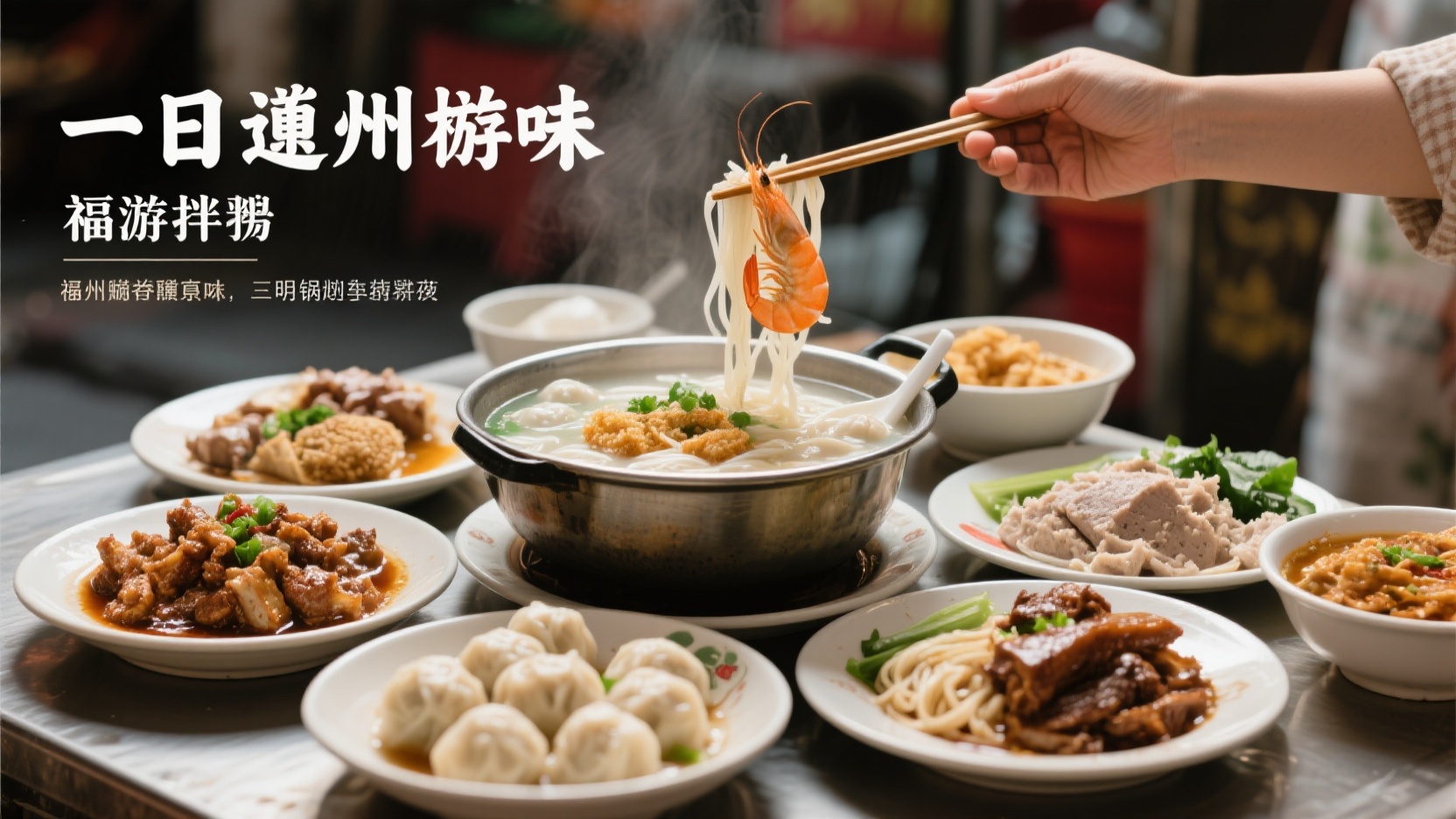
At six in the morning, the breakfast stalls in the streets and alleys of Fuzhou are already steaming with rice flour paste and clam soup. Locals rarely start their day with coffee and bread; more commonly, they settle down with a bowl of rice flour paste with a piece of fried food.
Breakfast: Pot-side rice noodles and shrimp crisps
Guobianhu, also known as "Dingbianhu," seems simple to make but requires a good hand: rice is ground into a paste, a spoonful is scooped and poured evenly along the edge of a heated wok, the paste solidifies into thin sheets upon contact with the heat, and is then scraped into the bottom of the wok with a spatula. The broth is usually simmered starting in the early morning, using river clams, dried cooked fish, dried shrimp, and celery to enhance the flavor; it's clear and flavorful, with the umami coming from the natural taste of the clams and dried fish. The key to good guobianhu is thin and even sheets, and a clear and flavorful broth. The thickness of the rice paste determines the thickness of the sheets; too thin and they break, too thick and they're thick—it all depends on the chef's touch. The sheets are soft and smooth with a rice aroma, slightly chewy at the edges, and the broth is clear and fresh, with a subtle oceanic flavor. In Fuzhou, guobianhu is rarely ordered alone; the standard accompaniment is a shrimp crisp—a hollow round cake made by frying a mixture of rice paste and soybean milk, golden and crispy on the outside, with a hint of scallions and seafood inside. Besides shrimp fritters, some people also eat oyster cakes or taro cakes, but the combination of pot-side paste and shrimp fritters is always the most classic. Eating this set in the morning, with soup to soothe the throat and fried food to provide a feeling of fullness, is a morning ritual that many old Fuzhou people have continued for decades.
Lunch: Lychee pork and fried liver
In the bustling local restaurants, Lychee Pork is one of the most popular Fuzhou dishes for lunch. Pork tenderloin or foreleg is scored with crosshatch cuts, two-thirds of the way down, coated in a thin layer of flour, and deep-fried until curled, resembling a lychee. A sweet and sour sauce is made with tomato sauce, vinegar, sugar, and a little soy sauce, and quickly tossed with the fried pork and water chestnuts. The finished dish is crispy on the outside and tender on the inside, with a sweet and sour flavor that isn't greasy, and the water chestnuts provide a crisp texture. Southern-style Fried Liver requires more precise control of the heat. Thinly sliced pork liver is quickly deep-fried and then tossed in a sauce made with minced garlic, soy sauce, sugar, and Shaoxing wine for no more than ten seconds. The liver slices are tender and powdery, with a sweet and savory flavor, and no fishy taste. These two dishes, one bright red and the other dark brown, embody the balanced "sweet, sour, salty, and umami" flavor of Fuzhou cuisine and are a common lunch combination for locals. The restaurant has a fast turnover during lunchtime, and most of the customers are nearby office workers and residents. A plate of lychee pork, a serving of fried liver, and two bowls of rice make for a satisfying meal.
Afternoon tea: fish balls, meat swallow dumplings, and taro paste
Around 3 or 4 pm, the fish ball shops on the street experience a small peak. Fuzhou fish balls are made by mincing eel or shark meat, adding sweet potato flour, and repeatedly kneading to form the outer skin. This skin is then wrapped around a seasoned pork filling. Once cooked, the outer skin is elastic and the filling is juicy; when bitten into, the meat juice and fish flavor burst forth simultaneously. Locals traditionally eat fish balls by first biting a small hole to suck out the juice, then dipping them in shrimp oil—a way to avoid burning your mouth and lock in the freshness. Often paired with fish balls is meat swallow dumplings (rouyan). The dumpling skin is made by pounding pork hind leg meat into a paste, mixing it with sweet potato flour, rolling it into thin sheets, and then wrapping it around a meat filling. The finished product is translucent and has a crisp texture. Fuzhou people consider both as "snacks" rather than a main meal. A bowl of clear soup sprinkled with scallions and a little shrimp oil is both satisfying and light. If you still have an appetite, a small bowl of taro paste—steamed and mashed taro mixed with lard and sugar—is another option. It's smooth, oily, and the most substantial of Fuzhou's sweet treats. Fish balls and meat swallows, one made with fish skin and the other with pork skin, embody the culinary wisdom of Fuzhou people in making the most of their food.
Late at night: Lo mein and braised dishes
The vibrant atmosphere of late-night food stalls is embodied in a bowl of "Lao Hua." Lao Hua is a Fuzhou-style "Lao Xing Hua Fen" (rice noodles cooked in a broth), where thin rice noodles are quickly blanched in boiling water, then topped with a rich broth made from pork bones and seafood. Toppings such as beef offal, razor clams, clams, pork blood, or braised tofu are added according to personal preference. The broth of Lao Hua is meant to be clear yet flavorful, with the rice noodles absorbing the broth without becoming mushy. Served with a side of shrimp oil dipping sauce, the flavor is directly savory and fresh. Fuzhou locals even feel that Lao Hua is incomplete without shrimp oil. Often served alongside Lao Hua are braised food stalls: braised duck gizzards, braised large intestines, and braised tofu, cut into pieces and drizzled with braising sauce, served with garlic sauce or sweet and sour chili sauce. People finishing their night shifts and diners enjoying drinks gather around the tables, eating without much fanfare, yet giving Fuzhou's nights a genuine warmth.
From the morning's pot-side rice noodles to the afternoon's fish balls and meat dumplings, and then to the late-night snacks at the food stalls, Fuzhou people's meals and snacks don't involve much fancy cooking techniques, but rather a daily adherence to the "fresh, sweet, sour, and salty" flavors. From the main streets to the back alleys, experience the city through its food in a day.