
The Flavors of Foshan in the Markets: The Secrets of Guangzhou's Dining Tables Hidden in Pujun Market and Lianhua Market
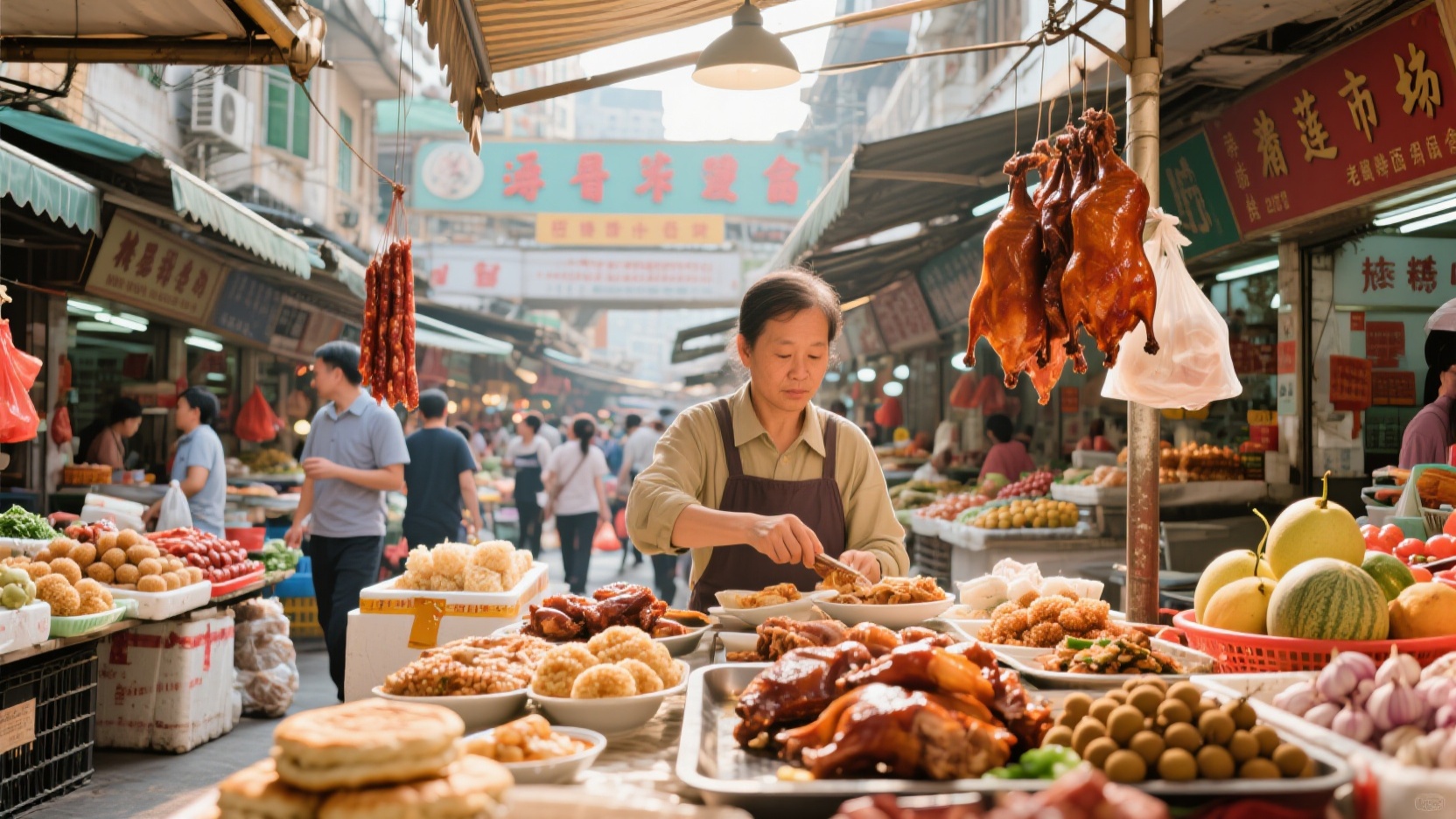
In Foshan, to judge whether someone truly understands food, you don't need to look at their favorite trendy restaurants; just ask them if they go to Pujun Market in the early morning. Pujun Market's origins can be traced back to Pujun Market in the Ming Dynasty, and it was once one of the most important market towns in Foshan's ancient town. Lianhua Market, on the other hand, has been a staple for the residents of the Zumiao area, with its densely packed stalls and numerous regular customers. In both markets, roast meat stalls, dim sum stalls, sauce stalls, and fruit stalls line the streets, showcasing the most authentic dining experiences of Foshan locals.
Cooked food stalls: roast goose, braised pork hock and fish tofu
Among the cooked food stalls outside Pujun Market, the roast goose is the most noteworthy. Foshan roast goose mostly uses local black-bristled geese, with a deep reddish-brown skin and plenty of juice. When choosing, first check if the leg joints are dry, then check if the subcutaneous fat is translucent; if the juice slowly seeps out after slicing rather than flowing out in large quantities, it means the cooking time was well controlled. At home, there's no need to overheat; simply chop it and microwave on medium for one minute. It can also be served directly with rice noodles or lo mein. If you want an extra side dish to accompany drinks, look for braised pig's trotters. This is a traditional Foshan dish; the pig's trotters are deboned, stuffed with lean meat and frozen pork, braised until cooked, and served cold, sliced thinly. The skin is crisp and the meat is firm. When choosing, look for trotters where the slices have clear marbling and the skin and meat don't separate.
Fish tofu is an often overlooked but carefully prepared item at cooked food stalls. Good fish tofu is pale yellow in color and springs back quickly when pressed. You can best test the ratio of fish to egg white when you cook it at home, such as in winter melon soup or hot pot. Some stalls also sell fish cakes; choose those with slightly charred edges, and reheat them with a little oil to restore their texture.
Handmade pastry stall: Lunjiao cake, Xiqiao pancake and Jiujiang fried glutinous rice balls
Handmade pastry stalls in the market are often tucked away in aisles and corners. Lunjiao cake, in particular, requires a keen eye. Authentic Lunjiao cake is made with year-old rice and rice flour, naturally fermented, resulting in a cake with fine, dense horizontal and vertical pores. When selecting, check the bottom; evenly distributed pores and a snow-white to slightly yellow color are ideal. It's best eaten cold, torn by hand, to avoid over-steaming and losing its chewiness. Xiqiao flatbread, on the other hand, is thick and slightly yellow, with traditionally visible charcoal-fired patterns on the bottom. When selecting, gently press the edge; a good spring back indicates proper fermentation, making it suitable for pairing with tea or as a souvenir. Slightly burnt spots on the surface may actually be a sign of traditional methods.
As the season approaches, Jiujiang fried glutinous rice balls will also appear at stalls. Unlike regular round fried glutinous rice balls, they are flat and round, with a thin skin and plenty of filling. When buying, check if the sesame seeds are firmly attached. This type of snack should not be stored for long; it tastes best if consumed within two days of purchase.
Pickled and preserved vegetable stall: Chinese sausage, chu hou sauce and pickled shallots
The preserved meat stalls are especially bustling in autumn and winter. Foshan sausages have a distinct lean-to-fat ratio, with thin, translucent casings. When selecting them, gently pinch them with your fingertips; the best sausages are firm and don't collapse, with pearly-colored fat bits. Sausages are best cooked with longevity rice or stir-fried with kale, allowing the aroma of the oil to permeate the entire dish. The most local condiment is Zhuhou sauce. Foshan is the birthplace of Zhuhou sauce, and it's often sold in bulk or small bottles in the market. When choosing, look for a smooth, oily texture; after opening, it should have a rich, but not overpowering, bean aroma, suitable for braising beef brisket, braised goose, or as a dipping sauce.
Pickled shallots and salted lemons are also common pickled side dishes in Foshan households. For pickled shallots, choose those with a natural, slightly yellow color and clear juice, which can be served with white porridge or steamed fish to cut through the greasiness; for salted lemons, choose those with intact peels and even salt frosting, and the longer they are stored, the better they are for making salted lemon drinks or adding to dishes.
Seasonal Fruits and Vegetables: Shixia Longan and Leping Snow Pear Melon
The fruit and vegetable stalls in Foshan's markets are clearly influenced by market days, offering different local specialties at different times of the year. In summer, Shixia longan is a signature product of Nanhai, known for its clear shell patterns, thick flesh, and small seeds. When selecting longan, gently shake the whole bunch; a sound of no fruit falling is desirable. Refrigerating it after purchase makes it even crisper. Leping snow pear melons, especially those from Sanshui, are considered superior. They have a white-green rind and a sweet aroma; ripe melons release their fragrance even before cutting. Gently press the navel; a slightly soft texture indicates ripeness, while too soft means overripe. Some stalls offer samples, which is the most direct way to judge ripeness—don't be shy!
In autumn, local starfruit and guava can be added to the menu, but those in the know will follow the vendors' recommendations, ignoring imported labels and focusing only on the freshly arrived local produce. These seasonal items may not be the most visually appealing, but they are the most direct indicator for Foshan residents to judge the changing seasons.
Visiting a farmers' market is never just about shopping; it's about understanding the rhythm of a city's life. The sounds of unloading goods at Pujun Market in the early morning, the conversations between stall owners and regulars at Lianhua Market, the savory aroma of cured meats, and the sweet scent of sliced pears and melons from fruit stalls—all these elements combine to create the most tangible aspects of daily life in Foshan. Tourists who only visit tourist attractions and shopping malls see similar replicas; only by stepping into a farmers' market can they discover how Foshan people use a piece of Lunjiao cake, half a roast goose, and a piece of sausage to make their lives flavorful and fulfilling. Next time you visit Foshan, make the farmers' market your first stop. There are no standardized tourist routes there, but they hold the city's most honest appetite.