
Is Changchun worth a special trip? I'll explain the seven most important questions you should ask before you go.
Many readers treat Changchun as a transit point when planning their trip to Northeast China, staying for only half a day. However, the city's pace, scale, and the finer details of life require you to think carefully about a few things beforehand to decide how long to stay and how to spend your time. This article doesn't list attractions; it only answers seven things that are easily overlooked before departure and that most affect the experience.
Question 1: How many days are enough to visit Changchun?
My assessment is that two days are enough to see the core attractions, but to understand the city's character, at least three days are needed. Two days can cover the Puppet Emperor's Palace, the surrounding area of the Eight Ministries, Nanhu Park, and the nightlife around Guilin Road, plus a visit to the Northeast Nationalities and Folk Customs Museum or the former site of the Changchun Film Studio. But what truly makes Changchun captivating isn't the "tourist checklist," but rather its street-level layout as a model of modern urban planning, and its unhurried, localized lifestyle. On the third day, you can slow down, stroll along Shengli Street and Renmin Street, and appreciate the axes formed by old buildings and tree-lined streets, rather than rushing from one gate to another.
If you only have one day, choose either the Puppet Emperor's Palace or Nanhu Park, and have a meal at a local restaurant. Don't try to cram in Jingyuetan in one day; it's in another direction, and the round trip will eat up your limited time. Changchun's attractions are more scattered than you might imagine. The subway can solve some issues, but traveling between districts is still time-consuming.
Question 2: What season is the best to visit?
This issue needs to be addressed in two parts. If you want to see Changchun at its most "standard," summer and autumn are the safest times. From June to September, the temperature is comfortable, Nanhu Park and Jingyuetan Park are lush with greenery, and the street food stalls and night markets are vibrant, making it ideal for walking. From late October to early November, the autumn leaves along Renmin Avenue and the forest colors around Jingyuetan Park are perfect for taking photos, and there aren't many crowds.
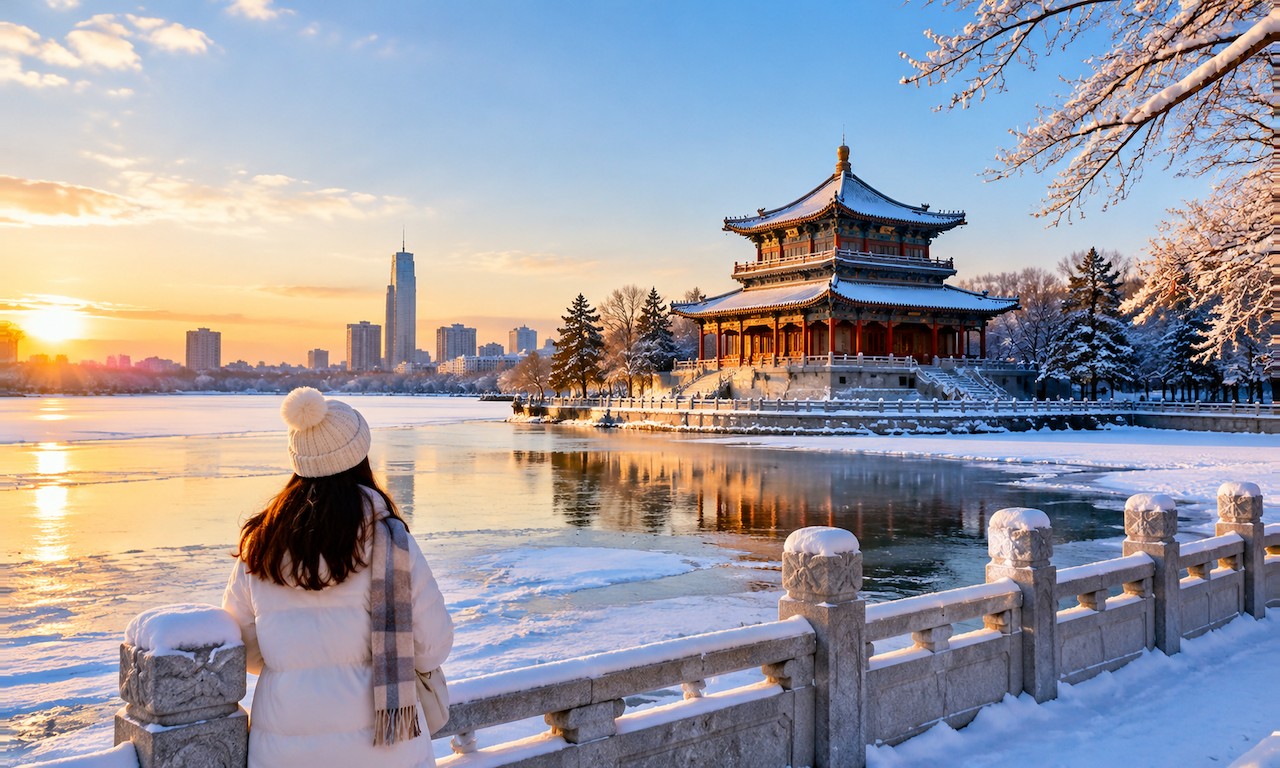
Winter in Changchun is suitable for two types of people: those with specific plans for ice and snow experiences, such as skiing at Jingyuetan or seeing snow sculptures; and those who simply enjoy the solemn and somber atmosphere of northern winter streets. Changchun's winter isn't like Harbin's bustling ice and snow extravaganza; it's quieter and possesses a unique, austere beauty characteristic of industrial cities. However, if you're sensitive to the cold and don't plan on prolonged outdoor activities, winter can be quite challenging. I don't recommend spring; the wind is strong, the streets are generally less vibrant after the snow melts, and the scenery lacks highlights during this transitional period.
Question 3: Is it safe for someone to come alone?
Safety is not a concern; Changchun's public security is among the most reassuring of provincial capitals. During the day, you can move freely in the main urban areas without worry, and at night, as long as you avoid overly remote urban-rural fringe areas, walking alone is relatively comfortable. The area around the train station and Guangfu Road is a bit more crowded, but there are no problems getting around during normal hours.
The real "risk" is loneliness. Dining and entertainment in Changchun tend to be group-oriented; many good restaurants are suitable for two or three people ordering together. If you go alone, you often can only order one or two dishes, and the portions are large, which can be a bit awkward. If you're traveling alone, I suggest focusing on strolling through the streets, visiting museums, and independent cafes. For meals, prioritize snacks, noodles, or places that offer half-portions. Also, winter nights are long, so you'll likely spend more time alone in your hotel. Preparing books or videos you want to watch beforehand will greatly improve your experience.
Question 4: Is it appropriate to bring elderly people and children?
Bringing elderly people is suitable, but the itinerary shouldn't be too packed. The Puppet Emperor's Palace has steps, but the number is manageable; the park isn't large, and two hours is enough to explore at your leisure. Nanhu Park has flat paths, perfect for a stroll. Changchun's public transportation is relatively senior-friendly; subway stations are clearly marked and not crowded during off-peak hours. As for food, Northeastern cuisine tends to be salty, so you can specify less salt when ordering, and many local restaurants will accommodate this.
When traveling with children, age matters. There aren't many activities for preschoolers in Changchun. While there are common indoor children's playgrounds, it's not worth making a special trip for them. Once children are in elementary school and have a basic understanding of history or the Manchukuo period, the Puppet Emperor's Palace and film studio become more educational. Jingyuetan is suitable for family trips, but it's best visited in spring, summer, and autumn. In winter, be sure to dress warmly for children and be aware of icy roads.
Question 5: What is the approximate budget?
Changchun's cost of living is relatively moderate compared to other cities of its size. For accommodation, a decent mid-range chain hotel costs just over 100 to 200 yuan per person, and even high-end hotels are significantly cheaper than in coastal cities. Dining out can be quite satisfying for a few dozen yuan per person; a mid-range Northeastern restaurant will offer signature dishes and drinks for around 100 yuan per person. Entrance fees to attractions are generally low, with key sites like the Puppet Emperor's Palace and the former Changchun Film Studio costing only a few dozen yuan.
If you're budgeting for three days and two nights, excluding round-trip transportation, the average cost per person for a mid-range meal would be between several hundred and a little over a thousand yuan, depending on your requirements for accommodation and dining out. If you want to save money, Changchun has many long-established snack shops and community noodle restaurants that have been open for over a decade, offering food that's just as good as high-end restaurants. If you want to spend more, there are also options; high-end Northeastern cuisine and craft beer bars have become increasingly common in recent years, but they're far from being so exclusive that reservations are mandatory.
Question 6: Which area is more convenient to live in?
My suggestion is to prioritize areas along Renmin Avenue and the Guilin Road commercial district. Renmin Avenue is Changchun's main axis, running north-south through several core areas. Living near this street means you'll have easy access to the Puppet Emperor's Palace, Nanhu Park, and the Chongqing Road commercial district, with Metro Line 1 right at your doorstep. The Guilin Road area is more suitable for young people who enjoy a lively atmosphere and nightlife. There are plenty of snacks, cafes, and bars right downstairs, so you won't have trouble finding places to go at night.
I don't recommend staying near the train station. Although it's a convenient transportation hub, the environment and accommodation quality in that area vary greatly, and it can be quite noisy at night. There are some resort hotels near Jingyuetan, suitable for families or couples looking to relax, but they are far from the main urban area, which can restrict your itinerary. Taxis and ride-hailing services in Changchun are inexpensive, so even if you stay in a slightly out-of-the-way area, travel costs are manageable, but you should factor in the time cost.
Question 7: What are some good souvenirs to take home?
Changchun doesn't have any must-buy local specialties, but there are a few items that make thoughtful and appropriate souvenirs. First, Dingfengzhen pastries—a long-established brand with simple packaging; their "Eight Treasures of Beijing" and Sachima (a type of Chinese pastry) are suitable for elders, and the prices are reasonable. Second, dried goods or honey from the Changbai Mountain area; these can be found in large supermarkets or specialty shops in the city center, and are more reliable than those around the tourist areas. Third, locally branded smoked and braised foods; these are suitable for vacuum packaging and won't spoil on the way back.
I don't recommend buying expensive local specialties like ginseng or deer antler. Unless you're an expert, it's easy to end up with overpriced items in tourist areas. If you must buy something, go to reputable stores or established shops frequented by locals, and avoid the "unbranded" goods sold at street stalls. For young people, creative souvenirs with elements of Changchun's old industrial history or film studios are often more interesting than traditional specialties, and they're more likely to make the recipient feel your thoughtfulness.