
Discover the Flavors of Yantai's Markets: Explore the Hongli Market and Old Cultural Road, and pack 9 local specialties into your shopping basket.
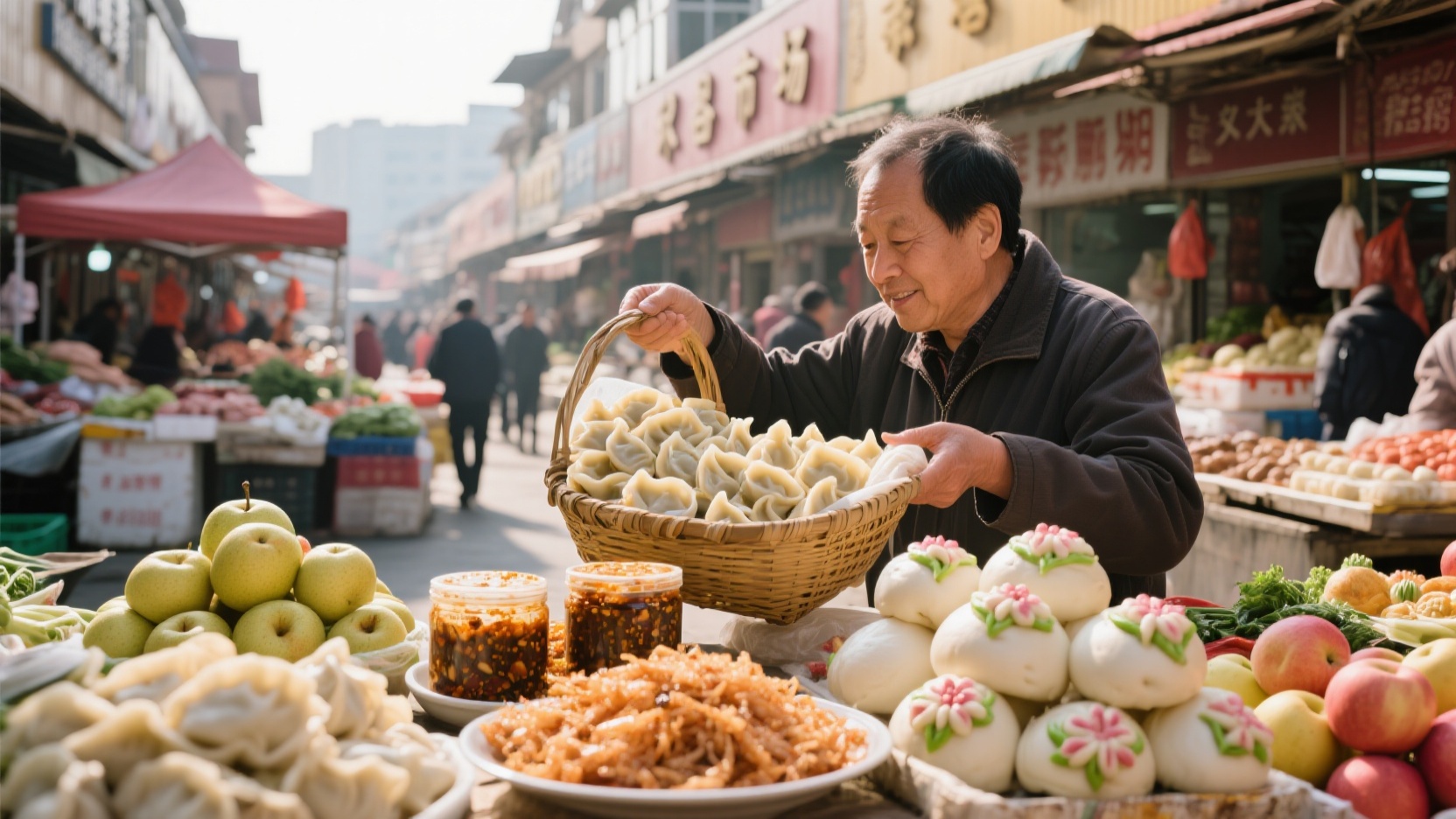
Hongli Market and Laowenhua Road Market are two vegetable markets in Yantai that still retain the trading habits of the 1980s. The former is by the sea, where fishing boats unload their catch and breakfast stalls start operating as early as 4:30 in the morning; the latter is located deep in a residential area, where farmers' stalls selling their own produce and local snack stalls are crammed into a narrow alley. If you want to bring the taste of Yantai home, these two markets are more direct than any trendy restaurant.
Cooked food stall: freshly pan-fried mung bean jelly, handmade mackerel dumplings and fried fish noodles
The sesame seed stalls at Hongli Market usually have short queues forming before 6 a.m. The sesame seed is made by cooking local sweet potato starch with water until it becomes a jelly-like consistency. It's then cut into small cubes and pan-fried until both sides are crispy. It's then topped with garlic sauce, sesame paste, and a little shrimp oil. When choosing sesame seed, select those with a distinct golden edge and a translucent, gelatinous center; they have a crispy exterior and a chewy interior. If they cool down after you buy them, dry-fry them in a non-stick pan to thaw them; do not add water.
Next to the cooked food stall, a mackerel dumpling stand usually has two or three aunties rolling out the dough and filling the dumplings on the spot. People in Yantai are particular about using only fresh mackerel meat for the filling, without adding pork. The fish meat is minced and then gradually mixed with peppercorn water and egg white, and finally a little chopped chives for added flavor. When you buy raw dumplings, you put them in boiling water, add cold water twice, and cook them for another minute after they float to the surface. The result is thin-skinned dumplings that don't break, and tender, juicy fillings.
Fried dough fish stalls typically have a large oil fryer set up at the market entrance. The dough is patted into long strips and dropped into the fryer, where it quickly expands and floats. The key to good fried dough fish is a crispy exterior and a fluffy interior. When buying, choose those that are light, golden in color, and have large, irregularly shaped air pockets when broken open, indicating proper dough rising. The best way to eat them is with a bowl of tofu pudding or sweet porridge. If they get cold, spray them with water and air fry them for three minutes to restore their crispness while keeping the inside soft.
Pickled and preserved vegetables: shrimp paste, dried shrimp and salted fish
Yantai shrimp paste is made from small sea shrimp and salt through natural fermentation. It has a pink color, a delicate texture, and a slightly fishy smell that turns into a fresh and fragrant aroma after cooking. When selecting shrimp paste, open the jar; a layer of light red shrimp oil should float on top, and the paste should have no obvious black spots. The most common way to eat it is as a shrimp paste stir-fry with eggs. Use two spoonfuls of shrimp paste with four eggs, add a little chopped green onion and a little water before cooking, stir well, and then quickly stir-fry in hot oil. It's savory and delicious with rice.
Golden hook dried shrimp is a staple at Yantai's dried goods stalls. Made from small, hook-shaped shrimp from the Bohai Bay in spring, they are cooked and sun-dried, resulting in a hook-like shape and a golden-red color. A good quality dried shrimp will be dry and not sticky, with intact bodies and no sand at the tail. They don't need to be soaked for a long time beforehand; a quick rinse with warm water is sufficient. They can be used in soups, fillings, or simply eaten as a snack. Alongside dried shrimp, salted dried fish is commonly found at the stalls. Locals often buy dried mackerel or small yellow croaker, soak them in warm water for half an hour, cut them into pieces, sprinkle with ginger slices, and steam for ten minutes. The result is firm, salty, and flavorful fish.
In the pickled vegetable section, pickled cucumbers and pickled shredded vegetables sell the fastest. Yantai locals traditionally eat millet porridge or cornmeal porridge for breakfast, along with a plate of pickled cucumbers drizzled with a few drops of sesame oil, or stir-fried shredded vegetables with meat. When choosing pickled vegetables, select those with clear brine, plump and non-sticky vegetables. After buying them, seal them and refrigerate; they can be stored for about two weeks.
Handmade pastries: Flower-shaped steamed buns and fried dough sticks
In the old Wenhua Road market, there are several stalls selling Jiaodong-style steamed buns. The moment the steamer is lifted, the aroma of dates mixed with wheat wafts out. These buns are made with fermented dough, repeatedly kneaded and pressed by hand, then studded with pitted red dates or shaped like peaches or fish. Locals buy them during festivals and also frequently purchase small date buns as a staple food. To choose a good bun, look for a smooth surface, one that springs back when pressed, and no water bubbles at the bottom. When eating, slice and steam thoroughly; they are chewier and sweeter than regular steamed buns.
Zhuaguo is a unique fried snack from Yantai. It's made with flour, eggs, sugar, and a little lard, cut into thumb-sized diamond shapes, and deep-fried until golden brown and floating. After frying, it's sprinkled with sugar or powdered sugar. It's crispier than regular twisted dough sticks, making a slight "crunchy" sound when bitten. When buying Zhuaguo, choose those that are light yellow in color and have a uniform honeycomb structure when broken open, indicating the oil temperature was suitable and it hasn't absorbed too much oil. It's suitable as a snack on the go, and surprisingly goes well with tea or coffee.
Fruit stall: Yantai apples and Laiyang pears
As autumn arrives, the mainstays of fruit stalls in the market are undoubtedly Yantai apples and Laiyang pears. Yantai apples are primarily Fuji variety; the best ones have reddish-striped skin, fresh, bright green stems, and feel heavy in your hand, offering a crisp, sweet, and juicy taste. Laiyang pears, on the other hand, are best chosen for their irregular shape and yellowish-green skin with brown spots. Don't let their ordinary appearance fool you; they have tender flesh and are incredibly juicy. The most authentic way to eat them is raw, without peeling, allowing the delicate aroma of the peel to blend perfectly with the flesh.
Visiting a farmers' market is like laying out the daily culinary delights of a city on a chopping board. The freshness, saltiness, sweetness, and aroma of Yantai aren't found in the adjectives on a menu, but in the stew handed to you by a vendor at the Hongli Market, and in the steaming aroma of freshly steamed buns at the Old Cultural Road Market. Put aside your tourist perspective, pick up a cloth bag, and browse like a local—only then will you truly understand that the flavor of a city always resides in its food basket.