
Port City Art Charm | A Cultural and Artistic Journey in Yantai: Savoring the Historical Echoes of the Coast
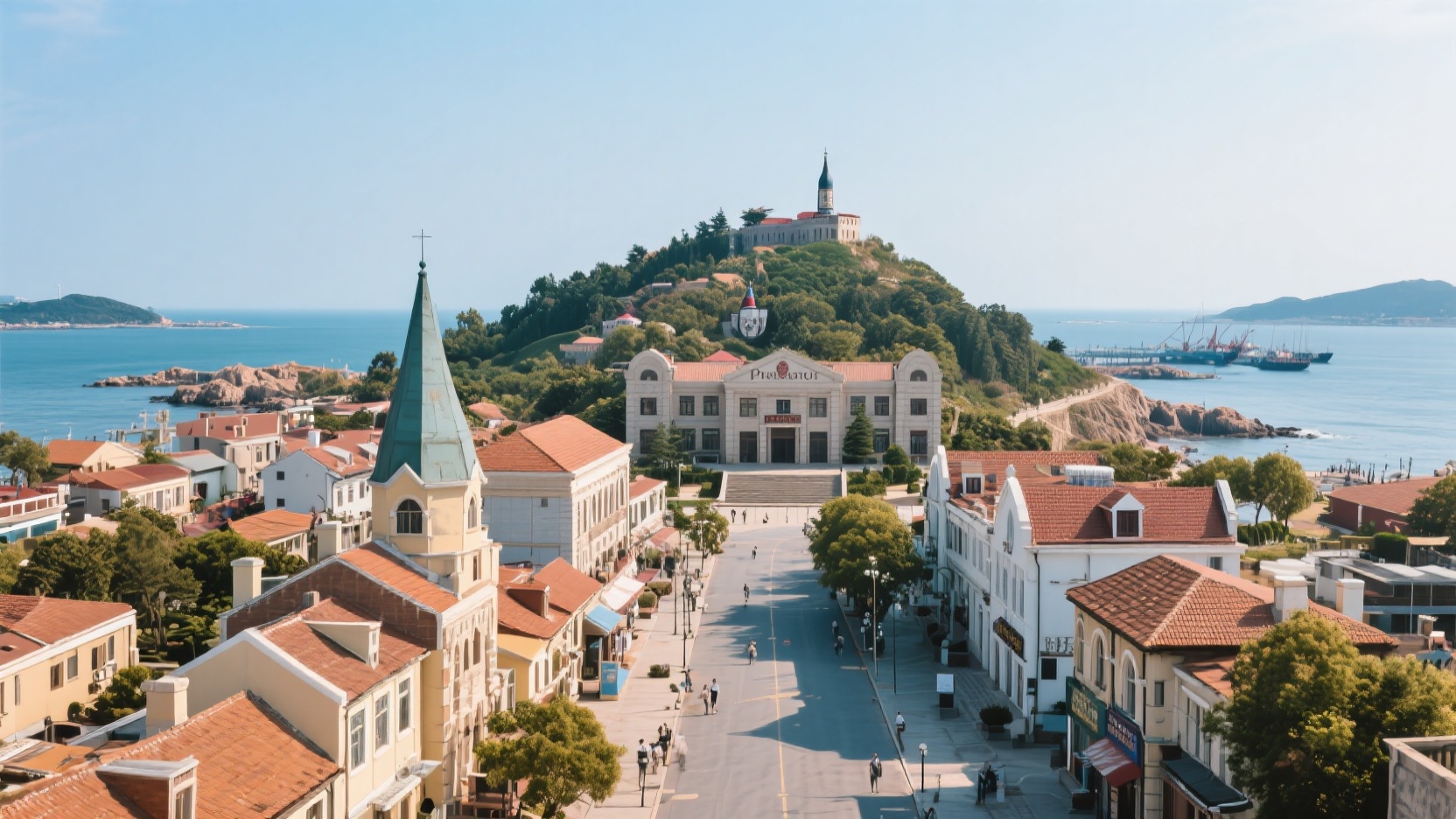
Yantai, a coastal city renowned as a "fairyland coastline," possesses charm far beyond its stunning mountain and sea scenery. Beneath the vast ocean lies a rich and unique cultural and artistic heritage. From the colonial memories of its century-old port opening to the origins of China's wine industry and the folk traditions of the Jiaodong Peninsula, Yantai, with its open and inclusive attitude, weaves a tapestry of East-West fusion and ancient-modern cultural landscape. This curated blog post aims to guide you on a deep, leisurely cultural journey, avoiding superficial tourist attractions and leading you to an immersive experience of Yantai's cultural fabric and artistic splendor.
A Century of Turmoil: A Historical Retrospective of Yantai Mountain and Chaoyang Street
A journey to explore Yantai's culture and art should begin at Yantai Mountain and Chaoyang Street, the starting point of its modern history. This place bears witness to Yantai's history as one of the first treaty ports opened to foreign trade in modern China, carrying the city's earliest memories of connecting with the world.
Yantai Mountain Scenic Area : As a landmark area of Yantai, Yantai Mountain is not only a superb location for sea views and sightseeing, but also an open-air "museum of international architecture." After Yantai opened as a treaty port in 1861, 17 countries, including Britain, the United States, France, Germany, and Japan, established consulates here, leaving behind a diverse collection of European-style buildings. Strolling through the area, the former embassy sites and official residences, nestled among red tiles and green trees, silently tell the story of the turbulent changes of a century and a half ago. These buildings are not simply replicas of foreign structures; they are combined with local building materials and craftsmanship to form the unique "Yantai Opening-of-Town Architectural Style," making them invaluable artifacts for studying the exchange of modern Chinese and Western cultures and the fusion of architectural art. Climb the lighthouse, overlook the entire port city, and let your thoughts travel with the sea breeze through a century, feeling the weight of history and the diversity of culture.
Chaoyang Street : Adjacent to Yantai Mountain, Chaoyang Street was once Yantai's most bustling commercial street. This street also retains many European-style buildings, such as the former French Consulate and the former HSBC building. Unlike the official residence area of Yantai Mountain, Chaoyang Street showcases more of the vitality of modern commerce and the atmosphere of daily life. The scene of merchants gathering and the blend of Chinese and Western styles has been restored and revitalized, bringing back its historical charm. Here, you can savor the rich heritage of time-honored brands, discover surprises in art shops, and experience a dialogue between history and modernity. Chaoyang Street is more than just a street; it is a living history of urban commerce and a unique space that integrates architectural art, commercial culture, and the lives of its citizens.
The Artistic Charm of Industrial Heritage: Changyu Wine Culture Museum
Traveling west from the foot of Yantai Mountain, we will arrive at another place bearing a unique cultural imprint—the Changyu Wine Culture Museum. This is not only a place to learn about winemaking techniques, but also an excellent window into exploring the history of modern Chinese national industry and its industrial aesthetics.
Changyu Wine Culture Museum : As China's first industrialized wine production enterprise, Changyu Company was founded in 1892 by Zhang Bishi, a patriotic overseas Chinese. The main building of the museum is itself a historical site, and its underground wine cellar is one of the oldest in Asia. The deep cellars, the array of oak barrels, and the aroma of wine permeating the air create a unique industrial aesthetic atmosphere. Here, you will learn how Changyu Company introduced Western technology, improved grape varieties, and brought wine culture to China, allowing it to take root and flourish. Through rich artifacts, documents, and interactive displays, the museum not only showcases the science and art of winemaking but also reveals the exploration and perseverance of national enterprises amidst the changes of the times. Savoring a glass of Changyu wine is not only a pleasure for the taste buds but also a tribute to a century of history and the spirit of craftsmanship.
In-depth exploration of Jiaodong memories: Yantai Museum
To fully understand Yantai's cultural heritage, the Yantai Museum is an indispensable stop. It systematically traces the historical evolution, folk customs, and artistic achievements of the Jiaodong region, serving as an important window into understanding Yantai's past and present.
Yantai Museum : Located within Yuhuangding Park, this museum comprehensively showcases Yantai's regional culture from ancient times to the modern era with its rich collection. The museum features multiple exhibition halls showcasing historical artifacts, folk customs, and intangible cultural heritage. Visitors can trace back to the Baishi Village cultural site, dating back 7,000 years, to learn about the fishing and hunting life of the Jiaodong ancestors; they can also admire exquisite Laiyang paper-cutting, Jiaodong flower-shaped steamed buns, and other intangible cultural heritage items, experiencing the ingenuity of folk art. Through artifacts, photographs, and scene reconstructions, the museum vividly recreates the social changes, local customs, and cultural and artistic achievements of the Jiaodong region. It is not merely a display of artifacts, but a storyteller of cultural tales, guiding visitors to a deeper understanding of Yantai's unique charm as an important part of Qilu culture.
The Extension and Experience of Art: Intangible Cultural Heritage Workshops and Contemporary Art Galleries
After exploring historical sites and museums in depth, why not turn your attention to Yantai's contemporary art scene and the living transmission of intangible cultural heritage?
Although Yantai boasts a rich intangible cultural heritage, such as Lu Yi wood carving, Laiyang paper-cutting, and Yantai drums, regular experiential workshops for tourists are still under development. Visitors are advised to pay special attention to the intangible cultural heritage exhibition area when visiting the Yantai Museum to understand its historical origins and artistic characteristics. Meanwhile, independent art galleries and cultural and creative spaces are gradually emerging in Yantai's urban area, serving as platforms for the collision of contemporary art and traditional culture. In these spaces, you can appreciate the works of local artists, participate in themed salons, and even purchase cultural and creative products incorporating Jiaodong elements. These venues are often hidden deep in the city's alleys or within old buildings, requiring you to slow down and discover them with your heart; they are a testament to the continued vitality of Yantai's cultural and artistic life.
A cultural and artistic journey through Yantai is a dialogue about time and space. It requires us to slow down and appreciate the profound meaning behind every brick, tile, exhibit, and story. The city's unique geographical location and historical opportunities have endowed its culture and art with diverse, inclusive, and innovative characteristics. This in-depth travel guide aims to help you unlock a more three-dimensional and meaningful Yantai, making your journey not merely about appreciating scenery, but also about immersing yourself in culture and touching your soul.