
Should I go to Xi'an during peak season or off-season? Let me explain.
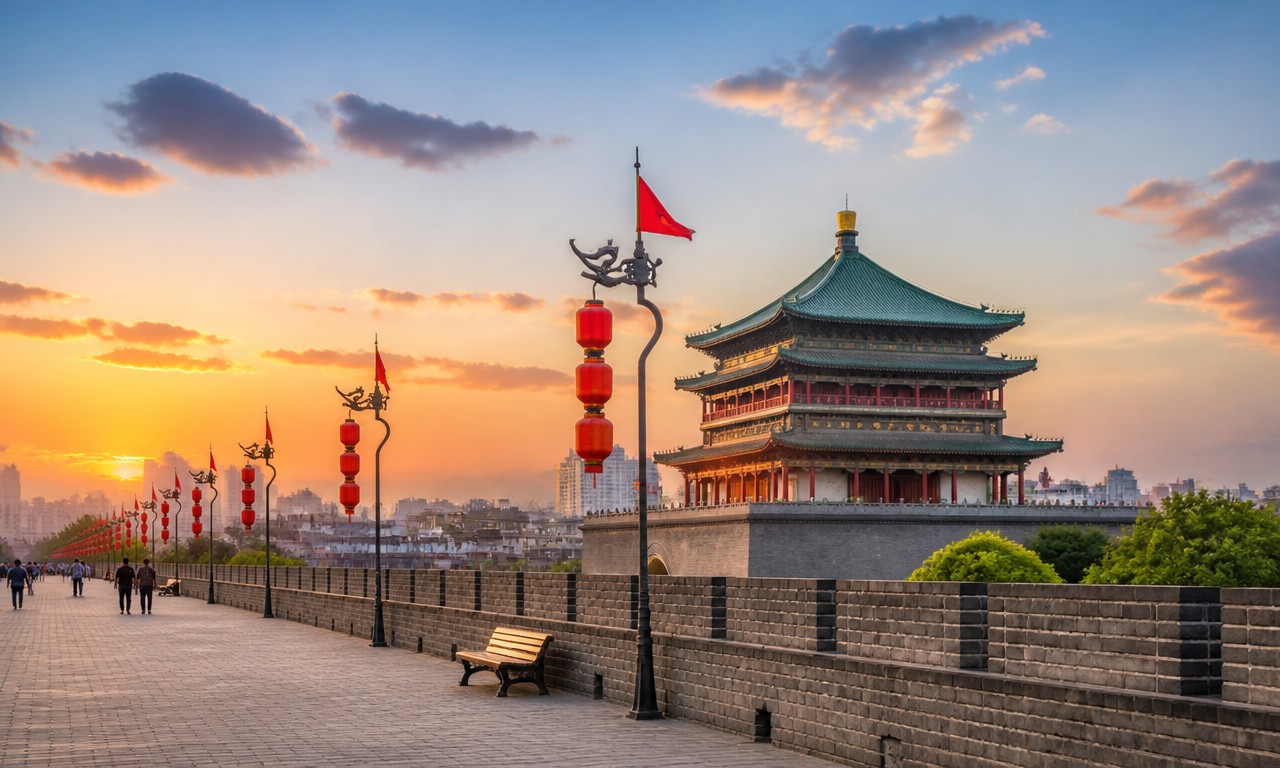
This article aims to answer a question that almost everyone planning a trip to Xi'an struggles with: Should you go during the peak season or avoid the crowds? Is a group tour more convenient or independent travel more liberating? Is a two-day weekend enough? I don't intend to give you a vague answer, but rather to present both the "most travel guides' opinions" and "my actual experience" side by side, allowing you to make a choice that you won't regret based on your own time and budget.
Peak Season vs. Off-Season: Is it really possible to touch the railings of the Terracotta Warriors?
Most travel guides will tell you that "Xi'an is beautiful all year round, but the atmosphere is even better during peak season." In reality, during peak season, you'll find three concentric circles of people in front of Pit 1 of the Terracotta Army, and you'll have to stand on tiptoe to even see the edge of the pit. On weekday mornings during the off-season, you can slowly peer through the railings, even clearly seeing the textures of the terracotta warriors' hair. If you want to seriously appreciate the artifacts, November to mid-March of the following year, excluding the week of the Spring Festival, offers a more comfortable viewing experience.
The only irreplaceable feature of peak season is the nighttime atmosphere reminiscent of "The Longest Day in Chang'an," but that kind of liveliness can be found every day in the Muslim Quarter and the Tang Paradise, so there's no need to squeeze in during the National Day holiday. Hotel prices also drop a notch during the off-season, allowing you to stay in a better location near the Bell Tower with the same budget.
Weekend vs. Weekday: Will locals give way to you?
Most travel guides will tell you that "traveling on weekdays is more relaxing." In reality, weekdays in Xi'an simply mean fewer tourists, but locals still live their lives as usual, and the subway line 2 remains crowded during rush hour. The real difference lies in places like museums and the city wall, which locals also frequent. On weekends, even making a reservation at the Shaanxi History Museum is difficult; on a weekday afternoon, you can stand in front of Tang Dynasty murals for a long time without being pushed around.
If you only have weekends available, my suggestion is to schedule the "must-visit" attractions for Saturday morning, and then visit open areas like the City Wall and Muslim Quarter on Sunday. The City Wall will actually be quieter than Saturday afternoon as tourists start leaving. Don't believe the claim that "weekends are completely off-limits"; just plan your itinerary accordingly.
Group tour vs. independent travel: Should I book a day trip on the East Coast?
Most travel guides will tell you, "Terracotta Warriors and Huaqing Pool, joining a one-day tour is the easiest way." In reality, most of the time on the eastern route one-day tour is spent at the meeting point, shopping stops, and on the road, with the actual time spent at the Terracotta Warriors probably less than an hour and a half. If you take the subway to Fangzhicheng and then transfer to Tourist Bus No. 5, your time is completely controllable, and you can stay in Pit 1 for as long as you want.
The only worthwhile scenarios for joining a tour group are when you're traveling with elderly people or children and don't want to figure out transportation, and during peak travel seasons like Chinese New Year and National Day when public transportation is packed. If you can read a map and are willing to get up early, independent travel in Xi'an is very easy; the road signs are clear, and the routes to tourist attractions are well-established. Don't think of joining a tour group as "convenient"; often, it just replaces physical labor with time cost.
Staying at the Bell Tower or the Big Wild Goose Pagoda: Which is more convenient?
Most travel guides will tell you, "Stay near the Bell Tower; it's close to everything." However, the Bell Tower's "closeness" is only on a map, not in terms of actual experience. The old town area near the Bell Tower has narrow streets, taxi congestion, and noise at night. Dragging your suitcase around Luomashi area to find a hotel isn't a pleasant experience. In contrast, the area around the Big Wild Goose Pagoda has wide roads, direct subway access, and you can walk to see the fountain and night view, making it more friendly to first-time visitors.
If you're someone who "goes out during the day and comes back to sleep at night," living near the Bell Tower will definitely save on commuting. If you enjoy evening walks and have places to stroll after dinner, the Big Wild Goose Pagoda area is more comfortable. Both areas have subway access, and the difference isn't as big as you might imagine. Don't put up with an old, run-down room just to "live in the city center."
How many days is enough: a two-day sprint or a five-day leisurely pace?
Most travel guides will tell you to "spend at least five days in Xi'an." In reality, if you only have two days, seeing the Terracotta Army, the City Wall, and the Muslim Quarter will already give you a grasp of Xi'an's essence, and you won't feel like you've wasted your trip. The issue isn't whether "that's enough," but whether you want to allocate time to museums and surrounding tombs.
Three days is a sweet spot: Day 1: City Wall and Muslim Quarter; Day 2: Terracotta Warriors (eastern route); Day 3: Shaanxi History Museum (morning) and Big Wild Goose Pagoda (afternoon). Only consider peripheral destinations like Famen Temple, Qianling Mausoleum, and Mount Hua if you have five days or more. Don't be bound by your "must-see list." Two days is enough to understand the city, and five days isn't enough to see it all.
Eat in the Muslim Quarter: The main street and the back alleys are two different worlds.
Most travel guides will tell you, "The Muslim Quarter is all for tourists; locals don't go there." While it's true the main street is heavily touristized, the Muslim Quarter isn't just one street, but a whole area. If you turn off the main street into Xiyangshi, Dapiyuan, or Sajinqiao, you'll see locals queuing for cured beef and enjoying stir-fried bread soup. The question isn't "whether to go to the Muslim Quarter," but rather "where in the Muslim Quarter are you?"
My approach is: walk along the main street without buying anything, then turn into any alleyway I see, and eat at whichever restaurant has a long queue of local elderly people. Don't worry too much about hygiene; those who enjoy beef and lamb can have a hearty meal in the back alleys for just a few dozen yuan per person. Don't let "avoiding bad food" turn into "missing out."
Is cycling along the city wall worth it?
Most travel guides will tell you that "you must ride a bicycle to get up the city wall." In reality, if you go up at midday in summer, cycling will expose you to the scorching sun; if you go in the evening in winter, the wind will be so strong you can barely open your eyes. The charm of the city wall isn't in "cycling around the entire wall," but in "choosing the right time to walk along it." In spring and autumn afternoons, walking from the South Gate to the Wenchang Gate, observing the old houses inside the city and the traffic outside, is much more rewarding than a hurried bike ride.
You can ride a bike if you want, but don't treat "going around in circles" as a task. The rental points are most concentrated near the South Gate. Just ride half a circle to the West Gate to return the bike, and save the other half for next time. This will save you energy and a lot of time.
Best time to go: Spring and autumn are the best, but winter also has its own unique charm.
Most travel guides will tell you that "March/April and September/October are the best months." In reality, Xi'an's spring is short and often windy, while autumn is the best but also the most crowded. Winter is a window many overlook: the air is dry and clear, the city walls and bell tower appear even darker in the winter light, and there are so few tourists that you can spend an entire afternoon alone in the Stele Forest. Aside from the cold, it has no other drawbacks.
Summer is the most unbearable season in Xi'an. The sweltering heat combined with the summer crowds makes for the worst experience. If you only have free time in the summer, schedule your itinerary for the mornings and evenings, and visit museums or return to your hotel to rest at noon. Don't believe the hype about "coming to Xi'an in summer to experience its warmth"—when it gets hot, you really won't feel like experiencing anything.