
What can you take with you from Xi'an using only one bag?
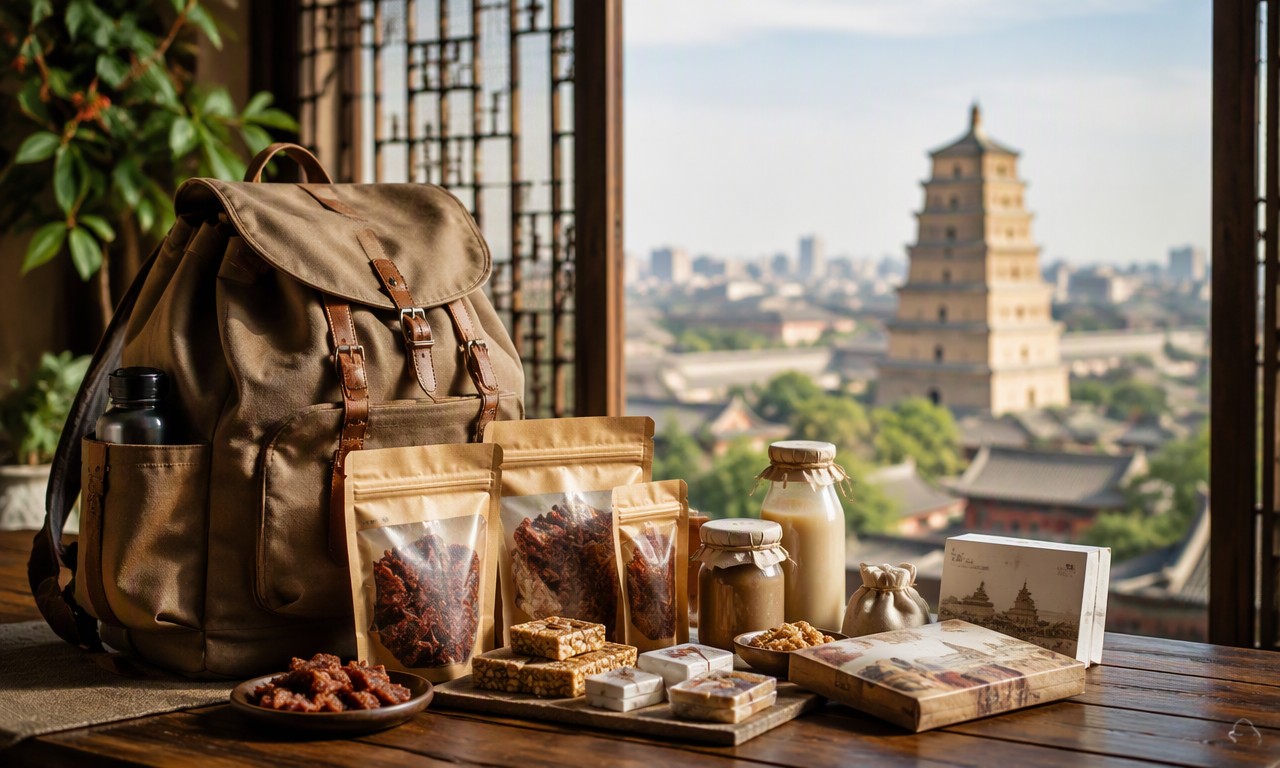
This article aims to answer a very specific question: When buying souvenirs in Xi'an, should you prioritize luggage space or who you're giving them to? It seems like a list-based question, but it's actually a matter of decision-making order. I've seen too many people browse the Muslim Quarter before buying a suitcase, and I've even seen people repack their luggage at the airport just to bring a piece of cured beef. Therefore, I've organized the answer into three branches: luggage capacity, whether it's for gifting or keeping for yourself, and whether it can be checked in. Matching these points to your needs is much easier than looking at a recommended list.
Option 1: Carry only one bag and it must be carried on the plane.
In this situation, discard all liquids, semi-liquids, and foods containing soup. Avoid even the most authentic Huang Gui Thick Wine, bottled chili oil, and plum powder; they won't pass security checks, and returning them is expensive. Your choices should be limited to those that are "dry, lightweight, unbreakable, and non-oily."
I recommend bringing two items: First, mini-packaged "stone-baked bread," especially the pepper leaf flavor. It's low in density, takes up very little space, and can be used as snacks if you get hungry on the road. Second, "persimmon cake with frosty skin" sold at an old shop near the Drum Tower. They come in individual small packages, are sweet but not runny, and make presentable gifts for colleagues and friends. These two items combined take up less than two packs of instant noodles, and the weight is almost negligible, making them the safest option to bring.
Branch Two: Sufficient baggage allowance and the ability to check in luggage.
If you can ship it, you can consider "bringing the taste of Xi'an back to cook." The first choice isn't vacuum-packed paomo (pita bread soaked in mutton soup), but rather a gift box of dried rice noodles and vacuum-packed cured beef. Take the dried rice noodles home, soak them in hot water, and then add chili oil—it's much fresher than ready-made packaging. Choose cured beef with a good balance of fat and lean meat, not all lean. Slice it and stir-fry it with garlic sprouts; it's a New Year's gift that people in Xi'an would give each other.
Among similar genuine products, I suggest avoiding "airline companion" style bundled packages, which often include dried fruits of dubious origin. Buy them separately, one category at a time. Although it takes a few more steps, you can clearly know where each item comes from. When checking in luggage, wrap the cured beef and dried rice noodles in soft clothing instead of using hard boxes; this actually makes them less likely to leak.
Branch 3: A gift is needed for someone who has never been to Xi'an.
For gifting to someone who's never been to Xi'an, the key is that "even first-timers won't have a hard time trying it." This is a completely different logic from gifting to locals. Don't give them "oil-splashed chili sandwich," as they might have no idea how to pair it. Three more suitable options are items with long shelf lives and mild flavors: crystal cakes, salt and pepper walnut crisps, and small pieces of Jingwei Fu tea.
Choosing between Demaogong and Quanshengzhai for crystal cakes doesn't really matter; just pick the one closest to you and with the newest packaging. Small bricks of Fu brick tea are more suitable as gifts than large tea bricks; you can just drop them into a cup and drink—no need for a tea knife or fairness cup. This combination of sweet, savory, and tea-infused items ensures the recipient won't feel like they just picked something up at a tourist attraction.
Branch 4: A gift is needed, but the recipient has lived in or frequently visits Xi'an.
The worst thing you can do in this category is to avoid repetition. Don't give him terracotta warrior figurines, postcards, dates, or paper-shelled walnuts; he's likely received those before. What he'll really remember are the "everyday flavors" he's eaten before but might not have thought of taking with him.
One is "loose pepper-salt sesame seed cakes from a halal snack shop," sold by weight, with a taste closer to the traditional Xi'an breakfast experience than the gift box version. The other is "small packets of cumin and chili powder from the Muslim Quarter," easier to use than chili oil for grilling meat or stir-frying potato slices. Add a packet of "Hans' Little Wooden House portable pack" or a similar fruit-flavored beer, and you have a light dose of nostalgia. What these items have in common is that the recipient will immediately understand how to eat them; no explanation of "how to eat them" is needed.
Branch 5: Eat it yourself, don't give it away, aim for it to last a long time.
"For personal consumption" is often overlooked, but the decision is actually simpler: don't worry about packaging or appearance, just consider shelf life and how fresh it tastes after reheating. I recommend frozen reheatable packs of "Tuotuo Mo" or "Baiji Mo," which many people don't know can be taken away. Freeze them at home, reheat them in a dry pan before eating, and add cured beef or pickled vegetables—the result is much more authentic than vacuum-packed instant food.
If you don't want to cook, just bring a pre-made "oil tea noodles with fried dough twists" set; just add boiling water and you have a meal. Also, there are small packets of "eight-treasure sweet rice seasoning," which can be steamed and served immediately. None of these require refrigeration and can be kept at room temperature for two or three months, making them suitable for rented apartments or dormitories.
Branch Six: Limited budget, but still want to give a gift that doesn't feel cheap.
Readers on a tight budget are most afraid of giving gifts that look cheap and cheap. I suggest focusing your budget on one main item and pairing it with two types of individually wrapped snacks, instead of buying three small gift boxes with low average prices. For the main item, choose a nicely packaged box of "Yellow Osmanthus Persimmon Cakes"—mid-range is enough, not expensive but presentable. For the snacks, choose "Dragon Beard Candy" and "Small Squares of Pea Flour Cake," weighed and packaged separately in kraft paper bags.
Once home, I portioned the gift out with parchment paper and then placed it in a plain paper box, which showed more care than the original plastic liner box. This approach doesn't cost much, but the recipient will think you specifically chose the gift. Even on a tight budget, avoid buying a "family portrait gift set"—that's the easiest way to make a mistake.
Branch Seven: Three things you should never bring, regardless of the branch.
First is the "high-quality replica terracotta warrior clay figurine," which is hard to miss unless the customer specifically requests it. Second is the "vacuum-packed mutton stew with pickled garlic" combination; the bread inside is dry and the meat is bland, far less satisfying than dried rice noodles with cured beef. Third is the "freshly cut osmanthus cake from the Muslim Quarter," which looks appealing, but it will crack within two hours on the street, and the taste will be completely ruined once you get it home.
These three items have one thing in common: they're attractive and famous, but they can't withstand the test of "trying them out after getting home." The meaning of a souvenir isn't in the moment of departure, but in the moment the recipient opens it. Ideally, you should be able to explain "why it's this one" for each item you choose. This is the truly useful standard I want to tell you.