
How can you make the most of your trip to Xi'an by enjoying its delicious food?
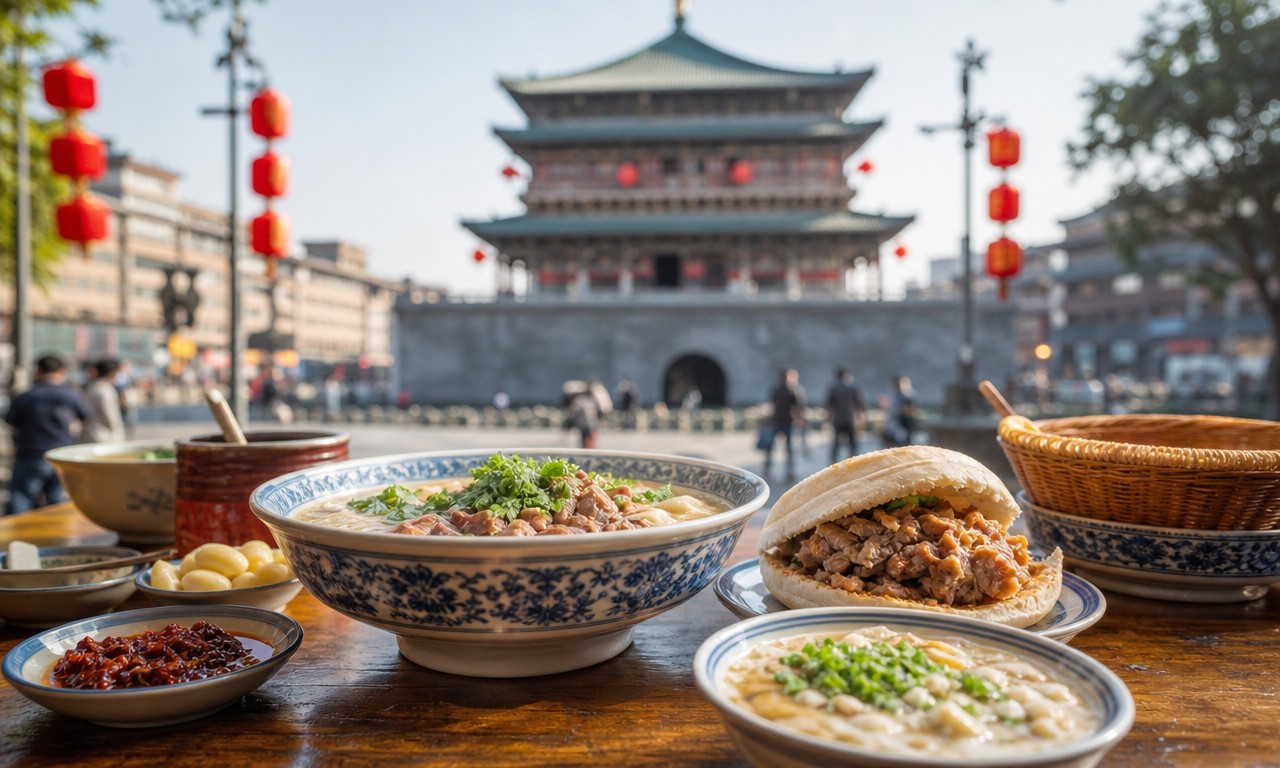
This Q&A isn't going to give you a "must-eat list," but rather to pick out the most frequently asked questions from readers over the past six months before their trips and explain them to you one by one: Eating a lot of snacks in Xi'an doesn't necessarily mean eating the right ones; understanding what you eat is more important than trying everything. So, the following questions are things you might genuinely hesitate about when you arrive in Xi'an and stand at a street corner.
If this is my first time in Xi'an and I only have one meal, what should I eat?
My assessment is: a bowl of paomo (pita bread soaked in mutton soup), a small dish of pickled garlic, and a bottle of Bingfeng (a local soft drink). Not because it's the most special thing, but because it best represents the rhythm of eating in Xi'an. Paomo has an atmosphere that can't be replicated elsewhere—you have to spend twenty minutes breaking the bread into pieces the size of soybeans before the kitchen will even cook it for you. This process forces you to slow down, and that's the essence of Xi'an snacks. Find a long-established restaurant, sit down, and watch how the locals break their bread; that's more effective than any travel guide.
If you really don't like lamb, you can switch to beef paomo, which has a milder flavor. If you want a stronger carb experience, order "stir-fried paomo," which is sour and spicy with more ingredients. But if it's your first time here, I recommend starting with the most traditional "mouthful of soup" style, where the soup is just enough for the bread to absorb until the last bowl is empty. This is the basic requirement for a good bowl of paomo in Xi'an.
What do people in Xi'an eat for breakfast? Can tourists keep up?
The essence of Xi'an breakfast is "hearty." A common breakfast for office workers is a bowl of meatball hot and sour soup with a steamed bun filled with cured beef. The soup contains beef balls, diced potatoes, carrots, and zucchini, thickened with cornstarch until it can hold a spoon upright. Seasoned with pepper and Sichuan peppercorns, each bite warms you from head to toe. Tourists might find it a bit thick and sticky at first, but that's just how it is; don't doubt your judgment.
For a milder option, try the fried dough twists in oil tea. The fried dough twists are soaked in savory oil tea, resulting in a soft yet crunchy texture. You can often see elderly men squatting by the roadside in the alleyways in the early morning, bowls in hand, eating them. If you're short on time, a sandwich with egg and vegetables and soy milk will do the trick; the key is to make sure there's plenty of sauce. To see the most vibrant breakfast scene in Xi'an, you don't need to go to any food streets. Between 7 and 8 am, find an alley with a primary school or a market, and go to whichever stall is the busiest.
Is the Muslim Quarter worth making a special trip to?
It's worth it, but only for the section around Hongbu Street, Sajinqiao, and Dapiyuan. It's not worth venturing into the widest main street directly behind the Drum Tower. Most of the shops on the main street are fast-paced tourist traps; the quality is inconsistent, prices are high, and while the food isn't bad, it makes you lose patience. The truly delicious food is in the side alleys on both sides, where shops typically only serve three or fewer items and have been open for two or three decades.
When you arrive in the Muslim Quarter, remember one thing: don't try to fill your stomach on just one street. Walk around first, see which shops have locals queuing in front of them, and then decide what to eat. Social distancing in the Muslim Quarter is very close; while queuing, you'll likely be surrounded by locals who have just finished get off work, discussing which shop has the best steamed buns or soups. Listening to their conversations is more helpful than doing three pages of research beforehand.
Roujiamo (Chinese hamburger), liangpi (cold skin noodles), and Bingfeng (a local soda) – is this combination really that amazing?
Whether it's delicious or not depends on how you eat it. Roujiamo (Chinese hamburger) should be eaten hot. From the moment the vendor hands it to the moment you take your first bite, it's best not to exceed five minutes. Once the bread becomes soaked in the meat juices and softens, the whole texture is off. Xi'an roujiamo is by default made with pork, in a rich, aged braising sauce. The meat should have a good balance of lean and fat to be truly juicy. Those who don't like fatty meat can ask for "all lean," but locals will tell you that an all-lean roujiamo lacks soul. For liangpi (cold skin noodles), choose rice noodles from Qin Town for a chewier texture. Served with cucumber strips and chili oil, it's tangy, spicy, and appetizing. Bingfeng (a local soft drink) must be in a glass bottle; canned versions don't have enough fizz. This is something locals won't explicitly say, but everyone knows.
The most reasonable way to eat this combination is actually quite simple: first, take a bite of the steamed bun to enjoy the savory aroma of the gravy and the crispiness of the crust; then, pick up a piece of cold noodles to let the sour and spicy flavor revitalize your palate; finally, take a sip of Bingfeng soda to suppress all the previous flavors and start the next round. Eating the three items alternately is much more interesting than eating them separately.
Are the snacks in Xi'an spicy? What about people who can't handle spicy food?
The spiciness in Xi'an differs from that in Sichuan and Chongqing; it's generally not very hot, leaning more towards a "fragrant spiciness." The chili oil is the soul of the dish, but its purpose isn't to burn your tongue, but rather to bring out the aroma of the Sichuan peppercorns, sesame seeds, and chili peppers. Many locals add a couple of spoonfuls of chili oil to their noodles, their foreheads slightly sweating, but not to the point of needing water. If you can't handle spice at all, you can ask for "less chili" or "no spice" for your cold noodles; the flavor will be much cleaner, but the aroma will be less pronounced.
What you really need to pay attention to is the pepper flavor in the spicy soup and steamed pork with rice flour. For many people from other regions, the "spiciness" of the spicy soup actually comes from the aroma of pepper, not chili peppers. If you can't handle spice, order a bowl and taste the soup first. If it's too strong, drink less soup and eat more of the ingredients, or switch to non-spicy options like fried dough twists or oil tea. There are many non-spicy breakfast options in Xi'an, but everyone is focused on the spicy soup and overlooks them.
What's the difference between a trendy online store and a decades-old shop tucked away in an alley?
The main difference lies in "stability" and "patience." Trendy restaurants often perfect their most outstanding flavor, making them perfect for taking photos and checking in on social media. They're quick to serve and have high table turnover, but they don't offer that experience if you want to sit down and enjoy your meal at your own pace. Established restaurants may not have the same amazing flavors, but they've maintained the same standards for years, with every pot of soup and every batch of steamed buns governed by the same set of rules. The owners of these established restaurants are usually not good at marketing; they rely on repeat customers and word-of-mouth from the neighborhood.
A more practical method is to mark the area you want to visit on a map, and then search for "established brands" or "30-year-old" restaurants nearby. The results will be more helpful than any list provided by food bloggers. If you only have one day, you can choose an established restaurant to have a proper meal, and then leave some time to buy a snack from a trendy restaurant to take away. This way, you won't miss out on checking off photos, nor will you miss out on truly delicious food.
Where can you find decent food after 10 p.m.?
Yes, but it's a completely different system from the daytime. After 10 PM, Xi'an belongs to night markets and barbecue stalls. The barbecue isn't Japanese-style grilling, but rather Northwest-style grilled meat on iron skewers. The meat is cut into small pieces, grilled quickly, and generously seasoned with cumin and chili powder. Near Dongxin Street and Sajinqiao, there are barbecue restaurants that stay open late into the night. A low table, a few iron skewers, a dish of pickled peanuts, and a side of fried noodles—this is the standard late-night meal for Xi'an locals.
If you're craving hot soup, look for stalls selling mutton soup. Some stay open late, serving a bowl of clear mutton soup with two crescent-shaped flatbreads. The meat is tender and the broth is clear, perfect for finishing off a late-night snack. There's also something called "hot jiaotuan," made by freshly stirring cornmeal and topping it with pickled cabbage broth. It's soft, chewy, and tangy—many young people haven't tried it, but you can still find it at old night market stalls. After 10 PM, the rule is: don't be picky about the environment or service, just go for the busiest stalls. The more people, the faster the ingredients turn over, and the fresher the food.
What should I bring back as gifts so they don't seem like tourist souvenirs?
Vacuum-packed cured beef and mutton are the top choice. Many old shops on Muslim Street offer vacuum-packed options, perfect for slicing and stuffing into sandwiches or enjoying with drinks at home. Before buying, you can weigh out a small amount to taste; the meat should be tender but not fall apart, and the spices should be flavorful but not overpowering. Next is chili oil. Many old shops only sell it in bulk, so bring your own glass jar to fill it up. It's excellent for mixing with noodles or cold dishes. Finally, I recommend bringing home a serving of steamed glutinous rice cake (Zenggao). Choose the kind that's made fresh daily and vacuum-packed; the texture after steaming is very similar to eating it fresh—sweet but not cloying, and perfect with a cup of tea.
I wouldn't recommend bringing back those beautifully packaged "Shaanxi Eighteen Delicacies" gift boxes from tourist attractions. The taste is average and unremarkable, making them seem like a perfunctory gift. What's truly worth bringing back are things you enjoy while in Xi'an and then go back to buy more to take home. The only criterion is: will you crave the taste after you get home? If you will, then it's worth bringing back.