
A Day in Tangshan: 8 Local Street Foods from Morning to Night
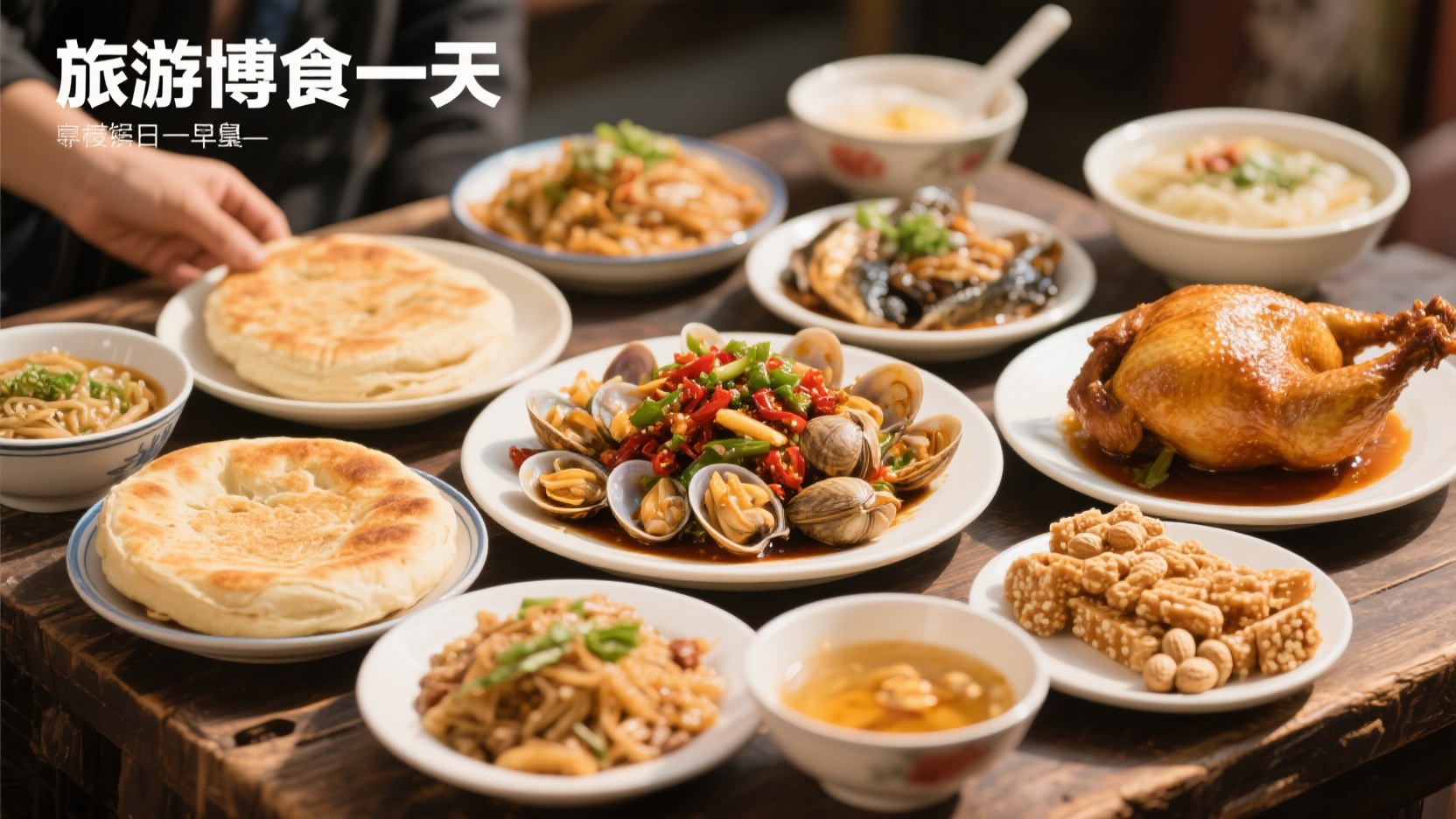
In Tangshan, understanding the city's culinary landscape doesn't necessarily require visiting grand restaurants. Following the locals' schedules reveals a clearer picture: the first batch of chess-piece-shaped sesame cakes in the morning, a piece of honey sesame candy in the afternoon, and a plate of spicy stir-fried clams late at night—eight dishes a day connect the everyday culinary landscape shaped by the Hebei Plain and the Bohai Bay. These dishes don't rely on elaborate presentation or famous names; they rely on the daily routine of setting up stalls, lighting fires, and serving food.
Early morning: Chess-shaped sesame seed cakes with tofu pudding
Chess Piece Sesame Cakes are a common breakfast staple in Tangshan, named for their resemblance to chess pieces. The dough is filled with pork and scallion filling or red bean paste, coated with sesame seeds, and baked against the oven wall. Once baked, the outer layer becomes flaky and layered, while the filling is savory or sweet. Fresh out of the oven, the flaky crust crumbles noticeably, releasing a rich aroma of sesame and oil. Locals typically order several Chess Piece Sesame Cakes with a bowl of hot tofu pudding or mutton soup for a quick and filling breakfast. In Tangshan, the tofu pudding is often topped with a savory sauce made from wood ear mushrooms, daylily buds, and egg flowers, complementing the flaky texture of the cake. Chess Piece Sesame Cakes were once a staple food carried down mines or on long journeys, and they still retain their characteristic small size, multi-layered flaky texture, and long shelf life.
Morning: Two Everyday Faces of Geza
In Tangshan, "Geza" (also written as "Geza") is a thin pancake made from mung bean flour. The key is to use stone-ground mung bean milk, which is quickly spread on a griddle until cooked through, resulting in a thin yet chewy pancake. Local eateries often serve two types: one is vinegar-braised Geza, cut into diamond shapes, deep-fried, then quickly stir-fried with minced garlic, vinegar, and soy sauce, resulting in a crispy exterior and soft interior, with a tangy and appetizing flavor; the other is Geza sticks, made by rolling meat or vegetarian fillings in Geza, steaming, and then cutting into sections, which can be eaten cold or fried again. The former is more sour and crisp, while the latter is more soft and fragrant—one hot, one cold; one vegetarian, one meat. For locals, it's both a seasonal dish and a convenient and satisfying combination of staple food and side dish for weekday lunches.
Lunch: The rustic aroma of lazy tofu
Around noon, "lazy tofu," a common dish in Qianxi and Zunhua, appears in local eateries. The preparation is much simpler than regular tofu: soybeans are soaked and then boiled with the pulp and solids. Chopped greens or dried cabbage leaves are added and cooked until thickened. It's then eaten with chive blossoms, chili oil, or soy sauce. It has a distinct texture from the soybean pulp, with a blend of soybean flavor and vegetable sweetness, and is very filling. Originating from a simple, time-saving one-pot dish during busy farming seasons, it remains a staple of local lunches, naturally served with corn tortillas or rice. Adding a spoonful of fried chili peppers instantly elevates the meal with the aroma of soybeans, vegetables, and spiciness.
Lunch: Braised mixed seafood with cornbread
In Tangshan, a coastal city, a dish of braised mixed seafood is a common sight on the lunch table. Small sea bass, yellow croaker, and ribbonfish are cleaned and braised with soybean paste, scallions, ginger, and garlic. The fish absorb the rich aroma of the sauce, resulting in tender yet firm flesh. The sauce is thick but not too salty. The most authentic way to eat it is to break open a cornbread and dip it in the sauce; the rough texture of the cornbread perfectly holds the broth. This dish doesn't use a specific type of fish; whatever is caught that day is used. It's a direct reflection of the lives of fishermen in the Bohai Bay, a dish often found on the everyday dining table. For many families, this mixed seafood dish is often the last thing served at lunch, but the first to be devoured with the sauce.
Afternoon tea: Honey sesame candy and peanut brittle
In Tangshan, afternoon tea doesn't rely on Western desserts; honey sesame candy and peanut brittle are more common snacks. Honey sesame candy is made from refined flour, honey, sesame oil, and white sugar. The process involves kneading the dough, rolling it out, cutting it into shapes, deep-frying, and drizzling it with honey. The finished product is paper-thin, golden in color, and has a crisp, sweet taste with a concentrated sweetness that melts quickly in the mouth. Peanut brittle uses local peanuts, which are roasted, peeled, mixed with syrup and sesame seeds, repeatedly folded and pressed while hot, and then cut into strips after cooling. It's crisp at first, then crunchy, with the oily aroma of peanuts overpowering the sweetness, making it a perfect accompaniment to tea. These two snacks were traditionally served to guests during festivals, but now, enjoying a small piece of sesame candy or half a strip of peanut brittle in the afternoon is a common practice in many Tangshan families. Sesame candy is crisp and sweet, while peanut brittle is oily and fragrant; one is light, the other substantial, and together they form the local version of afternoon tea.
Late at night: Roast chicken and spicy stir-fried clams
As night falls, local long-established roast chicken and seafood stalls take over the flavors. Tangshan roast chicken is made with young roosters selected this year, marinated, deep-fried, and then braised in a rich broth. The chicken skin is a deep reddish-brown, the meat firm yet tender, and the flavor is savory with a hint of five-spice. It tastes even better when eaten chilled. At the coastal stalls, spicy stir-fried clams are the most frequently seen seafood late at night. The clams are cleaned of sand, then stir-fried in hot oil over high heat with dried chili peppers, garlic slices, and fermented bean paste. They are served as soon as the shells open, revealing tender and juicy clam meat in a savory and spicy broth. Roast chicken provides a satisfying meaty texture, while clams add a touch of spiciness and vibrancy. A group of people sitting around a table, enjoying staple foods or a few drinks, is a common way to conclude a Tangshan night out. Especially on summer nights, the sound of clam shells piling up into small mountains is almost as ubiquitous as the wind blowing across the Bohai Bay in Tangshan's nightlife.
From the streets to the alleys, from the first batch of crispy cakes in the morning to the last plate of spicy stir-fried clams late at night, experience the city through its food in a single day.