
Eat in Taizhou at the Right Time of Year | I rearranged my itinerary six times according to the solar terms, please keep this list of seasonal specials handy (personally tested to avoid pitfalls)
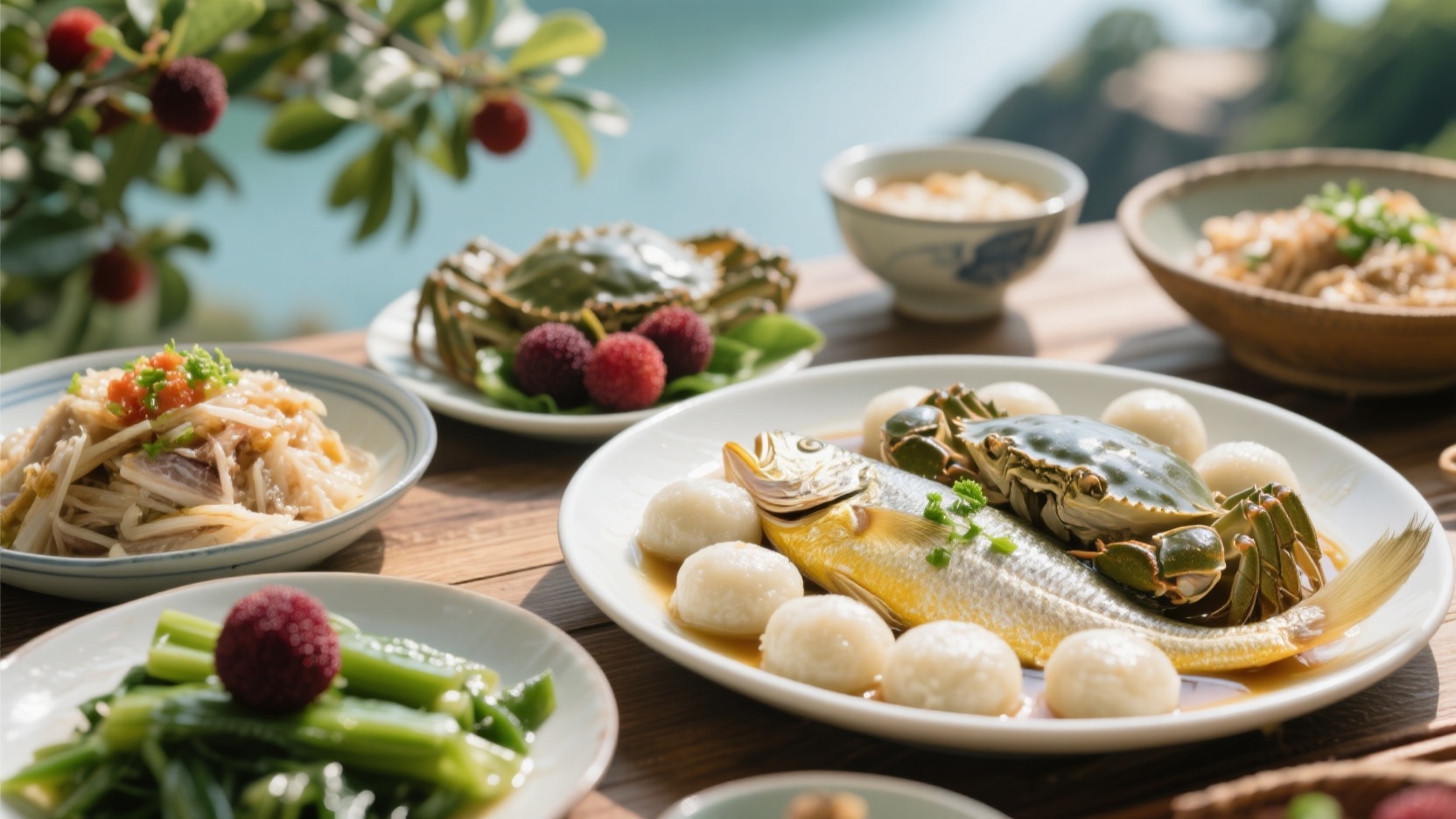
I've been to Taizhou eight times, and the first three times I almost always went at the wrong time—in May, I chased after Sanmen crabs but only caught empty shells; in October, I went to Xianju to look for bayberries but only found frozen stock. Later, I changed my itinerary to be arranged according to the solar terms, and only then did I truly understand the Taizhou people's habit of "eating only what's in season." The essence of Taizhou cuisine isn't in trendy restaurants, but in the intersection of local mountain and sea produce with the twenty-four solar terms. The following eight dishes are, in my personal experience, Taizhou-exclusive dishes that "you'll have to wait another year after this season."
Spring – From Qingming to Guyu: Green clams and razor clams, mountains and seas awaken simultaneously.
Qingbing is a type of green dumpling made by Taizhou people during the Qingming Festival. It is made by kneading the juice of cudweed or mugwort into glutinous rice flour, giving it a darker color than ordinary green dumplings and a slightly bitter herbal taste. The cudweed is only at its tenderest around Qingming Festival, making the juice fragrant and not astringent; after Guyu (Grain Rain), the stems become old, and the color and aroma are inferior. Locals prefer to eat it with a savory filling, made by stir-frying bamboo shoots, dried tofu, minced meat, dried shrimp, and rice flour. After steaming and cooling, it is eaten with a non-sticky skin. Served with a bowl of seaweed soup, it is the standard meal after a spring outing.
Also reaching their peak flavor around the Qingming Festival are the razor clams from Sanmen Bay. At this time, after a winter of accumulation, the clams have the thickest, yellowish meat and the thinnest shells. Locals say, "Qingming razor clams are better than ginseng," not to suggest they're particularly nourishing, but to remind you that not enjoying a couple of pounds of razor clams at this time is like missing out on spring. The most authentic way to eat them is boiled or steamed: skewer the clams vertically into a stewing pot, add ginger slices and rice wine, and steam until the shells open. Remove them and dip them in ginger vinegar. Remember not to add salt and soy sauce yet; first, sip the original broth—its sweetness is like the sweetness of the sea.
Summer – From Summer Solstice to the Dog Days: Twenty Days of Waxberry Season and the Fishing Season of Dachen Yellow Croaker
I waited three years to finally taste the Dongkui bayberries from Xianju when they were fully ripe. Around the summer solstice in June, the Dongkui bayberries reach their peak season in about twenty days, changing color from purplish-red to dark purple, with the flesh swelling up like tiny bursting beads. At this time, you must go up the mountain and pick them fresh before the morning dew dries to truly appreciate their grassy, fruity aroma; soaking them in water or refrigerating them overnight will diminish the fragrance. Locals eat bayberries without spitting out the pits, saying it helps cleanse the digestive system. Whether or not you swallow the pits depends on your courage, but you must put the whole bayberry in your mouth, first biting the flesh to release the juice, allowing the sourness to fade into a sweet aftertaste.
From the Dragon Boat Festival to the Minor Heat, it's the peak season for yellow croaker on Dachen Island, and also the time when Taizhou people can most confidently enjoy "home-style braised yellow croaker." At this time, the yellow croaker is thick with fat, its flesh is shaped like garlic cloves, and most importantly, its swim bladder is still elastic. Taizhou people don't make it sweet and sour, nor do they steam it; they prefer "home-style braised"—frying the yellow croaker briefly in lard, ginger, and garlic, then pouring boiling water over it, resulting in a naturally milky white broth. At the table, you first drink a spoonful of broth, then add the fish meat to rice and mix it in. The broth is devoured even before the fish—this is the local standard for judging the freshness of a yellow croaker.
Autumn - Mid-Autumn Festival to Frost's Descent: Crabs with Full Roe and Tangerines with Sugar Coating
Sanmen mud crabs are renowned, but many don't know that their fattest and most delicious period is from around the Mid-Autumn Festival to before the first frost. During this season, female crabs are full of roe and yellow fat, while male crabs have firm leg meat. This is a result of the crabs storing energy to prepare for winter as the seawater cools after typhoons. The locals' most enjoyable way to eat mud crabs is by "dry steaming" them without adding a drop of water, shell down, allowing the internal juices to flow back; or they can be cooked with loofah, where the sweetness gives way to the crab's aroma. When eating, first remove the shell, scrape the roe from inside the shell with chopsticks, then eat the body, and finally suck the legs. After this period, the mud crabs molt, and the meat becomes loose, with a sharp decline in flavor.
After the first frost, Huangyan tangerines and Linhai Yongquan tangerines begin to "grow sugar," as the temperature difference between day and night reduces their acidity. Locals will tell you to choose tangerines picked in the morning, when the peel is so thin it's translucent. Don't remove all the white pith; eat the whole segment—it's less likely to cause internal heat. The most refined way to eat them is to peel them from top to bottom, leaving the small navel intact so the fruit fibers remain unbroken. If the tangerine peel can be peeled off in one piece without breaking, it means the rainfall this year was just right, and the sweetness will be good. I once visited Yongquan three days after the first frost, and a tangerine farmer by the roadside handed me a tangerine still wet with dew. That crisp, tender "freshly picked" quality is something cold storage can never replicate.
Winter Solstice to Great Cold: Glutinous Rice Balls and Dried Eel, the glutinous rice and freshness carried by the wind.
In Taizhou, people don't eat dumplings on the Winter Solstice; instead, they eat "Lei Yuan" (擂圆). Around the Winter Solstice, newly harvested glutinous rice is soaked, ground with water, pressed dry, shaped into balls, cooked, and then rolled three times in soybean powder and brown sugar—a process called "Lei" (擂). This layer of soybean powder must be freshly roasted and ground; it's coated while still hot to give it a caramelized aroma. The sweet Lei Yuan is fragrant on the outside and chewy on the inside, with a flowing brown sugar center when you bite into it. In the coastal Wenling area, there's also a savory version, filled with shredded radish, minced meat, and dried shrimp, with glutinous rice used as the wrapper. Locals say that eating Lei Yuan on the Winter Solstice makes you a year older, so even Taizhou people who live far away will try to steam a basket of them on this day.
After the winter solstice, when the northwest winds begin to blow, rows of dried eels hang under the eaves of houses along the Taizhou coast. The eels are gutted, salted, and skewered with bamboo sticks, then naturally dried in the dry, cold north wind—the taste is completely different from frozen eels. The most common way locals eat dried eels is steamed and hand-shredded: after steaming until soft and letting it cool, they are torn into strips along the grain and dipped in a little rice vinegar. The freshness of the dried eel is concentrated, as if the winter sea breeze has been absorbed into the meat. If you happen to have "dried eel rice" before the Spring Festival, it's a prelude to the festive atmosphere of Taizhou.
The blogger concludes: After trying these eight dishes, the biggest takeaway is that Taizhou doesn't follow the trend of "out-of-season delicacies." They've already planned out what to eat for each season. Missing out isn't a regret, but rather a reason to go again. Useful Tips:
Tip 01: Arrange your itinerary according to the solar terms for the most stable trip. Go to Sanmen around Qingming Festival, Xianju or Dachen around Summer Solstice, Huangyan and Linhai after Frost's Descent, and leave a day for Leiyuan and dried eel on Winter Solstice.
Tip 02: Local markets are more reliable than seafood restaurants. Go to the morning market before 7 a.m., and the razor clams and yellow croakers that have just been brought ashore will still be moving. When buying bayberries and tangerines, be sure to ask if they were picked today.
Tip 03: These dishes do not require heavy seasoning. Boiling, steaming, and home-style braising are the best ways to bring out the original flavor of the ingredients. Don't be misled by fancy menus.
Eating according to the seasons is the right way to experience a city.