
Avoid these pitfalls when traveling to Taiyuan | Don't be fooled by the "3-day, 2-night classic itinerary": A local's optimized version + 10 things to avoid.
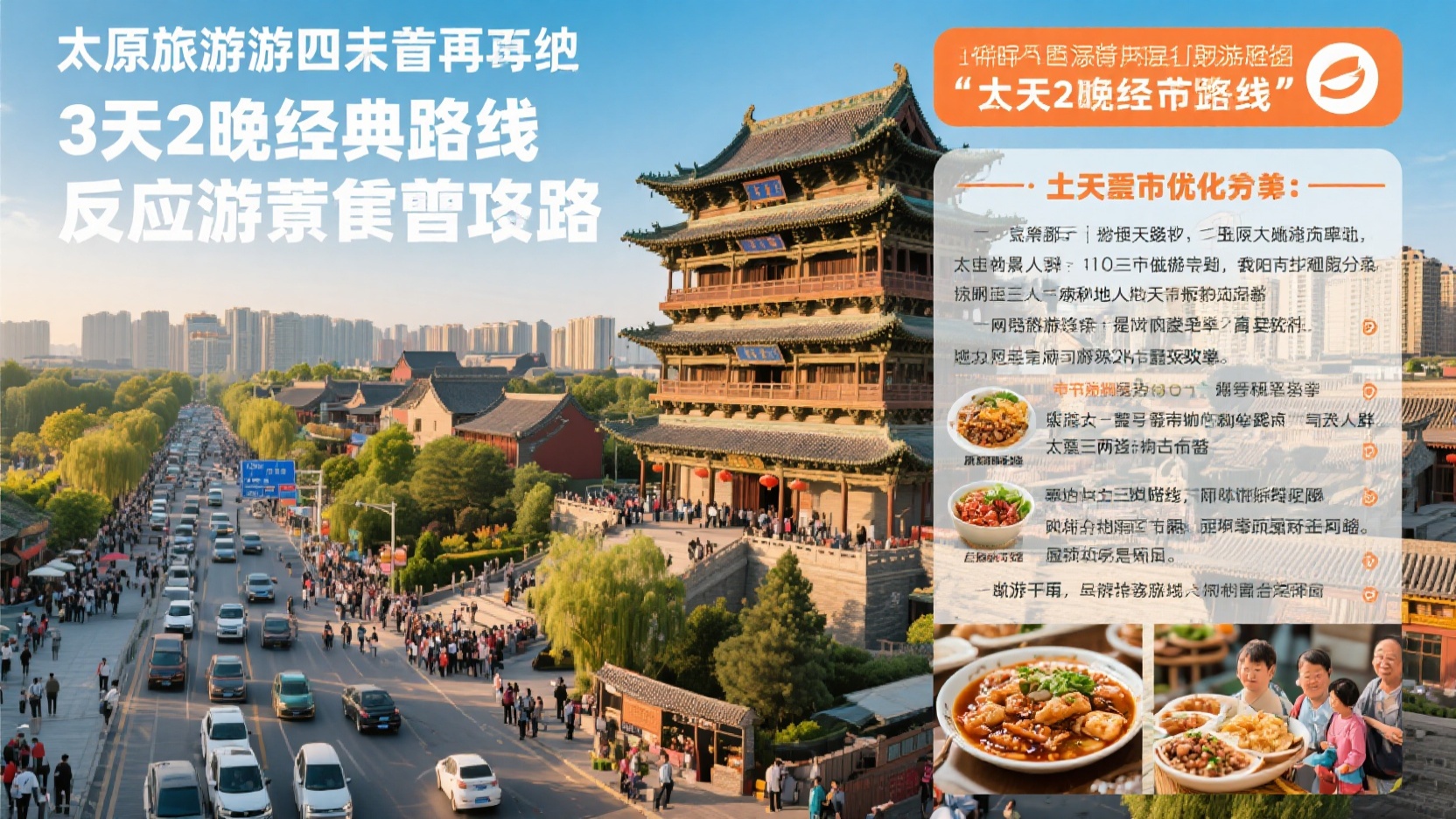
If you follow the "three days and two nights classic route" in Taiyuan, you'll be stuck in traffic in Liuxiang on the first day, questioning your existence, and discover that the old Taiyuan restaurants with two-hour queues don't taste as good as the bowl of braised noodles downstairs in your residential building.
Online travel guides treat Taiyuan like a must-see city, as if you have to visit all the "must-see" spots in three days. But most of the truly worthwhile things to eat and see in Taiyuan aren't on that list. This local's revised version breaks down that classic route for you. This isn't to discourage you from coming, but rather to advise you not to follow that route.
The itinerary of "Jinci Temple in the morning + Ancient County Town in the afternoon + Liuxiang in the evening" will be ruined on the first day.
Jinci Temple is worth half a day, but don't sleep in. Binhe West Road is very congested during rush hour; a trip from the city center to Jinci normally takes about half an hour, but can take an hour and a half if there's traffic. It's recommended to leave before 7:30 am and enter the park by 8:00 am, especially during peak season and weekends. Taiyuan Ancient Town is a reconstructed commercial street; taking photos is fine, but don't allocate three or four hours for it—one hour at most.
Avoid Liuxiang at night; it's a notorious traffic jam area that even locals avoid, and parking is extremely difficult. The so-called night market is mostly chain milk tea shops and tourist souvenir stores. Instead, skip this stop and have dinner in Taoyuan Second Alley or Laojunying East Alley – it'll be much more comfortable. Otherwise, spending the whole evening stuck in traffic and searching for parking will ruin your mood.
Second, the "Old Taiyuan Restaurant" and "Bingzhou Food Stall," where people queue for two hours, are not popular with locals.
Lao Taiyuan Restaurant and Bingzhou Da Pai Dang, which are always on the online must-eat list, have a wait time of two hours or more during mealtimes. However, the taste is not much better than that of local home-style restaurants. Many dishes are semi-finished products that have been heated up. The braised pork is too sweet and the sweet and sour meatballs have a powdery texture. After eating, you will only feel that you have wasted the time waiting in line.
Locals prefer to go to Chinese restaurants near residential areas, ordering a bowl of "tijian" or "youmian kaolao" (a type of noodle dish), accompanied by braised pork and stir-fried cabbage with vinegar, a satisfying meal for just a few dozen yuan per person. If you want to eat Shanxi cuisine in a nicer setting, you can arrive before 11:30 am to avoid waiting, while dinner areas become tourist hotspots after 5:30 pm.
Third, the Shanxi Museum is not a "half-hour check-in point," so don't force it into your itinerary.
Many travel guides describe the Shanxi Museum as a "casual visit," suggesting a quick half-hour tour, only seeing the bird-shaped bronze vessel and artifacts from the Jin Marquis's tomb before leaving. However, its basic exhibition, "The Soul of Jin," is extremely informative and requires at least three hours to fully appreciate. If time is limited or reservations are unavailable, the Taiyuan Bronze Museum or the Shanxi Geological Museum are more suitable alternatives, especially for families with children or those who dislike long exhibitions.
The fact that museums are closed on Mondays causes a lot of trouble every year. Check the reservation and opening hours before you go. Don't schedule museum visits on Mondays or the day you return, otherwise you'll have trouble storing your luggage and feel anxious while you're there.
4. Just take some photos at Zhonglou Street/Food Street; for food, go to Laojunying and Yijing.
The renovated Bell Tower Street is a great spot for taking photos, but the food stalls there are basically the same as those in tourist attractions all over the country: giant fried squid, trendy twisted dough sticks, and bamboo tube milk tea. Locals don't eat dinner there. The truly authentic Taiyuan snacks are hidden in Laojunying East Alley, Yijing Comprehensive Market, and Taoyuan Second Alley.
You can stroll along Zhonglou Street in the evening, take a few photos and leave after half an hour; there's no need to spend the whole evening in the Liuxiang commercial district. Traffic congestion is severe nearby, so taking the subway or bus is more practical than taking a taxi.
5. You don't need to visit both the Twin Pagodas Temple and the Mengshan Giant Buddha; the season and the number of tourists are more important than the attractions themselves.
Common routes cram both Shuangta Temple and Mengshan Giant Buddha into the same day, which is actually quite rushed. An hour and a half is enough for Shuangta Temple, but Mengshan Giant Buddha requires climbing, which can be strenuous for elderly people or children. The most comfortable months to visit Taiyuan are April to May and September to October. Summer days are sunny at midday, while winter is dry, cold, and often smoggy; it's best to avoid the midday sun.
For families with elderly members, consider replacing the Mengshan Giant Buddha with Yingze Park or the Fenhe River Trail; for families with children, consider replacing the Shuangta Temple with the Science and Technology Museum or the Bronze Museum. Young people can visit both, but don't cram them all into one day, or they'll be too tired to eat dinner.
VI. Optimized version for local residents: "3 days 2 nights + 1 day flexible alternative"
We set off for Jinci at 7:30 am on the first day. In the morning, we spent the time visiting the Jinci Museum and Nanlao Spring. At noon, we ate local noodles in Jinyuan District. In the afternoon, we only spent an hour exploring the ancient town of Taiyuan. In the evening, we returned to the city center and had dinner at Taoyuan Second Alley. After dinner, we took a walk along the Fenhe River Trail.
On the second day, visit the Shanxi Museum or the Bronze Museum in the morning, have some snacks in Laojunying East Alley at noon, visit Shuangta Temple in the afternoon, take photos on Zhonglou Street in the evening, and find a local Shanxi cuisine restaurant near Qinxian Street for dinner. Avoid going to popular online restaurants.
On the third day, choose either Mengshan Giant Buddha or Donghu Vinegar Garden. For lunch, have mutton offal soup or "brain soup" with shumai. In the afternoon, buy some braised meat as souvenirs from a time-honored braised meat shop before heading back. Alternatively, you can spend a flexible day visiting Juwei Mountain, Taishan Mountain, or Qinglong Ancient Town, depending on the season and your physical condition.
This queuing method avoids peak traffic hours and popular queues, making it suitable for first-time visitors to Taiyuan, as well as those with parents or children. It doesn't focus on a large number of sightseeing spots, but rather allows time for eating and leisurely strolling.
In closing: 10 things locals didn't tell you
1. Don't buy bulk aged vinegar and "Shanxi specialties" in Liuxiang Food Street; they are expensive and not authentic. 2. Don't follow unlicensed tour guides at the entrance of Jinci Temple; you're likely to be led to buy overpriced vinegar. 3. Don't go to the museum and most cultural and historical sites on Mondays. 4. Don't take unlicensed taxis at the entrance of tourist attractions; you can call a ride-hailing service.
5. Don't force yourself to try the strong flavor of Shaoxing wine; many people from other places are not used to it. 6. Don't book a hotel in Liuxiang; it's congested and noisy at night. 7. Don't wear light-colored shoes to the Fen River or parks; Taiyuan is dusty. 8. Don't ride a bike at noon in summer; the ultraviolet rays are stronger than you think.
9. Don't think Taiyuan only has noodles; braised pork, sweet and sour meatballs, and copper hot pot are hidden gems. 10. Don't schedule any hiking trips on your return day; missing your train will ruin everything. Any one of these ten tips can save your three-day, two-night trip. Don't ask why; these are the words of a local friend.