
Delving into Taiyuan's Old Markets | 9 Local Must-Have Items and Selection Tips from Two Old Markets
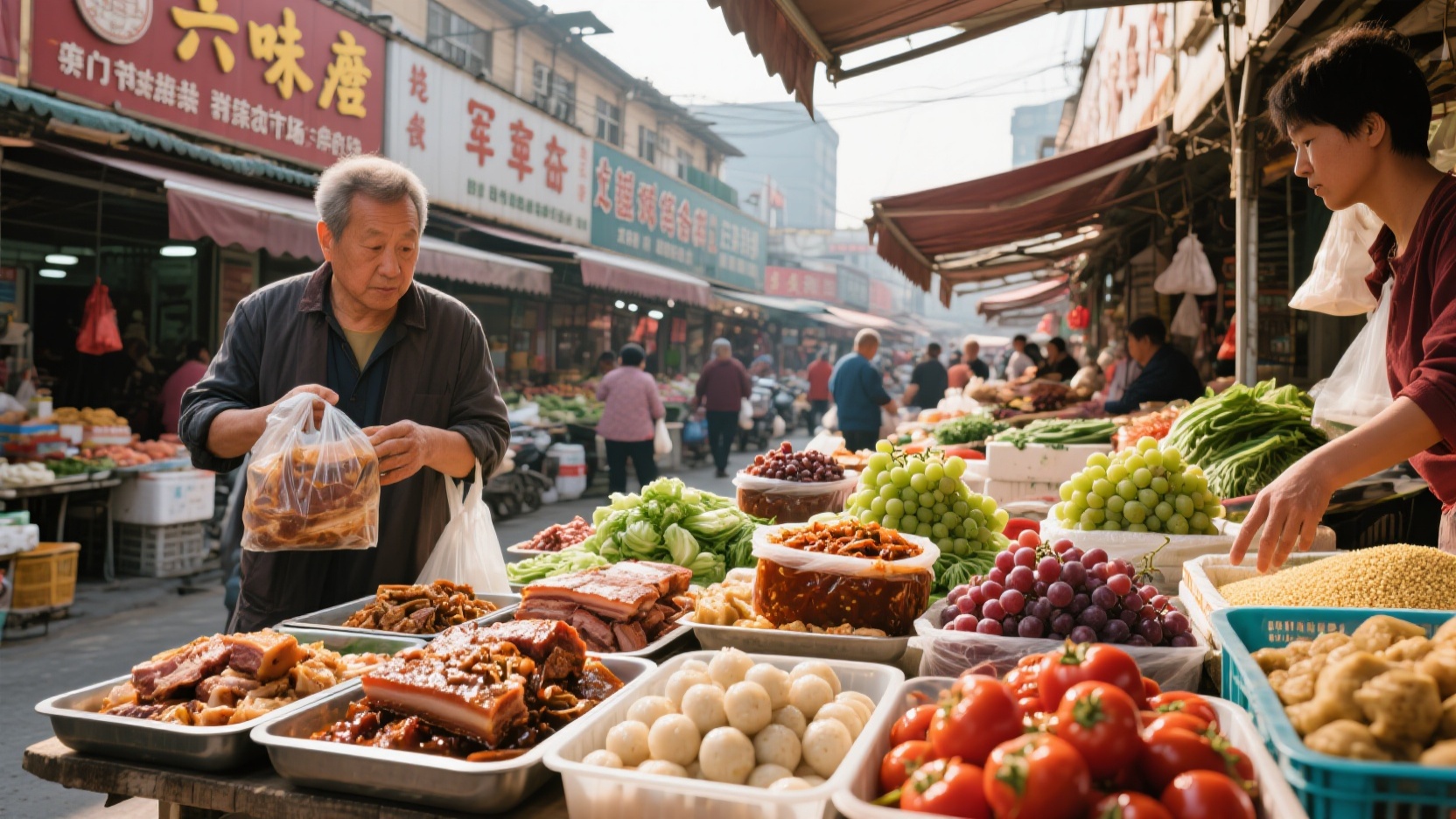
The cooked food and pickles in Taiyuan's markets often reveal the city's culinary character better than restaurant menus. The Laojunying Market and Yijing Comprehensive Market are two old markets that still maintain their morning market tradition: the former has a strong community focus, concentrating on cooked food and handmade snacks; the latter offers a more comprehensive agricultural market, with a denser concentration of seasonal fruits, grains, and pickled vegetables. Below are nine must-buy items, categorized by stall type, along with selection tips and cooking methods.
Deli meat stalls: Braised meat and steamed meat are the hidden stars
Liuweizhai braised meat is a signature dish at the cooked food stalls in Taiyuan's vegetable markets, commonly featuring braised pork hock, braised beef, and braised pig's trotters. When choosing, first look at the cut surface: the lean meat should be a deep reddish-brown, the fat layer translucent and not yellowish, and the meat firm enough not to fall apart when picked up with chopsticks. Avoid choosing meat that is sticky on the surface or too dark in color. After buying it, there's no need to heat it; simply slice it thinly and stuff it into baked flatbread or steamed buns, drizzling a few drops of aged vinegar to balance the oil and acidity. Another dish often overlooked by out-of-towners is Dingxiang steamed meat. The grayish-white powdery meat is pressed into a cylindrical shape, with a smooth surface and elasticity when pressed. After steaming for five minutes, slice it thickly and eat it with garlic vinegar; the texture is more tender and the powdery aroma is more pronounced than when cold-cut. If you see a stall also selling buckwheat sausage, choose one that is grayish-brown in color, with intact edges and honeycomb-like holes; cut it into strips and drizzle with garlic vinegar and chili oil—perfect for summer.
Main food stall: hand-pulled noodles, braised sauce, and freshly rolled glutinous rice balls.
In the old military camp area, noodle stalls make freshly hand-pulled noodles every morning, with various thicknesses to choose from. When selecting noodles, check for an even layer of thin powder on the surface, whether they break when shaken, and whether they spring back when lightly pressed and are not sticky. The corresponding way to eat them is Taiyuan-style braised noodles: a sauce made with daylily, wood ear mushrooms, sliced meat, and eggs, cooked until just done, then topped with two spoonfuls of hot sauce and sprinkled with chopped chives; no soy sauce is added. The handmade pastry stalls sell Jinci Osmanthus Yuanxiao (glutinous rice balls) only in winter and spring. The freshly rolled Yuanxiao have an even layer of dry powder on the surface without cracks, and the filling feels round when shaken. When cooking, use plenty of water, adding cold water three times after the water boils, and cooking for another two minutes after they float to the surface to ensure the osmanthus filling is runny. No sugar needs to be added to the broth. If you miss the Yuanxiao season, you can buy fried cakes or red date cakes from the same stall, but these must be eaten on the same day.
Seasonal grains and miscellaneous grains: Qingxu grapes, Yangqu millet, Jinci rice
In autumn, Qingxu grapes are abundant at the fruit stalls of Yijing Market. Qingxu grapes are known for their thin skin and distinct sweet and sour flavor. When selecting them, check if the stems are green and the bloom is intact. If the grapes don't fall off when you gently lift the bunch, they are fresh. After buying, refrigerate for two hours before eating; alternatively, juice them and mix with a small amount of aged vinegar to make a grape vinegar drink. The ratio can be adjusted to your taste for a more pronounced sour flavor. At the grain stalls, Yangqu millet is golden in color and has round grains. A good quality millet will not break apart when you grab a handful and leave no fine residue. When making porridge, add the millet to boiling water, simmer for twenty minutes, and a layer of rice oil will form on the surface. This is suitable for breakfast or for the elderly and children. Jinci rice is characterized by translucent, long, and uniform grains. The water-to-rice ratio for steaming is approximately 1:1.1. After steaming, the grains are distinct and have a sweet aftertaste, making it suitable to pair with braised or stewed meat. Buy small bags of millet and rice separately; seal them tightly to prevent insects during humid seasons.
Pickled and preserved vegetables: mustard tubers, pickled mustard greens, and homemade tomato sauce
In Taiyuan's vegetable markets, pickled vegetable stalls often display whole jars of mustard tubers and pickled mustard greens. When choosing mustard tubers, look for intact outer skins, a crisp and tender texture after cutting, no pithy core, and a naturally salty and sour taste that isn't pungent. Before eating, finely shred them, soak them in water for twenty minutes to remove excess salt, squeeze dry, and then mix with sesame oil, chili oil, and a little vinegar. They're very palatable with millet porridge. For pickled mustard greens, choose those with a bright yellow color and intact stems and leaves. They're suitable for chopping and stir-frying with vermicelli and soybeans, a common base flavor in Taiyuan stews. If the stall has old pickled vegetable shreds, you can buy a small amount, but be sure to seal and refrigerate them. Handmade bottled tomato sauce and chive blossom sauce are also worth bringing home: the best tomato sauce is from a bottle with a concave opening, a good seal, and a dark red color; use a spoonful when eating oat noodles or mixed noodles. For chive blossom sauce, choose those with distinct chive blossoms, a green color, and a pungent taste; they're best paired with lamb or used as a dipping sauce for steamed vegetables. Although bulk aged vinegar isn't considered a dish, it's the staple of all the vegetable markets in Taiyuan. When choosing vinegar, look for a dark purple color that clings to the glass noticeably after shaking, and a mellow, pleasantly sour aroma that doesn't irritate the throat. Bulk vinegar is inconvenient to carry, so buy small bottles; they're perfect for dipping meat, seasoning braised dishes, or mixing with sausages. Both types of sauces should be refrigerated after opening and consumed as soon as possible.
Visiting the local market is the best way to experience a city.
The local markets don't display a city's history and flavors on their walls; instead, they're displayed on stalls, packed into net bags, and mixed into a bowl of noodles. In Taiyuan's old markets, the aromas of vinegar, soy sauce, and noodles mingle with the sounds of early morning market diners. How locals choose a mustard green or a bunch of Qingxu grapes is the most direct illustration of the city's character. Before leaving, consider buying just a small bag of millet, a bottle of tomato sauce, or half a pound of braised meat. A simple meal back at your accommodation offers a more authentic glimpse into daily life in Taiyuan than any travel guide.