
Taiyuan Amidst the Sounds of Folk Performances: A Slow-Paced Experience of Intangible Cultural Heritage from Jinci Temple Fair, Iron Rod Carrying, and Old Vinegar Workshops
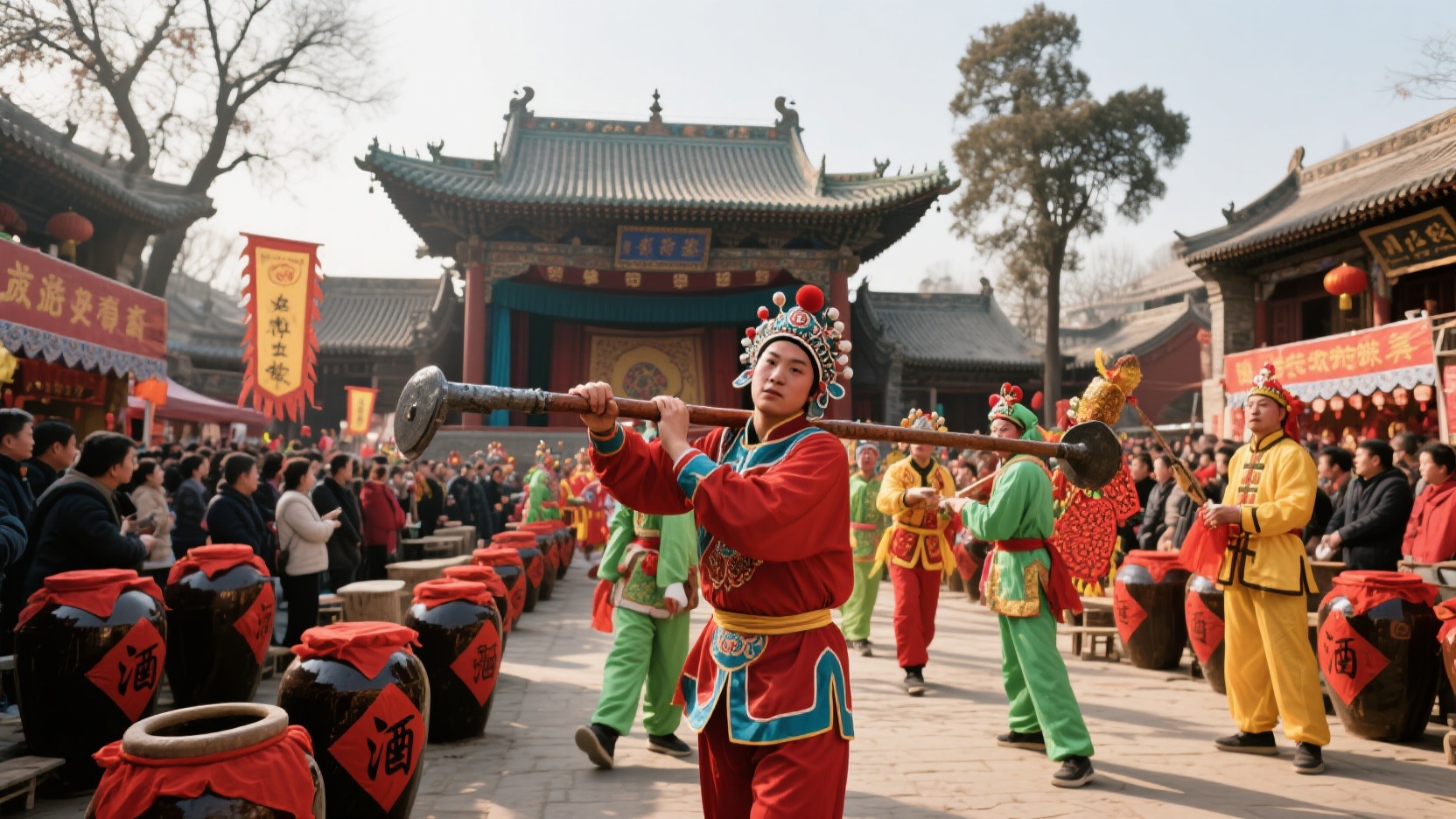
Understanding Taiyuan's artistic heritage doesn't require just visiting museums. The Jinci Ancient Fair on the second day of the seventh lunar month brings the sound of gongs and drums to the temple; in Xugou, Qingxu, children are elevated into the air as performers carrying iron poles; and the tangy aroma of vinegar fermentation in the old vinegar workshop is more direct than any explanation. These scenes are still alive, and if visitors stay an extra half day, they can transform from spectators into "half-locals" who sit down and learn. Below, we've selected four of the most representative Taiyuan festival customs and intangible cultural heritage projects, categorized by available time and setting.
Jinci Ancient Temple Fair: On the second day of the seventh lunar month, listen to the ancient Jinyang in Jin opera.
The Jinci Ancient Temple Fair begins on the second day of the seventh lunar month, with the three days surrounding it being the most lively. Entering from Jinci Park in the early morning, first watch the sacrificial procession, then stroll through the fair. On the stage, Jin opera, Taiyuan drums, and Yangko dances take turns performing. Stalls offer dough figurines, glass clappers, and Jinci rice. The highlight isn't chasing the parade, but sitting in the side corridor of the stage or under an ancient tree, listening to a section of Jin opera, "Beating the Golden Branch," in the Jinyang style, and then waiting for the flowing rhythm of the Taiyuan drums to begin. The Taiyuan drums at the fair are known for their vigorous and powerful beat; as soon as the drums start, the folk performance troupes move to the rhythm.
Jinci Temple was originally dedicated to Tang Shuyu, but after the Song Dynasty, the Holy Mother Yi Jiang gradually became the main deity. The temple fair transformed from an official ceremony into a folk carnival, incorporating elements of trade and gratitude. The legend of "Water Mother Goddess Sitting in an Urn" at the Water Mother Pavilion by Nanlao Spring is a story most often told to tourists by local elders. In the past, the temple fair also included the trading of farm tools and livestock; now it primarily showcases folk performances and food. It is recommended to watch the sacrificial rites in the morning, listen to Jin opera at noon, and watch the folk performances in the afternoon to avoid the midday crowds.
Xugou carrying iron rods: Watching how "aerial opera" is performed in the makeup room.
The tradition of carrying iron rods in Xugou is concentrated in Xugou Town, Qingxu County, and peaks around the Lantern Festival (January 15th of the lunar calendar). If you miss it, performances can also be seen at large gatherings such as the Jinci Temple Fair. The most exciting part is about two hours before the official parade. Inside the dressing room, the young actors begin their makeup and are strapped with iron rods as early as four or five in the morning. The performers use wide cloth straps to secure the children to an iron base, then cover them with costumes, transforming them into characters from "Mu Guiying Takes Command" or "The Legend of the White Snake." The rods are carried either shoulder-mounted or by two people, with all the mechanisms hidden under the costumes. After being strapped in, the young actors are lifted onto the shoulders of the carriers, making them appear as if they are standing on flower branches.
This form evolved from Ming Dynasty rain-praying rituals and is known as "silent drama" or "aerial dance," blending opera characters, dance, and acrobatics. The person carrying the iron pole takes small, quick steps with slightly bent knees, allowing the child performers above to naturally sway their sleeves with each step, resembling opera characters moving through the air. When watching, don't just follow the parade; first observe the process of binding the pole from the inside out in the dressing room, then find a street corner to watch the procession. This will allow you to simultaneously see the steady steps of the person carrying the pole and the children's flowing sleeves in the air. Xugou Iron Pole Carrying is a national intangible cultural heritage; a complete viewing requires at least a morning.
Taiyuan paper-cutting: A "Twin Towers Reaching the Sky" paper-cut in two hours
Taiyuan paper-cutting is still a living tradition in places like Jinyuan and Xiaodian, with some workshops offering two to three hours of hands-on experience. The instructor first demonstrates the four steps of "folding, drawing, cutting, and carving." Beginners start with round patterns, emphasizing "smooth cuts and even lines" when cutting. Once proficient, they can try the common Taiyuan "Twin Towers Soaring to the Sky," where two towers are arranged at varying heights on red paper, with fine yet orderly lines. When the scissors reach the corners of the tower eaves, pause slightly, using your wrist to rotate the red paper instead of abruptly turning it, to prevent the lines from breaking.
Taiyuan paper-cutting combines the ruggedness of the frontier with the delicacy of central Shanxi. Traditional patterns include "a snake coiled around a rabbit, signifying wealth," while "dragon and phoenix bringing good fortune" is used for weddings. Jinci Temple and the Twin Pagodas are frequently featured in the designs. Behind these patterns lies the simple wish of the central Shanxi region for "a prosperous family and a comfortable life." Don't be greedy after cutting out a lot; choose one piece, put it on a cardstock, and take it home—it's closer to local craftsmanship than ready-made souvenirs. If you visit during the Spring Festival, you can also see how window decorations and door decorations are pasted into old courtyards.
Qingxu Old Vinegar Workshop: Understanding Shanxi's "Sourness" Through Fermentation and Vinegar Tasting
Qingxu is the core production area of Shanxi aged vinegar, and traditional vinegar workshops still retain the "steaming method" from the late Ming and early Qing dynasties. During the experience, you wear an apron and help the master turn the vinegar mash. The vinegar mash is hot and pungent, so turning it requires strong wrist movements and a single, thorough stirring to ensure even fermentation. When the vinegar is poured, reddish-brown raw vinegar drips down, and afterwards you can compare new vinegar with three- and five-year aged vinegar to learn about the layers of flavor: "smooth, sour, fragrant, sweet, and fresh." New vinegar is direct, while aged vinegar is more robust, and its acidity is less harsh on the throat.
The brewing technique of Qingxu aged vinegar is a national intangible cultural heritage, with its core consisting of five steps: steaming, fermentation, smoking, leaching, and aging. "Smoking" deepens the vinegar's color and gives it a caramelized aroma; "aging" involves "summer sun-drying and winter ice-catching," relying on time to concentrate the vinegar. Visiting in autumn or winter allows you to witness the "winter ice-catching" process—ice forms on the surface of the vinegar, and removing the ice further concentrates its acidity. After the experience, you can rinse your mouth with water. The key is to ask about the differences between new and aged vinegar in cold dishes and cooking—more informative than simply buying vinegar. This experience is slow-paced and perfect for spending an entire afternoon.
The "cultural and artistic journey" in Taiyuan isn't about rushing, but about taking your time. At the Jinci Ancient Fair, listen to a piece of Jin opera; in the Xugou makeup booth, watch the iron-stick carrying tradition; cut a piece of red paper in the paper-cutting workshop; or stir a shovel of vinegar mash in the old vinegar workshop—any one of these can take up half a day. In early July, you can attend the Jinci Ancient Fair; around the Spring Festival, you can see the iron-stick carrying and paper-cutting New Year customs in Xugou; and in autumn and winter, go to Qingxu to see the "winter ice harvesting." If time is limited, you don't have to do it all at once. Choose something that matches the season, sit down, and enjoy the experience—that's how you truly feel like a local.