
Shijiazhuang in the Marketplace: 10 Local Delicacies Hidden by Locals in the Old Cotton Mill No. 3 and Huaizhong Road Markets
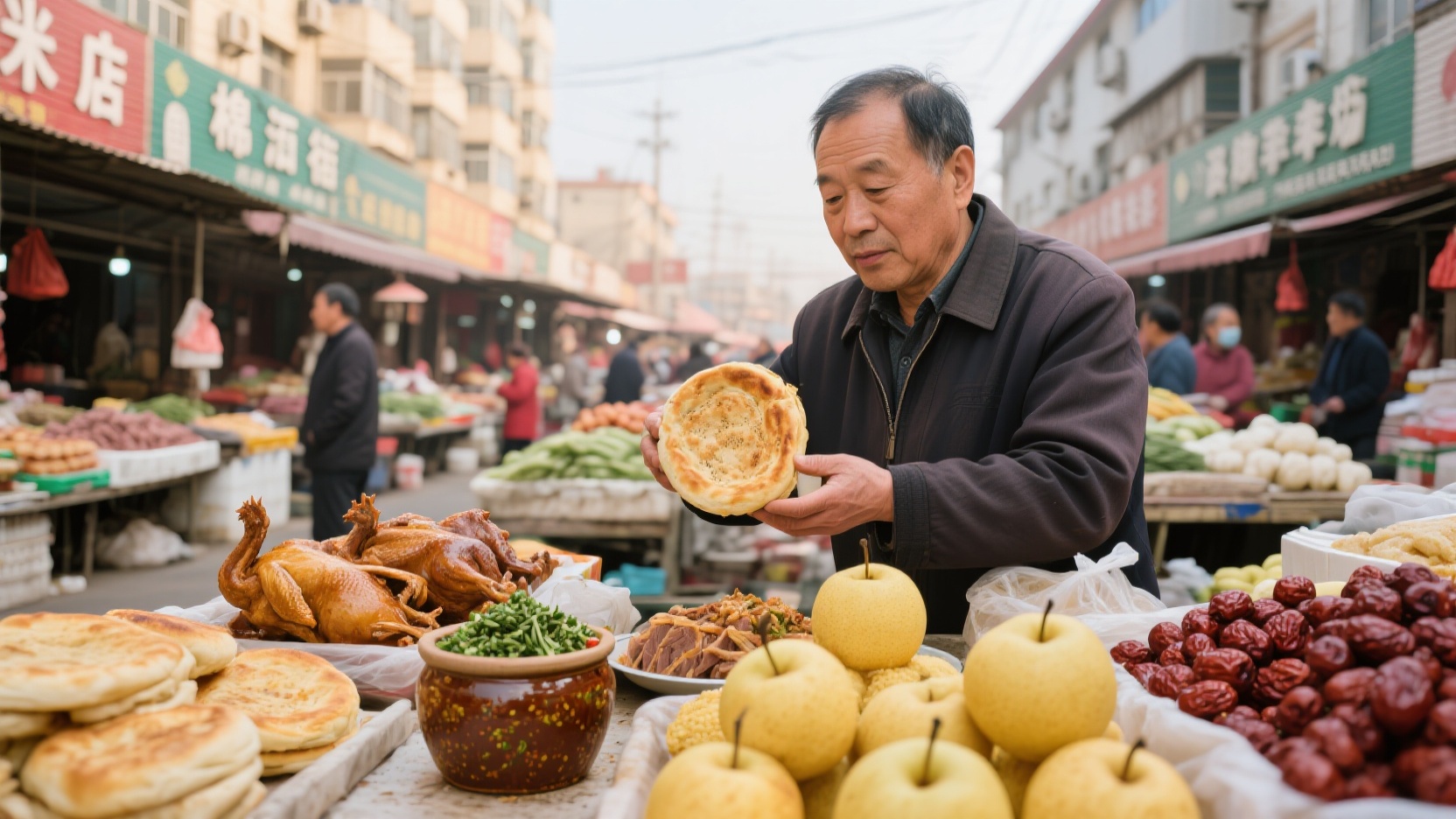
Discovering the culinary delights of Shijiazhuang doesn't have to start with trendy restaurants. The old markets in the Mian San residential area of Chang'an District and the Huai Zhong Road Market still preserve the most authentic culinary foundation of this industrial city: cooked food stalls simmer their broths until closing time, sesame seed cake ovens are plastered with jars before dawn, and salt frost forms on the rims of pickle jars. The following 10 items are local favorites that locals repeatedly purchase, yet rarely mentioned in travel guides.
Cooked food stall: First look for braised dishes in old broth and braised donkey meat.
Traditional braised chicken stalls are a staple in Shijiazhuang's markets. When choosing a whole braised chicken, look for one with intact skin and a dark, deep reddish-brown color; avoid those that are too brightly colored. Locals prefer to buy it and tear it apart by hand to eat it cold. The chicken breast, dipped in a garlic and vinegar sauce, is even more flavorful than when heated. If the stall has braised pork hock or trotters, ask the vendor for the front trotters; they have thick skin and lots of tendons. Slice them thinly and toss them with cucumber strips and minced garlic—a convenient and easy appetizer in the summer.
Donkey meat stew is often overlooked by people from other regions. It is made by combining donkey meat broth with starch, and when sliced, it is translucent and light brown. It is sandwiched in a freshly baked clay oven flatbread, offering more layers of flavor than eating the meat alone. When choosing one, press it gently; it should be springy but not hard, and it should smell of meat broth without any sourness.
Handmade pastries: Keep an eye on the baking time
Clay oven baked flatbread is a staple food in Shijiazhuang. The stalls in the old market typically bake one batch each in the early morning and evening, roasting the flatbread against the inner wall of the earthenware jar until the sesame seeds are slightly charred and the surface puffs up. When buying flatbread, choose those with slightly charred edges and a slightly hollow sound when tapped, indicating proper layering. It's delicious eaten plain, but a more authentic way to enjoy it is to break it open and stuff it with braised donkey meat or braised pork hock, accompanied by a bowl of tofu pudding.
Yellow millet flour fried cakes should be eaten while hot. Good fried cakes have a crispy outer layer and a sticky, chewy interior. The red bean paste filling should be homemade with noticeable grains, not an overly smooth commercial filling. If they cool down after purchase, lightly fry them in a pan with a little oil, but avoid double-frying to prevent them from absorbing too much oil. Buckwheat cakes are a product made from buckwheat flour. In markets, they are usually cut into small gray cubes and served cold with minced garlic, vinegar, and sesame paste. They are more refreshing than cold noodles in hot weather.
Pickled and preserved vegetables: the flavors of the jar
Local chive blossom sauce differs from the chive blossom sauce used for hot pot; the leeks are coarser and slightly saltier. When choosing, look for a dark green color with scattered blossoms, not a vibrant green. It's great for mixing with tofu, spreading on steamed buns, or pairing with stewed lamb. For pickled garlic, fresh garlic is best; high-quality garlic cloves are plump, crisp, and the sauce is clear and not cloudy. For pickled radish, choose strips with the skin on; it's initially salty then sweet, and pairs well with porridge or fried rice to cut through the richness.
Seasonal fruits: Identify varieties by place of origin
Zhaoxian Snowflake Pears are a staple of Shijiazhuang's autumn and winter seasons. They're often sold by the basket in the market. When choosing pears, select those with yellow-green skin, fine freckles, and a heavy feel in your hand; these pears are juicy and have few stone cells. Besides eating them raw, locals also use them to make pear water with a little rock sugar and white fungus, making it even more refreshing than eating them directly. Zanhuang Jujubes are available in autumn. Choose jujubes with naturally wrinkled skin and firm flesh when squeezed. Steaming them or adding a few to porridge enhances their sweetness.
Visiting the local market is the best way to experience a city. Shijiazhuang's markets don't focus on elaborate plating; instead, they showcase the most authentic produce, seasonal produce, and local customs: what time the sesame seed cakes come out of the oven, which jar of pickled vegetables was just opened, which county the snow pears came from—these are local facts that can only be learned by standing in front of a stall for a few minutes. If you want to understand this city shaped by railways and factories, start with a meal of sesame seed cake with mung bean jelly at the market.