
Meals in Shenzhen: From Stone-ground Rice Noodle Rolls to Charcoal-grilled Shajing Oysters - Local People's Three Meals a Day
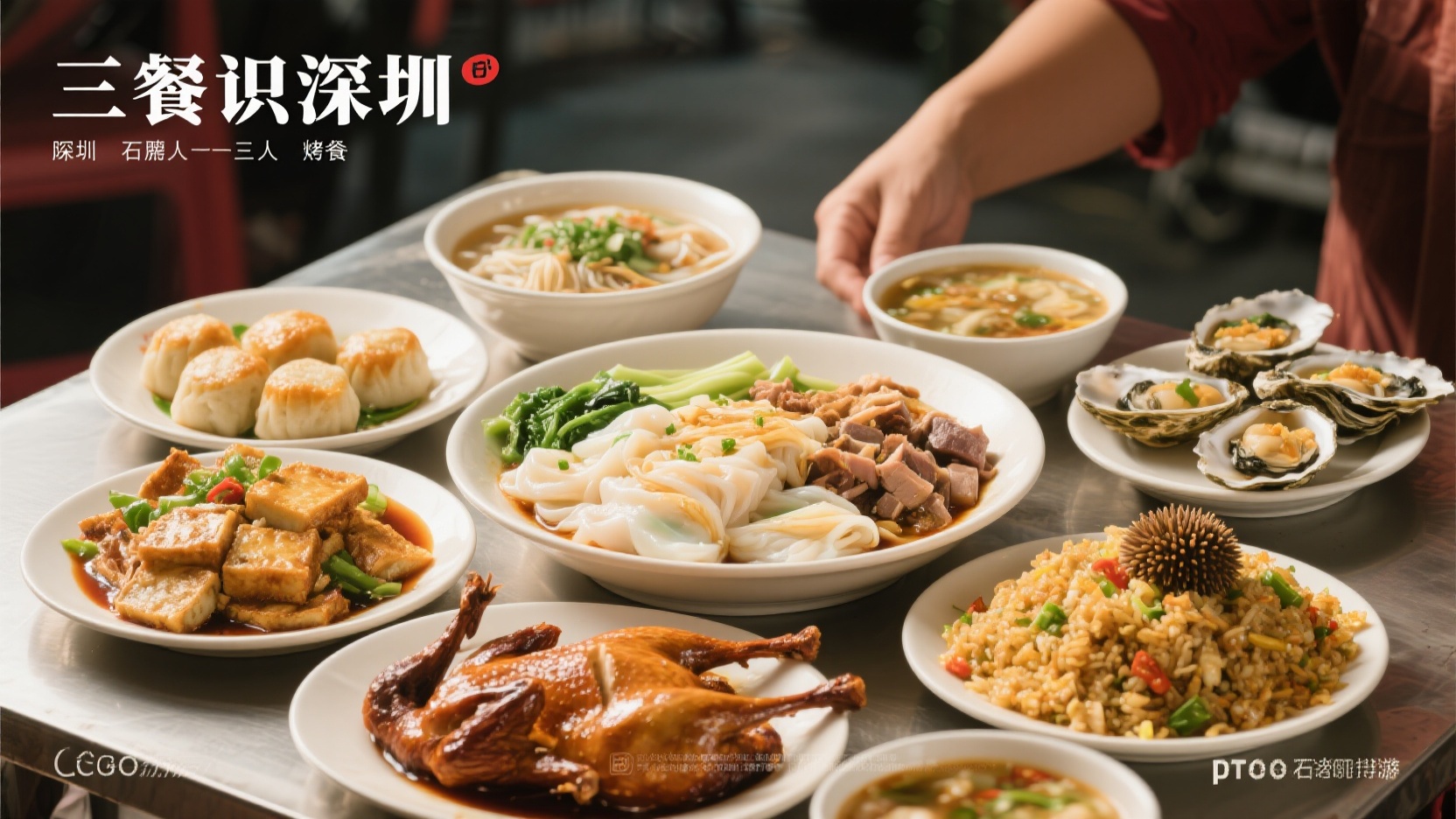
Shenzhen's cuisine is often labeled as an "immigrant city" or a "culinary desert," but if you follow the locals' mealtime routines, you'll discover a self-consistent flavor system: Cantonese foundations, Hakka techniques, Chaoshan umami, and seafood ingredients, appearing in sequence throughout the day. Below, we break down seven representative dishes from Shenzhen's daily meals, arranged chronologically from morning to late at night.
Early morning: Stone-ground rice noodle rolls
Shenzhen-style rice noodle rolls share the same origin as Guangzhou-style ones, but Shenzhen emphasizes a thinner and smoother texture. The rice batter is typically made with early-season indica rice, soaked and then stone-ground at a low speed to retain its aroma. A thin layer of batter is poured over a stainless steel pan, topped with eggs, minced pork, or dried shrimp, and steamed over high heat for about one minute. After rolling it up with a spatula, it's drizzled with a sweet soy sauce made from mushrooms, light soy sauce, and rock sugar. The result is a translucent, soft yet chewy rice noodle roll with a perfectly balanced sweet and savory sauce. Locals often enjoy it with a cup of soy milk as their first carbohydrate before work.
Breakfast add-on: Pork offal soup noodles
Another staple of Shenzhen's early morning streets is Chaoshan-style pork offal soup noodles. Fresh pork liver, heart, intestines, and lean meat are thinly sliced, blanched in boiling broth for a few seconds, and then placed on top of rice noodles or flat rice noodles. A clear broth made from pork bones and dried flounder is then poured in. The offal is cooked just until tender, resulting in a crisp and tender texture. The broth is clear and flavorful, and it's topped with celery stalks and fried garlic. For those finishing work in the early morning or starting their day early, this bowl is a warming start to the day.
Lunch: Gongming roast goose rice
Gongming roast goose is a rare local specialty of Shenzhen. It uses Qingyuan black-bristled geese, which are cleaned, stuffed with five-spice powder, salt, sugar, and star anise, then sewn up, scalded, brushed with maltose syrup, air-dried, and roasted in an oven with lychee wood charcoal. The roast goose is cut into pieces and served over rice, drizzled with roast goose sauce. The skin is crispy as paper, the meat tender and juicy, and the aroma of fat mingles with the smoky scent of fruitwood. In local eateries, locals often pair it with a dish of plum sauce and soup, completing a meal in twenty minutes – a common lunchtime rhythm shared by office buildings and urban villages along Shennan Avenue.
Lunch side dish: Hakka stuffed tofu
The Longgang and Pingshan areas of Shenzhen still retain Hakka walled villages and agricultural memories, making Hakka stuffed tofu a staple dish in local restaurants. Tofu is cut into triangular pieces, with a small hole hollowed out in the center. It's then stuffed with a 3:7 ratio of lean to fatty minced pork, sometimes mixed with mushrooms and dried shrimp. It's pan-fried until golden brown, then transferred to a clay pot and simmered with oyster sauce, light soy sauce, minced garlic, and a small amount of broth. The tofu is crispy on the outside and tender on the inside, the meat filling is firm and chewy, and the broth is savory and fragrant. A plate of stuffed tofu with rice is a daily staple for the Hakka people, reflecting the everyday life of Shenzhen's original inhabitants.
Afternoon tea: Hakka tea and fruit
Around 3 or 4 pm, the aroma of glutinous rice cakes begins to waft from local stalls. Shenzhen Hakka tea cakes come in many varieties, with common ones including radish cake, mugwort cake, and sweet potato cake. Radish cakes are made with a dough of glutinous rice flour and regular rice flour, filled with shredded white radish, dried shrimp, cured pork, and celery. They are shaped into a half-moon and then steamed or pan-fried. Mugwort cakes are made with tender mugwort leaves harvested around Qingming Festival. The leaves are blanched, mashed, and mixed with glutinous rice dough, then filled with peanut and sesame seeds. The texture is soft and glutinous with a hint of sweetness from the radish or a slightly bitter aftertaste from the mugwort. For local Hakka women, making tea cakes is a seasonal and entertaining skill, and now it has become a rare and delightful slow-paced snack near office buildings.
Pre-dinner snack: Bright Pigeon
Guangming pigeon is a signature cooked dish of Guangming District, Shenzhen, often enjoyed by locals as a "hard snack" before afternoon tea or dinner. It uses pigeons raised for over twenty days, first marinated in a brine with cinnamon, bay leaves, and cardamom to infuse flavor, then brushed with maltose syrup and air-dried, finally deep-fried quickly in hot oil. When served, the pigeon has a bright red and crispy skin; when torn open, pigeon oil seeps out, revealing tender and juicy meat. Compared to Cantonese roasted pigeon, Guangming pigeon emphasizes the combination of savory braising flavor and crispy skin. Around Guangming Farm, people often eat it by hand, accompanied by a pot of tea to cut through the richness.
Midnight Diner: Charcoal-grilled Shajing Oysters
Shajing in Bao'an District, Shenzhen, has been famous for its oysters since ancient times, and locals eat them in a direct and uninhibited way. At late-night food stalls, oysters, still in their shells, are pried open and placed on charcoal fires, topped with minced garlic, chili peppers, and peanut oil, and grilled until the edges of the oyster meat shrink slightly and the juices bubble. Shajing oysters are plump and thick; the garlic aroma and the oyster's salty freshness blend perfectly under the high heat, resulting in a tender texture with a hint of the ocean. For older Shenzhen residents, during the winter and spring oyster season, gathering around a charcoal grill to wait for a dozen oysters is a juncture between fishing village memories and urban nightlife.
Late-night extra: South Australian sea urchin fried rice
If you're still hungry late at night, Nan'ao sea urchin fried rice is another perfect finishing touch. Nan'ao, near Shenzhen, is abundant in purple sea urchins. Fishermen extract the roe and stir-fry it quickly with leftover rice, eggs, and scallions over high heat. The sea urchin roe releases its oils at high temperatures, coating the rice grains, resulting in dry rice with the sweetness of sea urchin and the aroma of eggs. It has a slightly grainy texture, a straightforward combination of marine protein and carbohydrates. In the early morning at roadside stalls, you can often see people returning from the sea enjoying this fried rice with beer, the night between the mountains and the sea slowly lengthening.
From the steaming rice noodle rolls rising from the steamer in the early morning to the sizzling oysters on the charcoal grill late at night, Shenzhen's everyday food is always in sync with the pulse of the land and the sea. These down-to-earth flavors, which don't rely on elaborate plating, form another key to understanding this city—from its streets to its alleys, you can eat your way to knowing the city in a day.