
To truly appreciate the freshness of Shaoxing cuisine, you need to eat according to the seasons | A blogger's personal review of seasonal limited-time dining options (avoiding touristy spots)
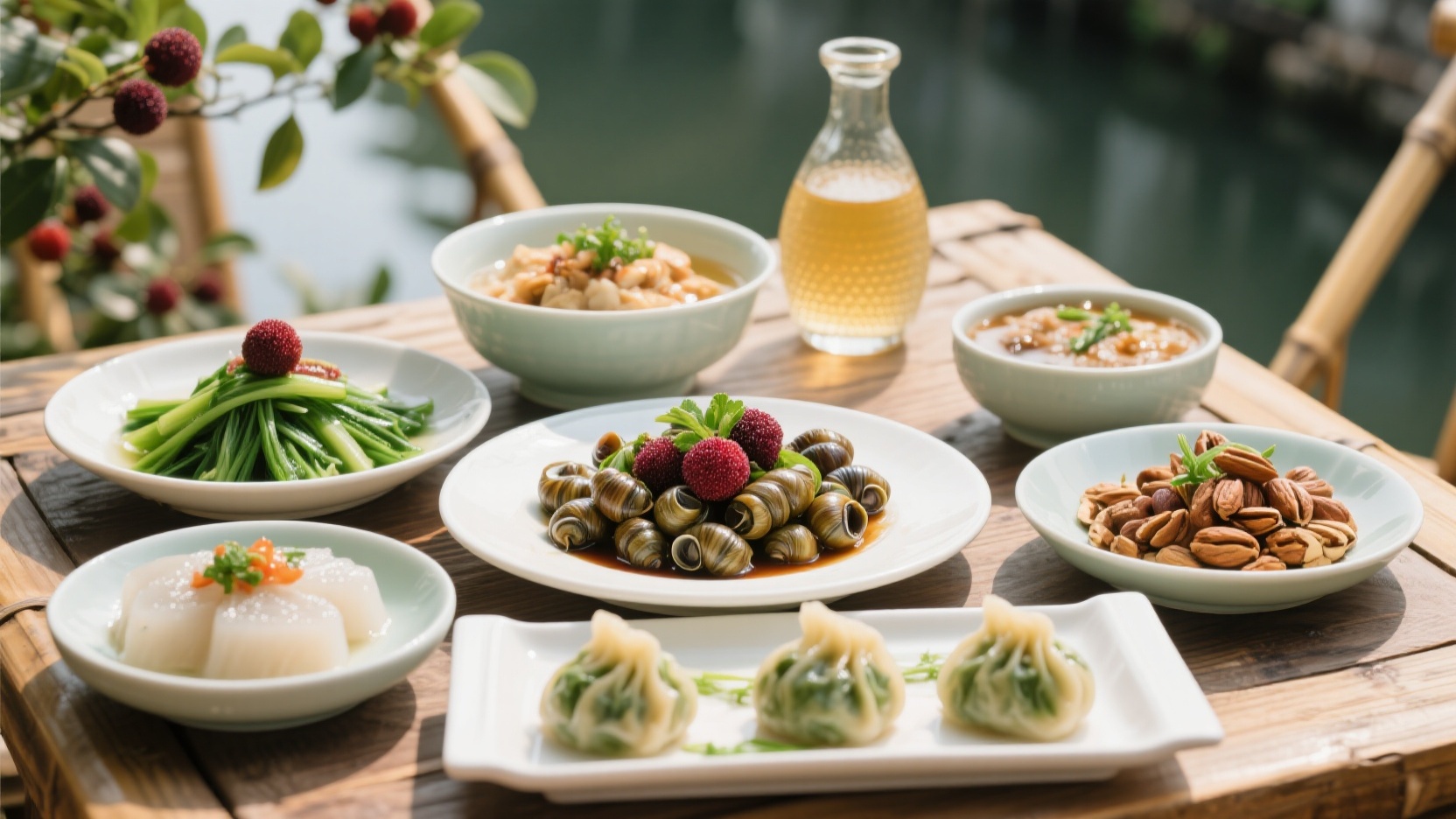
After visiting Shaoxing more than ten times, I discovered that the secret to this water town's culinary delights lies not in the "Shaoxing restaurants" at the scenic area entrance, but in the river wharves, the back alleys of the market, and the old stoves along the river in the ancient town. For the first two years, I only ever ordered "preserved mustard greens with braised pork belly and stinky tofu." Later, a local friend invited me to a small alleyway restaurant before Qingming Festival, and I realized that Shaoxing people truly "follow the calendar" when it comes to food. This post won't list the signature dishes that are available year-round, but only the seasonal dishes that I've personally tried and failed at.
Springtime - Qingming Festival: River snails and mugwort dumplings: the fifteen days when river delicacies are at their fattest and mugwort at its most fragrant and tender.
The green-shelled snails around Qingming Festival are the first taste of spring in Shaoxing, a true "river delicacy." Why are they only at this time of year? Because the snails spend the entire winter burrowing in the mud, accumulating plumpness. Before Qingming, they haven't laid eggs, resulting in less muddy taste, thinner shells, and thicker meat. After Grain Rain, the snails start laying eggs, and the taste immediately deteriorates. Locals don't crave complicated flavors for snails; they prefer "stir-fried with soy sauce" and "in broth." When served, don't rush to pick out the meat; suck the broth into your mouth as well. That salty, fresh taste with a hint of Shaoxing wine is what Shaoxing people mean when they say, "Qingming snails are better than goose." Remember to choose snails with their tails cut off; snails with uncut tails are difficult to suck out meat from and are likely tourist traps.
Another must-try around Qingming Festival is mugwort dumplings. Shaoxing locals use only tender mugwort harvested before Qingming, kneading it into glutinous rice flour and regular rice flour. The outer skin is chewy but not sticky. The fillings come in both savory and sweet varieties; my favorite is the one with pickled mustard greens, bamboo shoots, dried tofu, and minced pork. The bamboo shoots are crisp, the dried tofu is fragrant, and a little juice flows out when you bite into it. A local friend said that mugwort dumplings are a snack for ancestor worship and spring outings. They become even chewier after steaming and cooling, but if left overnight, they must be re-steamed for three minutes. The bright green, cloyingly sweet ones at the entrance of scenic spots are mostly not made using the traditional methods.
Summer - Yangmei and Magnolia Jelly: The sweetness of the mountains and the coolness of the water towns after the plum rain season
In Shaoxing, there are two things in summer that you'll have to wait another year to experience. Mid-to-late June is the peak picking season for Yangmei (Chinese bayberry) in Erdu, Shangyu, especially the "Crystal Yangmei," a white-pink variety that's cleanly sweet with almost no tartness. Why is this the best time? Because Yangmei needs the humidity of the plum rain season to ripen, but it's vulnerable to heavy rain after it's fully ripe. Once past the summer solstice, the fruit loses moisture and develops a slightly fermented flavor. Locals eat them in a very traditional way: standing under the tree, picking and eating them without washing them, as washing would cause them to lose their bloom and aroma. If they can't take them home, they soak them in strong liquor to make Yangmei liquor. If they get an upset stomach in the summer, the elders in the family will pour them a small cup.
If bayberries belong to the mountains and fields, then magnolia jelly is the "street coolness" of Shaoxing's water towns. It's made by hand-rubbing magnolia seeds to extract juice, solidifying it into a bouncy, jelly-like consistency. After chilling, it's topped with mint syrup and a touch of osmanthus sugar. Only when the weather truly gets hot do magnolia jelly stalls appear on roadside tricycles and at the entrances of ancient town alleys. Locals emphasize eating it standing up and not stirring it too much; it should have a distinct minty coolness in your mouth, otherwise it just tastes like sugar syrup mixed with powder. There's no fixed price for magnolia jelly; the price varies depending on the vendor's personal touch and the size of their osmanthus-scented spoon, but it's always a few yuan's worth of refreshing summer pleasure.
Autumn - Osmanthus and Torreya: Two "late-blooming" fragrances that you only appreciate after the first frost.
Many tourists only remember Shaoxing's yellow wine, unaware that autumn in Shaoxing is the perfect time to chase after osmanthus blossoms. Around the time of the Cold Dew solar term each year, osmanthus enters its first blooming season, its fragrance at its purest. Shaoxing locals pick half-open golden osmanthus blossoms in the early morning, layering the blossoms with sugar to create "sugar osmanthus." This sugar osmanthus is most precious at this time, used to season lotus root starch, sprinkle on rice cakes, or mix with fermented rice balls—a truly soothing dessert for the throat during the autumn-winter transition. Locals say that osmanthus should be picked before the dew dries, as the fragrance dissipates as soon as the sun rises. If you eat pastries in Shaoxing with a very strong osmanthus scent, it's likely not sugar osmanthus, but rather artificial flavoring.
Around the time of Frost's Descent, the torreya nuts from Fengqiao, Zhuji, truly come to market. Torreya nuts are harvested from the trees as early as White Dew, but they require over thirty days of composting, drying, and roasting – it can't be rushed. Roasted torreya nuts have thin, easy-to-peel shells, and the kernels are covered in a black seed coat. The more you chew, the more fragrant they become, with a hint of pine and nutty oiliness. Locals have a trick for eating torreya nuts: find the two "eyes" at the top; they should crack open easily with a pinch of your thumb and forefinger. The black seed coat must be rubbed off before eating, otherwise it will have a bitter taste. Enjoying a pot of warm tea on an autumn night while peeling a few torreya nuts is a leisurely pleasure for the people of Shaoxing.
Winter-brewed Shaoxing wine and Anchang soy sauce and cured meats: the rich flavors that time only grants after the start of winter.
Shaoxing rice wine is available year-round, but true connoisseurs only appreciate "winter brewing." The ingredients are added around the time of the Winter Solstice, followed by a long, low-temperature fermentation process, with the first batch of wine only being pressed around the time of the Spring Equinox. The cold waters of Jianhu Lake in winter, with fewer bacteria, are key to the clean and mellow flavor of the wine. Visiting Shaoxing at this time of year allows you to see the distillers stirring the wine, witnessing the rising steam and the rich aroma from the vats. Locals prefer to drink rice wine warm in winter, using a double boiler to warm it to 40-50 degrees Celsius, paired with braised duck and dried tofu—a single sip warms you from your stomach to your fingertips. Tourists shouldn't drink it on an empty stomach; rice wine has a strong aftereffect, so it's best to enjoy it slowly.
Paired with winter-brewed Shaoxing wine as a "winter-limited-time dining experience" are the dried soy sauce and cured meats along the river in Anchang Ancient Town. After the start of winter, the north wind rises and humidity drops, allowing sausages, soy sauce ducks, and dried fish to slowly air-dry without spoiling or becoming greasy. Especially in the twelfth lunar month, the entire river corridor is covered with soy sauce-colored hangings, and the air is filled with the aroma of soy sauce and oil—a scene unique throughout the year. Locals buy soy sauce ducks by looking for "frost": the skin is slightly oily, the meat is firm, and it smells of soy sauce rather than being salty or fishy. Sausages are best enjoyed steamed with rice or stir-fried with garlic sprouts. Remember, the best soy sauce and cured meats are not freshly made, but rather those that have been dried for about three weeks, allowing the flavor to "set."
Eating according to the seasons is the right way to experience a city. Many of Shaoxing's seasonal delicacies aren't listed on the year-round menu; they only appear at the riverbanks before Qingming Festival, in the bayberry groves after the plum rains, at the roasted nut stalls after Frost's Descent, and along the ancient town's river corridors in the twelfth lunar month. Here are some tips I've learned through trial and error: 1. For Qingming snails and mugwort dumplings, be sure to buy them a week before Qingming and between Grain Rain (around April 20th). After Grain Rain, the snails will still have roe, and the mugwort will be too old. 2. Bayberries have a short season and are susceptible to rain. Go to the mountains on a weekday morning in mid-to-late June to avoid crowds and get the best fruit. 3. When buying torreya nuts, look for the "Fengqiao Torreya" geographical indication; the ones with shells that crack easily are the best. 4. In winter, don't just visit Lu Xun's hometown in Shaoxing; the preserved meats and sauces in Anchang Ancient Town are the most spectacular in the twelfth lunar month. 5. When entering a local restaurant, ask "What's in season today?"—it's more reliable than ordering directly from the menu.