
This is my first time in Shanghai and I only have one meal. What should I eat?
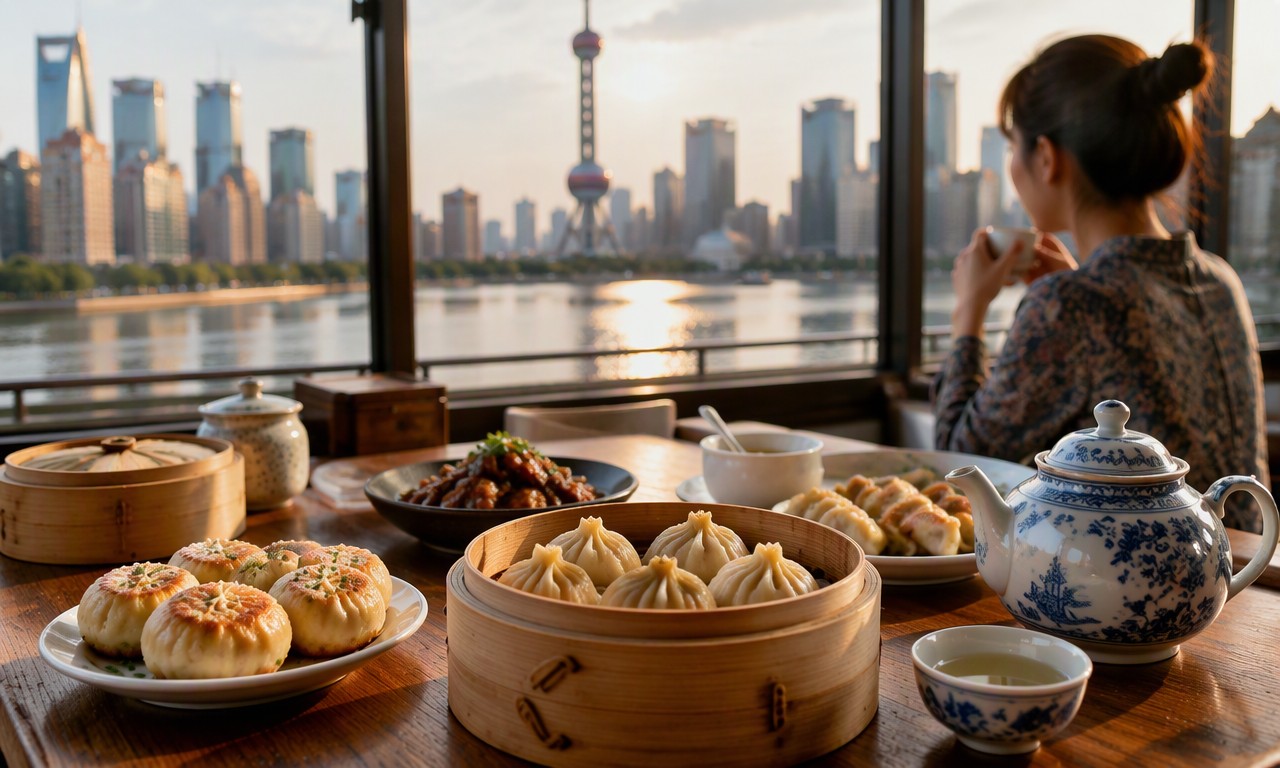
This is the question I get asked most often, and it's also the most difficult to answer. The difficulty isn't the lack of choices, but rather the sheer number of food options in Shanghai and the limited space for a meal. If I had only one answer, I would definitely choose "a serving of pan-fried buns and a bowl of curry beef soup," but I know what readers really want to know is: how to find the most representative taste of Shanghai within a limited time. Therefore, I've compiled eight frequently asked questions below, providing my judgment and reasoning for each. You can follow these suggestions, or you can choose the ones that best suit your taste.
This is my first time in Shanghai and I only have one meal. What should I eat?
My advice is: eat pan-fried buns with a bowl of curry beef soup, not xiaolongbao (soup dumplings). Pan-fried buns represent the most everyday street style dignity in Shanghai—crispy on the bottom, firm on the inside, and juicy. Each bite reveals a distinct Shanghai character—unassuming yet substantial. Curry beef soup is the standard accompaniment to pan-fried buns; the soup should be slightly yellow, the curry flavor not overpowering, and the beef slices thin and tender to be considered a good match. Eating just this set will help you understand the inherent "practicality" of Shanghainese people.
If your companions prefer a more "name-based" meal, then head to a local Shanghainese restaurant and order "braised pork belly," "stir-fried shrimp," and "braised pork intestines with clover." For braised pork belly, check if the skin is tender yet firm; for stir-fried shrimp, the key is crispy shells and springy meat; and for braised pork intestines with clover, it's a subtle indicator of cooking time and the freshness of the ingredients. Avoid the squirrel-shaped mandarin fish; that's not Shanghainese cuisine's forte. The reason is that out-of-town readers often associate Shanghainese food with sweetness, and these three dishes perfectly showcase a "savory-sweet" flavor profile, rather than being overwhelmingly sweet.
What do locals in Shanghai eat for breakfast?
Most people would answer "the Four Heavenly Kings" (a Shanghainese glutinous rice ball), but I want to be more practical. For locals still eating on their way to work, the most common choice is either "cifantuan" (sticky rice ball) or "scallion pancake" with a cup of soy milk. For cifantuan, choose the "sweet and savory mixed version"—wrapped with fried dough sticks, pickled vegetables, and sprinkled with white sugar. This is a unique Shanghai style, rarely seen elsewhere. A good cifantuan has distinct grains of glutinous rice, a crispy but not hard fried dough stick, and is still warm when you hold it in your hand.
For scallion pancakes, choose those that are freshly rolled, fried, and baked on a cutting board—they're generously scalled, fragrant with lard, and have a crispy, crumbly crust. If you have time, head to the old town on a weekend morning for a bowl of wontons with potstickers. The wontons are prized for their smooth wrappers and clear, flavorful broth, while the potstickers are admired for their golden-brown, crispy bottom. A simple rule of thumb is: if the shop is packed with local residents in their pajamas, it's usually a good choice.
Is Shanghai cuisine really that sweet? Can people from other places get used to it?
Sweet, but not entirely sweet. The sweetness in Shanghai cuisine is more of a "salty-sweet interplay," using sugar to enhance the umami and color, unlike the spiciness of Sichuan and Hunan cuisine or the blandness of Cantonese cuisine. It's a well-balanced, savory aroma. Take braised pork belly as an example: a good flavor should be salty at first, then sweet, with the fatty parts not greasy and the lean parts not dry, not just a syrupy taste. If every bite is only sweet, then the restaurant has gone astray.
Whether out-of-towners can get used to the food depends on the restaurant and the dishes you order. I suggest starting with "Sizzling Eel," "Stewed Pork and Bamboo Shoots," and "Four Happiness Braised Gluten." While the sizzling eel is rich and flavorful, the strong presence of white pepper balances the sweetness; Stewed Pork and Bamboo Shoots is savory with almost no sweetness; and Four Happiness Braised Gluten, served cold, has a noticeable sweetness but is refreshing. Don't order "Sweet and Sour Pork Ribs" on your first try; it doesn't represent the overall level of Shanghai cuisine. My assessment is: if you can accept the sweetness of Cantonese char siu, the sweetness of Shanghai cuisine is generally not a problem.
What's the difference between a trendy online store and an old shop tucked away in an alley?
The difference lies in "time" and "purpose." Trendy restaurants are designed for taking photos; they serve food quickly, have attractive presentations, and standardized flavors. However, the downside is that you'll spend a lot of time queuing, and the food you get may not be much different from what you've had in other cities. Established restaurants, on the other hand, have been refined by time. They may have ordinary storefronts and casual service, but their flavors have stood the test of time because you're eating a family's decades-old culinary tradition.
Specifically, even with the same "xiaolongbao" (soup dumplings), trendy shops might offer eight different colors of wrappers, while established shops only make white wrappers and sell two fillings—fresh pork and crab roe. The established shops are worth visiting, not because of nostalgia, but because of their stability. If you only have a day or two to spare, I suggest prioritizing the established shops, while trendy shops can be considered as alternatives for taking photos and resting. The reason is simple: established shops don't need to worry about attracting crowds; they only need to focus on retaining repeat customers.
Where can I eat after 10 p.m.?
Yes, but the choices are much narrower than during the day. The safest bet is to go to a local noodle shop that's open until late at night and order a bowl of "spicy pork noodles," "scallion oil noodles," or "pork intestine noodles." Spicy pork noodles aren't the heavily spicy kind from Sichuan cuisine; they're sweet and spicy, with diced pork stir-fried in chili sauce, which coats the noodles after mixing. Scallion oil noodles may seem simple, but the quality of the noodles depends entirely on how thoroughly the scallions are fried and how fragrant the soy sauce is.
If you're craving something hot and soupy, look for those "casserole wonton" or "firewood wonton" stalls that are still lit up. Firewood wontons are becoming increasingly rare, so finding one is a matter of luck. The soup, with a touch of lard and shredded egg skin, is the most comforting bowl of food late at night in Shanghai. The basis for this is: a barbecue restaurant with a queue after 10 pm might not be worth the wait, while a noodle shop full of designated drivers and taxi drivers is usually cheap and not too bad.
How exactly are pan-fried dumplings, potstickers, and xiaolongbao distinguished?
This question seems basic, but many readers from other places can't tell the difference, and even order them interchangeably. Both pan-fried buns and potstickers are "pan-fried," but the difference lies in the skin and shape: pan-fried buns have fermented dough, are round and puffy, with the opening facing down. When eating them, you first bite a small hole, suck out the soup, and then dip them in vinegar; potstickers have unleavened dough, are crescent-shaped, with the opening facing up, and have less juice than pan-fried buns, focusing on the crispy bottom.
Xiaolongbao, on the other hand, is steamed, resulting in a thin skin, abundant soup, and dense pleats, and its eating method is completely different. The correct order is: pour a little Zhenjiang vinegar into a small dish, pick up the xiaolongbao, place it on a spoon, bite a small opening, blow on it, suck out the soup, and then dip the skin and filling into the vinegar before eating. Never stuff the whole thing into your mouth; not only will you burn your mouth, but the soup will also splatter and make a mess. Reason for this: If you don't understand these three things, you're likely to end up with a messy, unappetizing "carb-filled" meal when ordering food in Shanghai.
What are some good restaurants to eat in Shanghai that won't disappoint when bringing elders or children?
When bringing elders, prioritize "gentle" dishes from Shanghainese cuisine. Examples include "Stir-fried River Shrimp," "Crab Roe Tofu," "Stewed Pork and Bamboo Shoots with Bamboo Shoots," and "Sweet Rice Balls in Fermented Rice Wine." These dishes share the characteristics of a soft texture, light and non-irritating flavor, and showcase the natural taste of Shanghainese ingredients. Avoid heavily oiled and sugary dishes like "Eight Treasure Spicy Sauce" and the firm and crunchy "Deep-fried Shrimp." The former can be greasy, and the latter is difficult for those with weak teeth to eat.
When traveling with children, the safest options are "xiaolongbao" (soup dumplings), "vegetable and pork wontons," and "beef pan-fried buns." Xiaolongbao features a fresh pork filling, a thin but not easily broken skin, and a slightly sweet broth that children readily accept. The vegetable and pork wontons have a fragrant and non-greasy shepherd's purse filling. The beef pan-fried buns are curry-flavored, with a soft outer shell and moist filling; many local children have enjoyed them since childhood. The criteria for choosing these dishes are: they are not spicy, not overly flavorful, at a suitable temperature, and the portions can be easily controlled.
I want to buy some food to take away. What's worth buying?
Don't buy the beautifully packaged "Shanghai specialties" in tourist shops; most of them have nothing to do with the taste you imagine. The three things truly worth bringing back are: First, buy "seaweed twisted dough sticks" or "seaweed cakes" from a time-honored food shop. These sweet and savory snacks with a strong seaweed flavor are a unique taste memory of Shanghai. Second, buy a bag of "cream-flavored spiced beans." Although hard, they have a chewy texture, perfect for eating on the go. Third, buy a box of "tiao tou gao" or "shuang niang tuan" from a freshly made pastry shop. The glutinous rice is soft and the red bean paste is delicate; best eaten on the same day or the next day.
My assessment is that the Shanghai flavors you can take home are mostly not "big items," but rather these everyday, long-lasting snacks. They're inexpensive, but they're closer to the real lives of Shanghainese people than any gold-rimmed gift box.