
A one-day culinary journey through Shanghai: From the Four Heavenly Kings of the morning to the humble Chai Pan Wonton at night – a street food menu
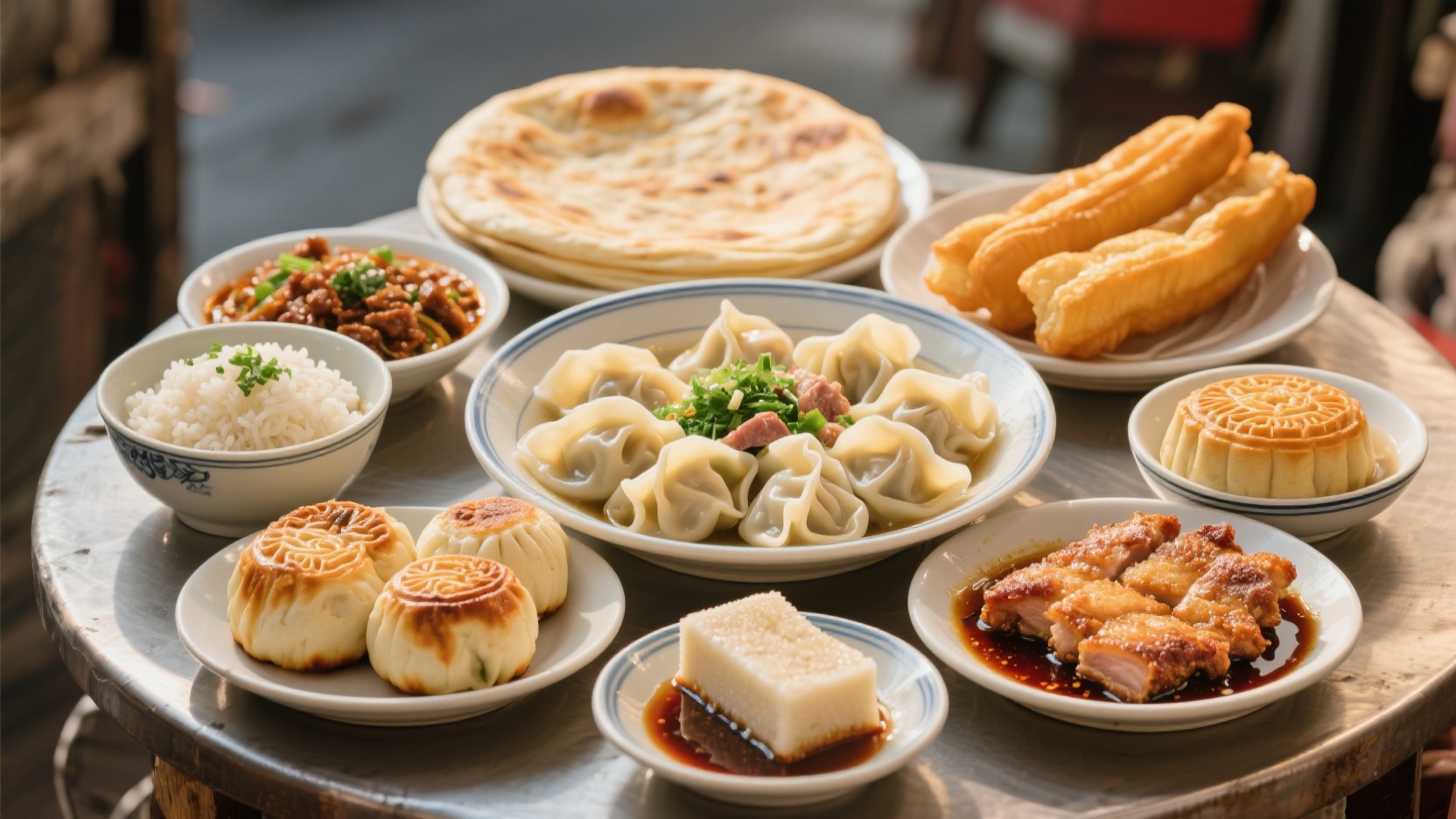
At six in the morning, the alleyways of Shanghai's old city are first awakened by a cloud of steam. A local's day begins with the "Four Heavenly Kings"—flatbread, fried dough sticks, soy milk, and glutinous rice balls—these four constitute the foundation of Shanghai's breakfast. Flatbread comes in two varieties: savory and sweet. Savory flatbread is brushed with oil and sprinkled with scallions, while sweet flatbread is coated in syrup and baked against the oven wall until slightly charred. Fried dough sticks are fried until hollow and crispy, then torn apart and dipped in savory soy milk mixed with dried shrimp, seaweed, and pickled mustard greens, with a few drops of vinegar to give it a slightly crunchy texture. Glutinous rice balls are made by wrapping fried dough sticks, pork floss, and salted egg yolk in glutinous rice, shaping them into ovals, and biting into them reveals a soft exterior and a crisp interior. These foods are mostly from small shops at the entrance of alleyways, a quick bite to go, yet they sustain the appetite during the commute.
Morning snack: A serving of pan-fried buns
If time permits, locals will also visit pan-fried bun shops. The buns are made with semi-fermented dough, and the filling is primarily pork and aspic. After being wrapped, the buns are placed pleated-side down in a large, flat-bottomed pan, then oil and water are added, resulting in a combination of pan-frying and steaming. When they come out of the pan, the bottom is golden brown, and they are sprinkled with sesame seeds and chopped green onions. The proper way to eat them is to first make a small opening to cool them, then sip the broth, and finally eat the whole thing, bottom and all – the top is soft, the bottom is crispy, and the filling is firm and juicy. There are often short queues in front of pan-fried bun shops, with customers often standing at the door with small dishes to eat. Pan-fried buns hold a special place in Shanghai's breakfast scene: they are not only a filling food but also a symbol of leisurely enjoyment.
Lunch: The authentic Shanghai flavor in a bowl of spicy pork noodles
Small noodle shops during lunchtime often feature spicy pork noodles as their signature dish. Shanghai-style spicy pork comes in two types: diced pork, made with diced pork leg meat, marinated, and then stir-fried with chili sauce, sugar, and soy sauce, resulting in a firm texture; and minced pork, made with finely minced pork stir-fried into a loose, bright red topping. The noodles are primarily Suzhou-style thin noodles, with a clear and flavorful broth. Topped with two spoonfuls of spicy pork, the spiciness isn't overpowering, and a sweetness emerges later. Noodle shops turn over tables very quickly during lunchtime; people often carry their bowls of noodles while searching for a seat, or even eat standing up. Many locals always have a side dish of pickled vegetables or vegetarian chicken with their spicy pork noodles, the alternating salty, sweet, and spicy flavors creating a pleasant balance. They eat until they're slightly sweaty, then finish with a sip of clear broth.
Lunch pairing: Salted pork and vegetable rice with soybean and pork bone soup
Salted pork and vegetable rice in humble street-side restaurants is a staple of Shanghainese lunches. Finely chopped greens are stir-fried with diced salted pork, then mixed with rice and lard and simmered until cooked. The rice is glossy and the greens are fragrant, while the salted pork provides both salt and savory flavor. It's served with a bowl of soybean and pork bone soup; the pork bones and soybeans are simmered for a long time, resulting in a slightly white broth where the bean aroma blends seamlessly with the meat's fragrance. Many restaurants use large wooden barrels to keep the rice warm, ensuring it remains moist even after a while, with the crispy rice crust served separately. The rice and vegetables are often served with a layer of crispy rice crust, offering a delightful contrast to the warm broth. This combination, without complex techniques, delivers a consistently comforting and satisfying taste of "home."
Afternoon tea: fresh meat mooncakes and rice cakes
Around three or four in the afternoon, it's time for Shanghai's afternoon tea. Fresh meat mooncakes are a localized variation of Suzhou-style mooncakes. The flaky crust is made by repeatedly folding lard and water-oil dough, wrapping it around a seasoned fresh meat filling, and baking it until the outer layers are flaky and crumbly. When the time-honored shops open their ovens, the queues often circle halfway around the street corner. Eaten hot right out of the oven, the flaky crust crumbles, the meat filling is juicy, and the flavor is savory with a hint of sweetness. Another option is glutinous rice cakes. These are made by steaming glutinous rice flour, rolling it into long strips, filling it with fine red bean paste, and sprinkling dried osmanthus flowers on top. They have a soft, chewy texture that doesn't stick to your teeth, and the red bean paste is delicate and slightly sweet. One is savory, the other sweet and sticky; together, they constitute the everyday flavors of Shanghai afternoon tea.
Midnight Diner: A Bowl of Chai Pan Wonton
On the streets of Shanghai late at night, Chai Pan Wonton remains a familiar landmark for some. The sound of the vendor banging on a bamboo clapper precedes the signboard as the cart passes by. The wonton wrappers are incredibly thin, topped with a little minced meat, and then pinched and shaped with a bamboo clapper before being cooked in boiling water. The broth isn't a rich stock, but rather flavored with lard, dried shrimp, seaweed, egg skin, and chopped scallions, topped with a few drops of chili oil or vinegar. In the past, Chai Pan Wonton was mostly sold by mobile vendors at night, but people still come drawn by the sound. A bowlful reveals the wrappers translucent in the broth, smooth and light on the palate, with a subtle meaty flavor—perfect for soothing the stomach of a late-night traveler. It doesn't aim for a full stomach, but rather a gentle, satisfying conclusion.
Late-night snack: Fried pork cutlet with spicy soy sauce
Often served alongside wontons, fried pork chops are a staple. The pork chops are first tenderized with the back of a knife, then coated in egg and breadcrumbs before being deep-fried until golden brown. Once served, they are cut into strips and dipped in Shanghai's unique spicy soy sauce. This spicy soy sauce isn't actually soy sauce, but a spicy and sour condiment that cuts through the richness of the fried food. When you bite into it, the outer shell is crispy, the meat is tender, and the sweet and sour flavor subtly stimulates the tongue. From Western restaurants to street stalls, this pork chop has always been a staple of Shanghai's late-night meals, and after localization, it has become a cherished memory of late-night dining at both street stalls and family tables.
From the morning steam to the late-night charcoal fires, experience the city through its cuisine in a single day.