
Is it worth making a special trip to Shanghai just to see art? Let me preface this by saying the worst part.
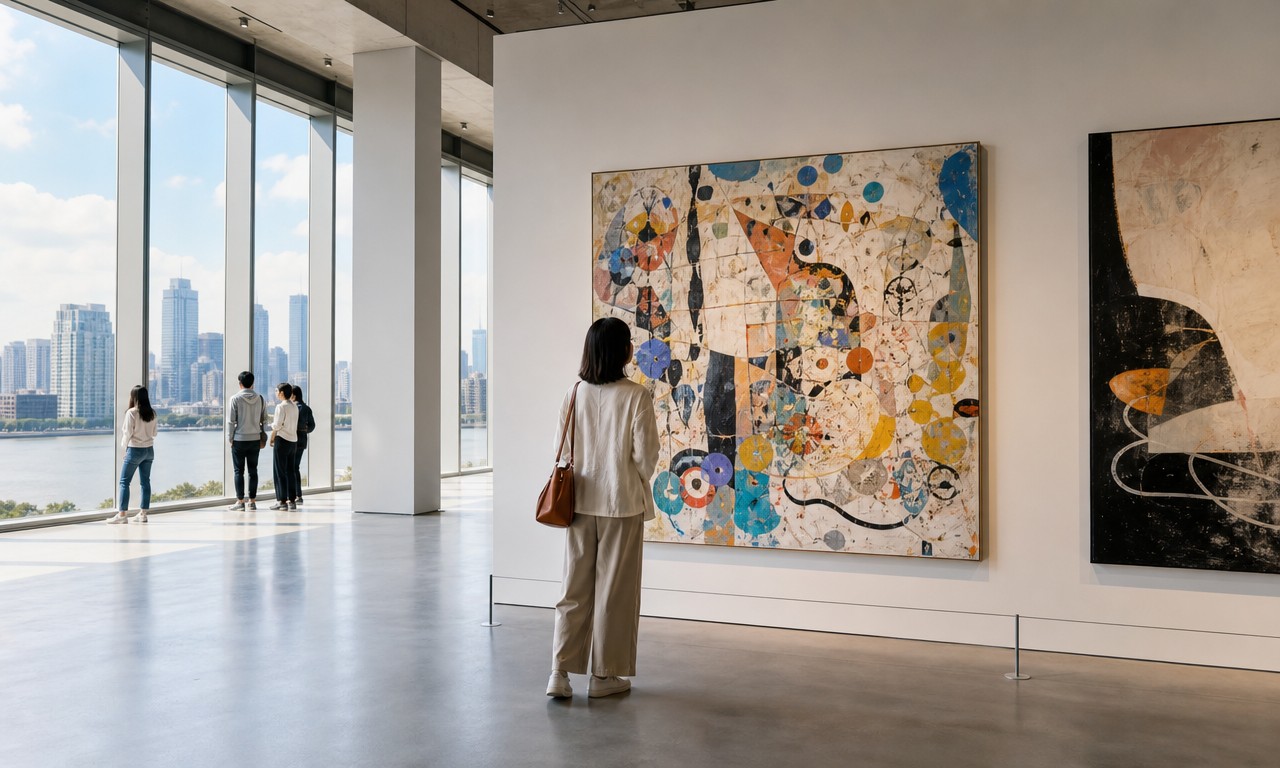
Let's get straight to the point: Is it really worth making a special trip to a city known for its efficiency and commerce for its culture and art? If this question isn't addressed first, all the recommendations for galleries will be wasted. My assessment is: yes, but with a caveat—you need to understand that Shanghai's approach to art differs from Beijing's or Hangzhou's. It's more like everyday life scattered throughout the city's fabric, rather than a pilgrimage enshrined within walls. This Q&A won't provide a list; it will simply answer a few of the most important questions you should ask before you set off.
Is Shanghai really worth making a special trip to see art?
If you're expecting the kind of overwhelming experience of seeing top-tier, rare treasures all at once, like in the Palace Museum or Dunhuang, Shanghai might disappoint you. Shanghai's strength in art lies not in its "national treasures," but in its "density" and "freshness." On the same day, you can see the opening exhibition of an international gallery on the West Bund, then wander into the alleyways to see experimental projects by young artists, and in the evening, you might stumble upon a newly staged physical theatre performance. This dense, ongoing cultural scene is Shanghai's most irreplaceable aspect.
Therefore, my judgment is: it's unnecessary to come specifically for a particular collection; however, it's well worth coming specifically to "immerse yourself in diverse scenes." Treat yourself as an observer rather than a tourist, and you'll find it very fulfilling. If you only have a day or two, I suggest focusing on one area and not running around the whole city.
Which exhibits are must-sees? Is there a specific order to visit them?
In conclusion: the West Bund Art Museum, the Power Station of Art (PSA), and the Pudong Art Museum form the core of Shanghai's contemporary art scene. The West Bund's collaborative exhibitions with the Pompidou Centre are consistently high-quality, with clear curatorial approaches, making them suitable as entry points for understanding the language of contemporary art. The PSA, converted from an old power plant, has a visually striking space, and combined with its biennial system, it's one of the few places in China that seamlessly integrates large-scale installations with urban themes. While the Pudong Art Museum's exhibitions may not be the most avant-garde, its architecture and exhibition design are exquisite, making it suitable for those who value a pleasant viewing environment.
If you can only choose two, the West Bund and PSA are the top choices. One leans towards an "international narrative," while the other leans towards a "local scene," complementing each other perfectly. If you're short on time, don't force yourself into a third exhibition hall; leave some time to stroll around the museum area. Shanghai's art scene is often found along those pedestrian walkways.
"If I bring a child, will they be able to understand it?"
To be honest, contemporary art isn't inherently "child-friendly" for most kids. Abstract, conceptual, and performance art can easily become "incomprehensible mazes" for young children. But that doesn't mean you can't take your kids there; it all depends on how you take them.
I recommend prioritizing venues with public educational spaces, such as the Smart Manufacturing Gallery on the West Bund and some open exhibition areas at PSA, which offer relatively high interactivity. Don't expect children to understand; instead, ask them a question beforehand: "Today, find the strangest artwork you see and tell me why it's strange." Changing the task from "understanding" to "discovering" will completely transform their experience. Also, keep your visit under 90 minutes; exceeding this time will turn even the best exhibitions into a burden. For preschool children, I suggest quickly exploring only one area and not taking them for the entire visit.
"How long does it typically take to visit one of the museums? How many can you schedule in a day?"
Museums in Shanghai are generally larger than expected. The West Bund Art Museum's permanent exhibitions plus special exhibitions require at least two and a half hours to fully appreciate; at the PSA, even three hours isn't enough if there's a major exhibition; and the Pudong Art Museum, including the viewing area and two special exhibitions, also takes close to two and a half hours. Therefore, scheduling two museums a day is already quite saturated, one in the morning and one in the afternoon, with an hour in between for lunch and walking.
If you're primarily focused on taking photos, you could try to visit three exhibitions in one day, but that would essentially mean "having been there" rather than "having seen it." I recommend a slower pace: see one complete exhibition in the morning, then focus on key exhibits in the second exhibition in the afternoon, leaving the rest of the time for the surrounding streets. Half of Shanghai's art experience is inside the exhibition halls, and the other half is in the surrounding sycamore-lined areas and along the riverside promenade.
"Which days is the museum closed? How can I avoid this pitfall?"
Most major art museums in Shanghai follow the rule of being closed on Mondays, including the PSA, West Bund, Pudong Art Museum, and Long Museum (West Bund). However, there is one exception: the Long Museum may be open on Mondays during certain special exhibition seasons, but this is not fixed, and you must check the official announcement before you go. In addition, many museums will not close or will extend their opening hours during holidays, so don't apply your usual experience to holidays.
If your itinerary happens to fall on a Monday, don't feel like you've wasted your time. Mondays are a great time to explore Shanghai's art districts. While the galleries around M50, the West Bund Art Center, and the Bund Source area may be closed, the architecture and streetscapes are definitely worth a visit. Plus, Mondays are less crowded, perfect for quietly observing the city.
"I heard that many exhibitions require advance booking. Is it a waste of time to go if you don't make an appointment?"
Since the pandemic, reservations have become the norm, but the current reality is that most art museums allow on-site reservations via QR code on weekdays, while for popular weekend exhibitions, it's recommended to make reservations through official channels a day in advance. The Pudong Art Museum and some special exhibitions on the West Bund do indeed have visitor limits on weekends, especially between 2 PM and 4 PM, when on-site reservations are likely to show "fully booked."
The safest approach is to spend five minutes the night before your trip to book the first exhibition you want to visit the next day, and then handle the second exhibition flexibly depending on the available time. It's better to book early, because if you arrive early you can wait, but if you arrive late you might have to reschedule. Also, some free exhibitions require reservations, such as the PSA's permanent exhibitions; don't be careless just because they're free.
"If I only have half a day, what can I see or do before catching my flight?"
In this case, I recommend a "one-hour minimalist viewing": choose a museum that's conveniently located in the direction of your train station or airport, and only visit one area. If you're coming from Hongqiao, the West Bund Art Museum or the Long Museum (West Bund) are both within a reasonable route; choose one, visit one special exhibition, and keep it under 70 minutes. If you're coming from Pudong Airport, the Pudong Art Museum is a reasonable option; after visiting it, you can take a short walk along the riverside before heading directly to the airport.
The worst thing you can do before catching a flight is to think, "Since I'm already here, I might as well linger for ten more minutes." Shanghai's evening rush hour traffic is very real, especially when crossing the river. My advice is: determine your latest departure time from the art museum, then work backwards to calculate your total time in the exhibition hall and leave fifteen minutes earlier. Art can be late, but flights cannot.