
Sanya's Seasonal Limited-Time Delicacies | Make the Most of Your Trip by Choosing These 6 Seasons (Blogger's Personally Tested List)
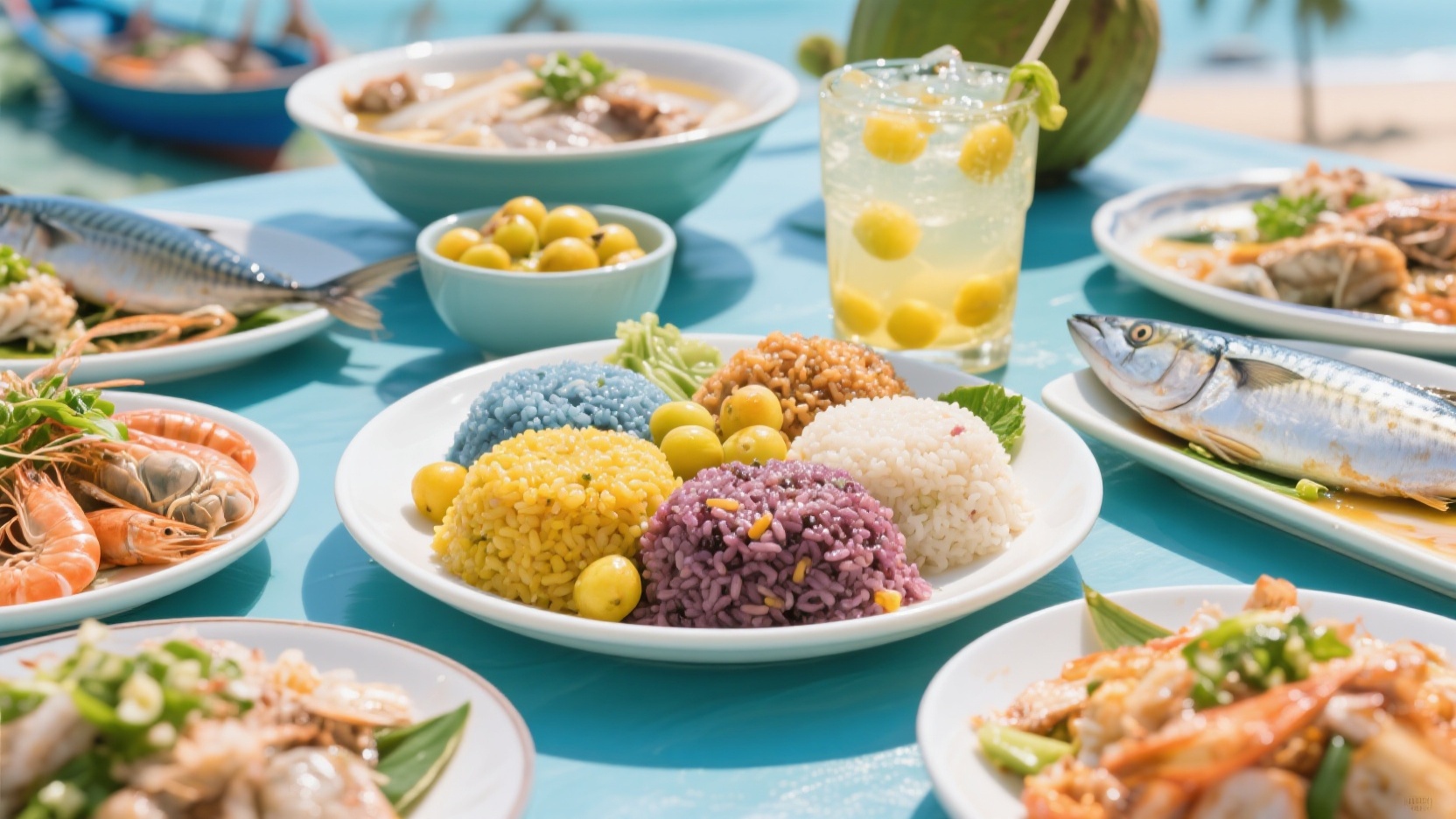
Having eaten in Sanya for six years, the biggest mistake I made wasn't the seafood processing restaurants, but constantly ordering food at the wrong time. Tourists often think Sanya's food scene is like having "the same menu all year round," but locals' meals follow the seasons: five-colored rice on the third day of the third lunar month, salted yellow plums after the start of summer, mixed fish stew from the first fishing boat of the season, mackerel on the winter solstice… If you miss it, you'll have to wait until next year. This post is a collection of limited-time dishes I personally tested at six different seasonal points.
Spring | The Third Day of the Third Lunar Month: Li Family Five-Color Rice and Mountain Wine
The third day of the third lunar month is a major festival for the Li ethnic villages in Sanya and the surrounding areas. Five-colored rice is not artificially colored glutinous rice; instead, it's made by soaking glutinous rice in the juices of plants such as turmeric, maple leaves, and red and blue herbs before steaming. The color comes from these plants, and it has a slightly bitter taste followed by a sweet aftertaste. The old woman said, "We only steam it on the third day of the third lunar month; we don't make it at other times," because the maple leaves must be picked that day.
The local way of eating it is to eat it with your hands, and to serve it with grilled river fish or cured meat wrapped in banana leaves, without adding white sugar. Shanlan wine is a low-alcohol glutinous rice wine brewed by the Li people. It is slightly sweet at first and has a long-lasting aftertaste. It should be sipped slowly from a bamboo cup, not drunk in one gulp like beer. It is difficult to find the authentic version in the city. It is best to go to a Li village near Sanya before or after festivals, or ask your guesthouse owner in advance.
Late Spring and the Beginning of Summer: Enjoying Sanya Mangoes in Two Ways – Green and Red
Sanya mangoes gradually come to market after the Spring Festival, but the peak season for Guifei mangoes is only from March to May, with the sweetness and aroma being most balanced around the beginning of summer. Tourists are often misled by fruit platters in tourist areas, only to find artificially ripened fruit; locals go to farmers' markets to look for "tree-ripened" mangoes, which have small black spots on their skin and are more fragrant.
The most authentic way to eat mangoes is to enjoy them both green and ripe: peel and slice green mangoes into strips, then dip them in chili salt for a tangy and refreshing treat; ripe mangoes can be eaten whole, peeled, or scored with a knife to expose the flesh. Once this season is over, mangoes either become fibrous or cloyingly sweet, losing their tropical aroma.
Before the summer solstice: wampee, lychee, and old salt wampee water
Every June, Hainan wampee and lychee are available at the same time. Locally, there is a saying about wampee: "Eat lychee when hungry, eat wampee when full." The peel is slightly sour, the flesh is sweet, and it aids digestion. For lychee, choose the Fei Zi Xiao or seedless varieties, which are at their juiciest from the end of May to mid-June.
The "Old Salt Yellow Peel Water" sold on the streets of Sanya is a limited-time offer before the summer solstice: freshly mashed yellow peel is mixed with old salt and ice water, resulting in a salty-sweet flavor that is incredibly refreshing. It should be shaken well before drinking, and the ice should not be removed, otherwise the salt will sink to the bottom and the aroma will dissipate. I've had the freshly mashed version near the First Market, and it's far superior to the jam-based versions found in many milk tea shops. After July, when yellow peel is no longer in season, this drink disappears.
Late Summer to Autumn: Fresh Fish from the Bottom of the Boat After the Fishing Season Opens
The fishing moratorium in the South China Sea usually ends in mid-August. In the first week after the fishing season opens, fishing boats from wharves such as Hongsha and Yazhou in Sanya will bring back "fresh catches": small miscellaneous fish, black sea bream, and blue crabs. They are not large, but their freshness is incomparable to farmed seafood.
Locals don't chase lobsters and groupers at this time of year; instead, they enjoy mixed fish stew or fish rice. Several small sea fish are boiled in water with ginger and served with lime soy sauce, resulting in a sweet and clear broth. Alternatively, they can be steamed and served with congee. It's recommended to get up early after the fishing season opens and wait at the pier for the fishing boats to unload their catch. Fish with clear eyes and bright red gills are worth buying; they're great to take back to your guesthouse and cook simply.
From the Autumn Equinox to the Mid-Autumn Festival: Crab season is for eating crab roe, not meat.
Crabs in Hainan are at their fattest around the Mid-Autumn Festival, with the local Sanya red flower crabs and mud crabs being just as good as the Hele crabs. Locals prefer to eat the roe rather than the meat, choosing female crabs based on whether their navel is round and translucent red and whether their backs are translucent with visible roe.
The best way to eat it is steamed whole, dipped in a sauce made of lime, soy sauce, and minced garlic. Avoid baking with cheese or using a typhoon shelter style, as these will overpower the freshness of the crab roe. When ordering processing, always emphasize "steam whole, do not cut," otherwise the crab roe will be lost, making your purchase a waste.
From the Winter Solstice to the Beginning of Spring: Spanish Mackerel and Brown Sugar Rice Cake
In Hainan, mackerel is a must-have for the Winter Solstice and the Spring Festival. In winter, mackerel is rich in oil and has firm flesh; locals in Sanya say, "Winter Solstice mackerel is not given away." The preparation is simple: slice thickly, rub with salt, pan-fry, and serve with white porridge or clear soup noodles.
Brown sugar rice cake, also a limited-edition item for the Spring Festival, is made by steaming glutinous rice and brown sugar, letting it cool, slicing it, coating it in egg wash, and frying it until both sides are slightly browned. People in Sanya with elders in their families will definitely fry mackerel around the winter solstice, filling the kitchen with the aroma of fish oil.
The blogger concludes: Sanya does have four seasons, but they are hidden in the docks, orchards, and the cooking stoves of the Li villages. Tourists eat according to guidebooks, while locals eat according to the solar terms. Eating according to the solar terms is the right way to experience a city.
Practical Tips: 1. The "Three-Five Color Rice" dish is mostly found during festivals in Li villages, and less so in the city. Ask your guesthouse owner in advance. 2. When buying mangoes, look for "tree-ripened" ones at the farmers' market. Try a green mango dipped in chili salt first. 3. The flavor of "Old Salt Yellow Skin Water" is concentrated in June, and drops sharply after July. 4. The mixed fish stew at the dock is freshest in the first week after the fishing season opens, so go early. 5. During crab season, choose female crabs with a bright red navel. They should be steamed whole. 6. In winter, you can buy mackerel cut into sections at the local market. Guesthouses with kitchens are more convenient.